What Is a Cordless Impact Wrench and How Does It Work?
If you are new to power tools and picking up a cordless impact wrench for the first time, you might assume it is just a bulkier version of a drill. In reality, the way it works is fundamentally different — what truly sets it apart is the internal hammering mechanism.
Basic Definition
A cordless impact wrench is a battery-powered handheld power tool designed to tighten or loosen large bolts and nuts.
Its defining characteristic is this: instead of applying continuous rotational force when it meets resistance, it delivers high-frequency rotational impacts to "break through" that resistance. This mechanism allows it to produce far more torque than a standard drill, all within a relatively compact body.
How It Works: The Hammer Mechanism Is the Key
Inside a cordless impact wrench is a dedicated hammer and anvil mechanism — which is exactly where the word "impact" comes from.
Here is how it works: the motor spins a hammer at high speed. When the bolt encounters significant resistance, the hammer does not force its way through. Instead, it briefly recoils and then strikes the anvil with a sharp, powerful blow. The anvil then transfers that force to the drive head and socket.
This cycle repeats 1,500 to 3,000+ times per minute. What you feel in your hand is that rapid, rhythmic thudding — and that is precisely how the tool generates high torque output.
Compared to a standard drill, this mechanism has one very practical advantage: the impact force is delivered along the rotational axis, so the reaction force does not travel back into your wrist. That is why tightening a stubborn bolt with a cordless impact wrench does not send a jarring kickback through your arm the way a manual wrench would.
Key Components
| Component |
Function |
| Brushless Motor |
Converts battery energy into rotational power; more efficient and longer-lasting than brushed motors |
| Lithium-Ion Battery |
Supplies continuous power; common voltages are 18V, 20V MAX, and 60V |
| Hammer and Anvil Mechanism |
Core structure that converts rotational force into high-frequency impact torque |
| Square Drive |
The interface that connects to impact sockets; common sizes are 3/8", 1/2", and 3/4" |
| Speed / Torque Control Ring |
Adjusts output mode to match different fastening requirements |
| Forward / Reverse Switch |
Toggles between tightening and loosening direction |
How Does It Differ from a Pneumatic Impact Wrench?
Many professional auto shops rely on pneumatic impact wrenches, which require a compressed air supply to operate. Both tools share a similar hammering principle, but they differ considerably in real-world use:
| Category |
Cordless Impact Wrench |
Pneumatic Impact Wrench |
| Power Source |
Lithium-ion battery |
Compressed air |
| Mobility |
Fully wireless; use anywhere |
Limited by air hose length |
| Continuous Output |
Limited by battery charge |
Continuous as long as air supply holds |
| Max Torque Ceiling |
High-end models reach 1,500+ ft-lbs |
Professional models can go even higher |
| Setup Required |
Ready to use out of the box |
Requires an air compressor |
| Best For |
DIY, field work, mobile tasks |
Fixed workstations, professional auto repair |
For everyday users and most DIY scenarios, the cordless impact wrench wins on convenience by a wide margin. A pneumatic wrench may offer a higher torque ceiling, but without a fixed workstation and air compressor, it simply is not practical.
Are Cordless Impact Wrenches Any Good?
This question comes up constantly, especially from users switching over from pneumatic or corded tools. The initial reaction is often skepticism: can a battery-powered wrench really handle tough jobs?
The answer is: yes — but it depends on which tier of product you buy, and what you plan to use it for.
The Freedom of Going Cordless Matters More Than You Think
Anyone who has worked with a pneumatic wrench knows how frustrating the air hose can be — limited reach, constant tangling, and repositioning every time you change your working spot. The most immediate advantage of a cordless impact wrench is cutting that tether entirely.
Whether you are swapping tires in the garage, tightening bolts on a job site, or fixing a vehicle in the field, you do not need to hunt for an outlet or drag a hose around. That kind of convenience saves real time and energy in ways that no spec sheet can fully capture.
Torque Performance: No Longer a Weak Point
Early cordless impact wrenches were genuinely underpowered, and experienced tradespeople had good reason to distrust them. But advances in lithium-ion battery technology and brushless motors have closed that gap significantly.
Here is how torque output breaks down across voltage tiers for mainstream cordless models today:
| Voltage Tier |
Typical Max Torque Range |
Best For |
| 12V |
100–150 ft-lbs |
Light household use, small fasteners |
| 18V / 20V |
250–700 ft-lbs |
Home use + semi-professional; covers most scenarios |
| 60V / 80V |
700–1,500+ ft-lbs |
Heavy construction, large equipment maintenance |
A mid-range 18V model typically delivers 300–500 ft-lbs, which is more than enough for the lug nuts on a standard passenger car (factory torque specs usually fall between 80–120 ft-lbs). For a pickup truck or large SUV, staying above 500 ft-lbs gives you a comfortable margin.
DIY Users vs. Professional Technicians: Different Expectations
The same tool can feel completely different depending on who is using it.
For DIY users, a cordless impact wrench has almost no meaningful shortcomings. Changing tires, assembling furniture, handling light modifications — one battery charge easily gets you through a morning of work, and the tool's performance will likely exceed expectations.
For professional auto technicians, the standard is far more demanding. Working continuously for hours, servicing dozens of vehicles in a day, dealing with seized bolts — these conditions place serious demands on sustained output and torque reserve. Some technicians still keep a pneumatic wrench as their primary tool and use the cordless as a supplement, mainly for situations requiring mobility or where an air hose cannot reach.
That does not mean a cordless impact wrench is inadequate — it just means different work intensities call for different tool strategies.
Battery Life: Sufficient, But Worth Understanding
Battery runtime is one of the most frequently asked questions. Three factors drive it: battery capacity (Ah), workload intensity, and ambient temperature.
| Battery Capacity |
Reference Runtime (Moderate Workload) |
| 2.0 Ah |
Approx. 30–50 standard fastening operations |
| 4.0 Ah |
Approx. 80–120 operations |
| 6.0 Ah |
Approx. 150+ operations |
Cold temperatures have a noticeable impact on runtime. Below 50°F (10°C), a lithium-ion battery can lose 15–25% of its usable capacity. If you regularly work outdoors in winter, keeping a spare battery warm inside the vehicle is a practical habit worth building.
Where Does It Perform Best?
A cordless impact wrench is not a universal tool, but in certain scenarios its performance is essentially unmatched:
- Mobile work: No fixed workstation; frequent repositioning required
- High-volume fastening: Large numbers of bolts to complete in a short window
- Roadside emergencies: Flat tire by the side of the road, field vehicle repairs
- Home DIY: Occasional use where buying an air compressor makes no sense
On the other hand, if your work is fixed-station, high-intensity, and all-day professional auto service, a pneumatic setup still holds an edge in pure cost-efficiency.
One Thing Worth Remembering
Do not focus only on the maximum torque number on the box. Many products advertise their peak torque figure, but real working torque is typically only 60–75% of that value. Looking at actual performance data before you buy is far more useful than reading the spec sheet alone.
Key Specifications to Look for in a Cordless Impact Wrench
There are two common buying mistakes: getting overwhelmed by specs and picking something at random, or fixating on the biggest number and ending up with the wrong tool. The specs on a cordless impact wrench are not especially complicated, but a few areas trip people up regularly.
Torque: Max Torque vs. Working Torque — Do Not Confuse Them
Torque is the most important spec, and also the most frequently misunderstood.
What most product packaging shows is maximum torque (Max Torque) — a peak figure measured under specific test conditions, not a reflection of what the tool sustains in real use. What actually matters is working torque, which typically runs at 60–75% of the stated maximum.
For example: a model rated at 600 ft-lbs max torque will realistically deliver around 360–450 ft-lbs during normal operation.
| Torque Type |
Description |
Reference Range |
| Max Torque |
Instantaneous peak measured under test conditions |
100% (the advertised number) |
| Working Torque |
Sustained output during actual use |
Approx. 60–75% of max torque |
| Breakaway Torque |
Burst force used to break loose seized bolts; listed separately on some models |
Often higher than working torque |
Buying tip: Take your actual torque requirement and multiply it by 1.3–1.5 to arrive at the max torque spec you should be shopping for. Always leave a buffer.
Voltage and Battery Capacity: Do Not Stop at the Voltage Number
Voltage determines the torque ceiling and the range of tasks the tool can handle. Battery capacity (Ah) determines how long it runs. Both matter, but they serve different purposes.
| Voltage |
Category |
Typical Max Torque |
Best For |
| 12V |
Compact, lightweight |
100–150 ft-lbs |
Light household use, confined spaces |
| 18V / 20V MAX |
Mainstream general-purpose |
250–700 ft-lbs |
DIY users, semi-professional work |
| 60V / 80V |
Heavy-duty professional |
700–1,500+ ft-lbs |
Construction, heavy equipment repair |
On the 18V vs. 20V MAX naming confusion: these are the same voltage platform. Different manufacturers simply label it differently. "18V" uses the battery's nominal (average working) voltage, while "20V MAX" uses the peak voltage at full charge. Performance is essentially identical in use.
On battery capacity:
| Battery Capacity |
Relative Weight |
Best For |
| 2.0 Ah |
Lightest |
Short sessions, light-duty tasks |
| 4.0 Ah |
Moderate |
Everyday DIY — the best-balanced option |
| 6.0 Ah |
Heavier |
Extended continuous use |
| 9.0 Ah |
Heaviest |
High-intensity professional work |
Larger capacity means longer runtime but more weight. If the tool needs to be held overhead or at an angle for extended periods, 4.0 Ah tends to be the sweet spot between portability and endurance.
IPM and RPM: Two Specs Most People Skip
These numbers appear on spec sheets but rarely get much attention.
RPM (revolutions per minute) controls how fast the tool spins when unloaded — it determines how quickly a fastener is driven into place once resistance is low.
IPM (impacts per minute) is the frequency at which the hammer strikes the anvil. This directly affects how the tool performs against stubborn, high-resistance fasteners.
| Spec |
Typical Range |
Effect on Real-World Use |
| RPM |
0–3,200 rpm |
Higher RPM means faster driving under light load |
| IPM |
0–3,600 ipm |
Higher IPM means more force against resistant fasteners |
Neither figure is better when maximized in isolation — what matters is how well they pair with the torque output. A model with high IPM but low torque will drive standard bolts quickly but struggle with seized hardware.
Drive Size: Getting This Wrong Means Your Sockets Will Not Fit
The drive on a cordless impact wrench is a square interface that connects to impact sockets. Different sizes serve different applications:
| Drive Size |
Bolt Range |
Typical Applications |
| 3/8" (approx. 9.5mm) |
Small fasteners |
Light machinery, household appliances |
| 1/2" (approx. 12.7mm) |
Medium fasteners |
Auto repair, passenger car lug nuts |
| 3/4" (approx. 19mm) |
Large fasteners |
Heavy vehicles, structural steelwork |
| 1" (approx. 25.4mm) |
Extra-large fasteners |
Industrial equipment, heavy machinery |
For most people, 1/2" is the most versatile choice. It covers the widest range of applications, and compatible sockets are the easiest to find. If your primary uses are home DIY and routine vehicle maintenance, a 1/2" drive will handle virtually everything you throw at it.
Weight and Ergonomics: You Only Notice This When You Are Tired
Weight differences that look small on paper become very real after half an hour of overhead work. A 0.5 kg difference matters.
| Tool Weight (With Battery) |
Practical Feel |
| 1.5–2.0 kg |
Light; ideal for extended overhead or side-angle work |
| 2.0–2.8 kg |
Mainstream range; balances torque and manageability |
| 2.8–4.0 kg |
On the heavier side; best suited for bench or fixed-position work |
| 4.0 kg+ |
Noticeably heavy; typically high-voltage professional models |
Beyond weight, pay attention to grip diameter and anti-slip texture. A grip that is too thick for your hand becomes tiring quickly and reduces control. Some models also include a side handle or built-in LED light, which make a real difference in tight spaces or poor lighting conditions.
Speed Settings and Torque Modes
Entry-level models are typically single-speed. Mid-range and higher models usually offer 2–4 speed settings, and some include a dedicated torque-limiting mode.
| Feature |
What It Does |
| Variable speed |
Low speed for precision work; high speed for fast driving |
| Torque-limiting mode |
Prevents over-tightening; protects threads and components |
| Auto-stop mode |
Shuts off once a preset torque is reached; useful for precision-critical applications |
If you regularly work on fasteners with strict torque specifications — aluminum wheel lug nuts, engine cover bolts — a model with torque-limiting capability gives you much greater peace of mind.
Quick Buying Reference
| Use Case |
Recommended Voltage |
Recommended Max Torque |
Drive Size |
Battery Capacity |
| Occasional home use / light DIY |
12V |
150 ft-lbs+ |
3/8" or 1/2" |
2.0–4.0 Ah |
| Regular DIY + vehicle maintenance |
18V / 20V |
300–500 ft-lbs |
1/2" |
4.0 Ah |
| Semi-professional + truck / large SUV |
18V / 20V |
500–700 ft-lbs |
1/2" |
4.0–6.0 Ah |
| Professional construction / heavy repair |
60V+ |
700 ft-lbs+ |
3/4" or 1" |
6.0 Ah+ |
When shopping for a cordless impact wrench, chasing the highest spec is rarely the right move. The goal is to find the range that matches your actual use case. Buying more than you need wastes money; buying less than you need wastes time.
Will a Cordless Impact Wrench Remove Lug Nuts?
This is one of the most common questions people type into a search engine before buying a cordless impact wrench — and for good reason. For many buyers, changing tires is the single most compelling use case. The short answer is yes, but there is more to know between "it can do it" and "it does it well."
First, How Much Torque Does Removing a Lug Nut Actually Take?
Factory lug nut torque specs vary quite a bit by vehicle type. Here are typical reference ranges:
| Vehicle Type |
Factory Lug Nut Torque (Reference) |
| Small sedan |
80–110 ft-lbs |
| Mid-size sedan / standard SUV |
100–130 ft-lbs |
| Large SUV / half-ton pickup |
130–165 ft-lbs |
| Heavy-duty pickup (3/4-ton and above) |
165–200 ft-lbs |
| Commercial vehicle / light truck |
200–300 ft-lbs+ |
These are factory pre-load values. In the real world, lug nuts on a vehicle that has been driven for a while are often tighter than the spec — thermal cycling, vibration, and over-tightening from a previous service can all add up.
On a corroded or previously over-torqued lug nut, the breakaway torque required to initially loosen it can be 2–3 times the original clamp-down value. That is the real test of what a cordless impact wrench can handle.
Which Cordless Impact Wrench Specs Are Up to the Job?
| Max Torque Rating |
Standard Passenger Cars |
Large SUVs / Pickups |
Corroded Lug Nuts |
| Under 150 ft-lbs |
Not sufficient |
Not sufficient |
Not sufficient |
| 200–300 ft-lbs |
Workable for sedans |
Marginal |
Inconsistent |
| 300–500 ft-lbs |
Handles sedans easily |
Most cases, yes |
Depends on severity |
| 500–700 ft-lbs |
Yes |
Yes |
Most cases |
| 700 ft-lbs+ |
Yes |
Yes |
Including heavy corrosion |
The takeaway is straightforward: for a standard passenger car, an 18V model rated above 300 ft-lbs is generally sufficient. For a pickup truck or large SUV, or any older vehicle where the lug nuts may be corroded, 500 ft-lbs or more is the safer target.
Practical Scenarios: Home Tire Changes vs. Shop Use
These two situations have meaningfully different requirements.
Home use (seasonal tire swaps, roadside emergencies)
For most private vehicle owners doing two tire swaps a year — summer to winter and back — or handling the occasional flat, an 18V model in the 400–500 ft-lbs range is a genuinely complete solution. Pair it with a 1/2" impact socket set, and it becomes a purchase you will never need to revisit.
Compared to kneeling on asphalt and wrestling with a cross wrench, swapping a full set of four lug nuts with a cordless impact wrench takes under a minute. The physical effort is negligible.
Professional shop use
In a professional shop environment, the tool is servicing dozens of vehicles a day, including ones with seized lug nuts, damaged threads, or hardware that was over-tightened by a previous technician. Under these conditions, a cordless impact wrench is typically used as a supplementary tool — the main torque work still goes through a pneumatic setup at a fixed station.
That said, the mobility of a cordless tool genuinely helps in certain shop situations — working around a vehicle on a lift, or reaching spots where dragging an air hose is awkward.
An Often-Overlooked Risk: Over-Tightening
A common habit among first-time impact wrench users is running the tool until it simply cannot turn anymore. That is a dangerous approach.
The impact mechanism can deliver far more torque than the fastener's specified clamp load in a short burst. If left unchecked, this can cause:
- Wheel studs stretching beyond their elastic limit, reducing structural integrity
- Aluminum wheel threads stripping
- Brake rotors warping from uneven clamping force
- Lug nuts that are impossible to remove next time around
The correct approach is to use the cordless impact wrench to bring the lug nut to approximate tension, then verify the final torque with a torque wrench against the vehicle's factory specification. Many people skip this step because it feels unnecessary — but for wheel safety, it is not optional.
| Step |
Tool |
Purpose |
| Initial tightening |
Cordless impact wrench (low-speed mode) |
Efficiency — drive the nut down quickly |
| Final torque |
Torque wrench |
Hit the factory spec accurately |
| Re-check after 50–100 km of driving |
Torque wrench |
Confirm no loosening under load |
Socket Selection: Do Not Cut Corners Here
Using a cordless impact wrench for lug nuts requires impact-rated sockets — the ones with a matte black oxide finish. This is non-negotiable.
Standard chrome-vanadium sockets are designed for hand ratchets. They are hard but brittle, and the repeated shock loading from an impact wrench causes metal fatigue. When they fail, they do not bend — they shatter, and the fragments travel at significant speed. Operating near your face or eyes makes this a genuine injury risk.
| Socket Type |
Surface Finish |
Material Properties |
Safe for Impact Wrench? |
| Impact-rated socket |
Matte black oxide |
Chrome-molybdenum (Cr-Mo); absorbs shock |
Yes |
| Standard socket |
Mirror chrome plating |
Chrome-vanadium (Cr-V); hard but brittle |
No |
The most common metric lug nut socket sizes are 17mm, 19mm, 21mm, and 23mm. Check your vehicle's lug nut size before buying — it varies considerably between makes and models.
What's the Difference Between a Cordless Impact Wrench and a Cordless Impact Driver?
These two tools share similar names, and many people new to power tools confuse them — sometimes badly enough to order the wrong one. They do both use an impact mechanism, but from appearance to application, they are quite different. Getting this straight can save you money and a lot of frustration.
The Visual Difference Is Obvious Once You Know What to Look For
Put the two tools side by side and the shape alone tells you which is which:
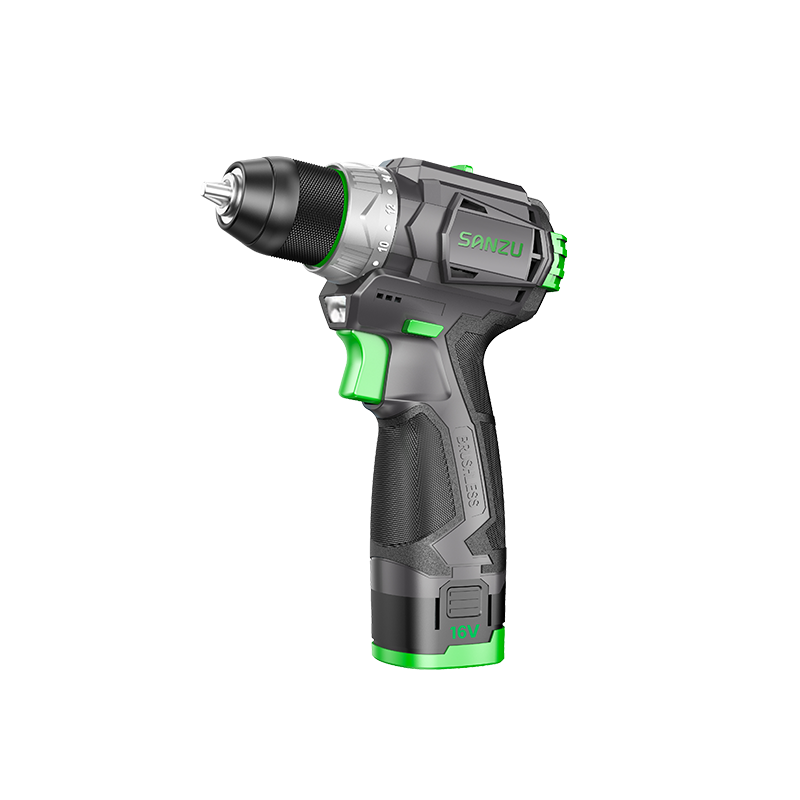
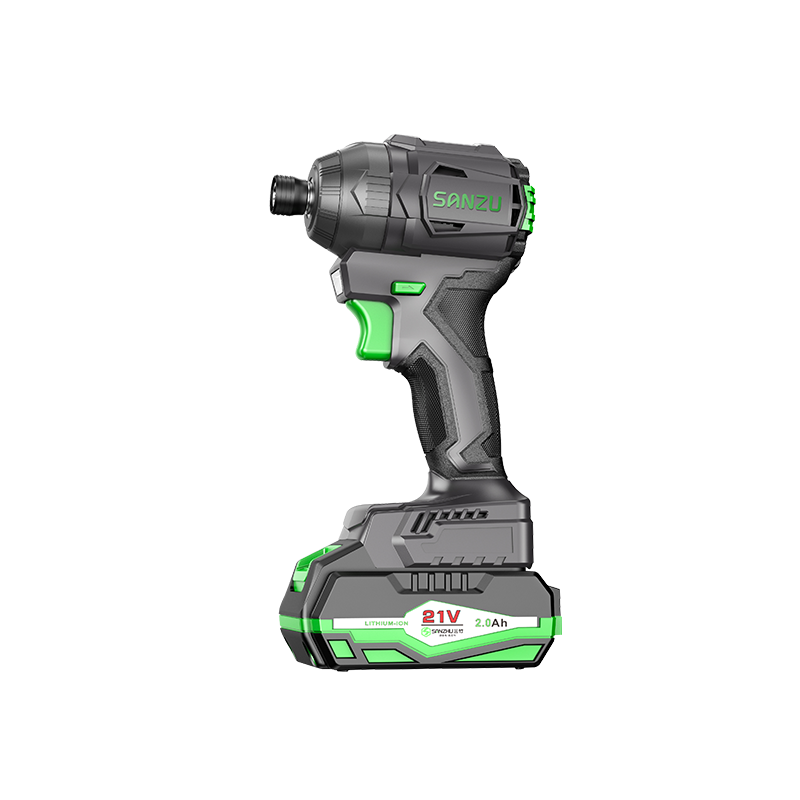
A cordless impact driver is slimmer and shorter — it looks like a stockier drill. The front end has a hex chuck that accepts 1/4" hex-shank bits directly.
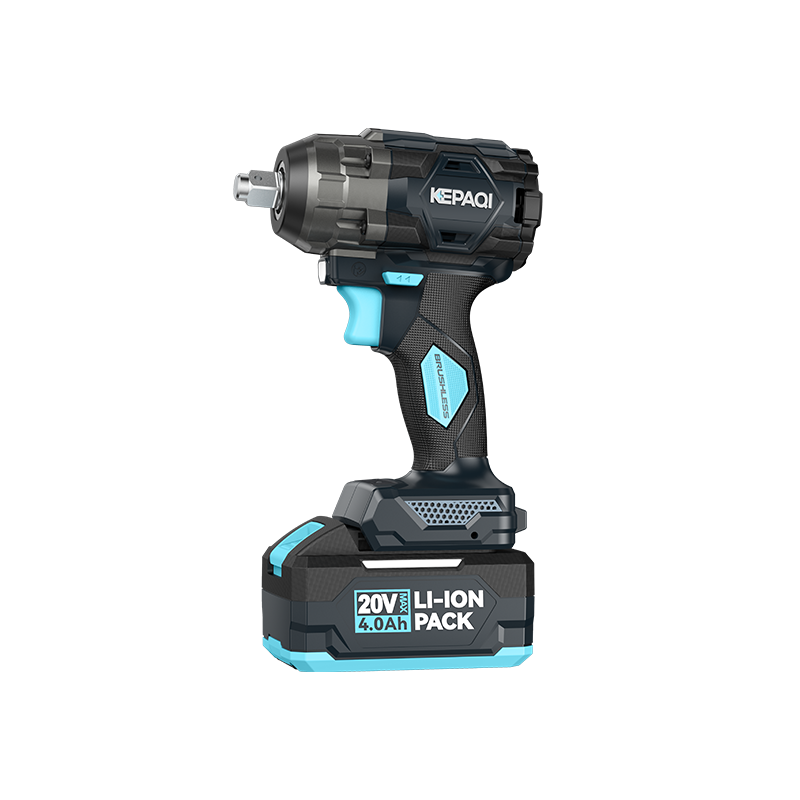
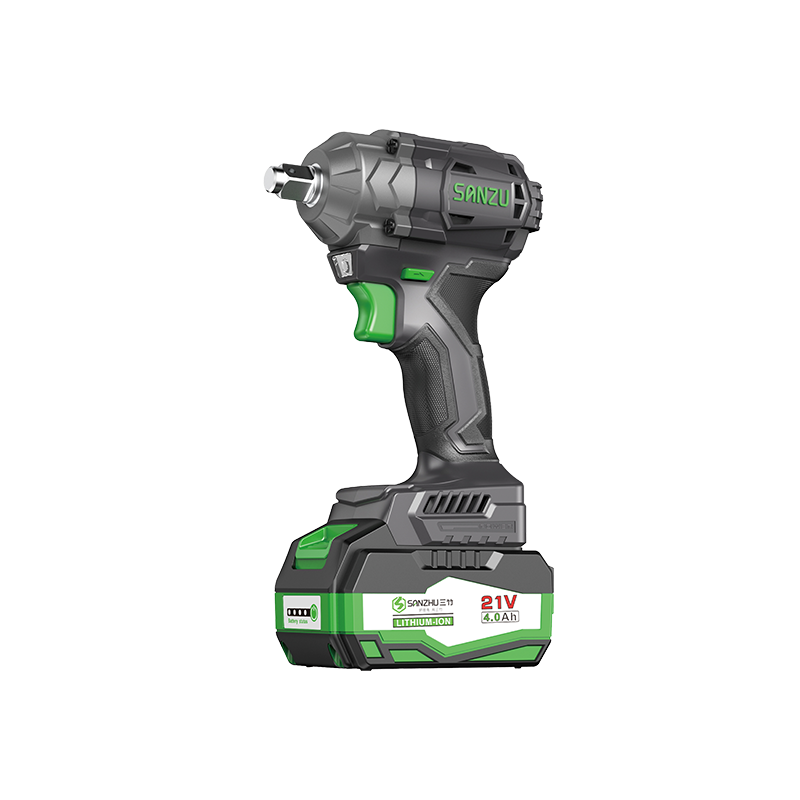
A cordless impact wrench is bulkier and heavier, with a square drive on the front that requires dedicated impact sockets. It cannot accept drill bits or screwdriver bits directly.
This is not arbitrary design — it reflects a fundamental difference in what each tool is built to do.
Drive Interface: This Determines What Jobs Each Tool Can Handle
| Category |
Cordless Impact Driver |
Cordless Impact Wrench |
| Drive Interface |
1/4" hex chuck |
Square drive (1/2" most common) |
| Compatible Accessories |
1/4" hex bits, short sockets |
Impact-rated sockets (matched to drive size) |
| Accessory Variety |
High — bit options are extensive |
More specialized; sockets purchased separately |
| Bit Change Speed |
Fast — spring-loaded collar |
Standard — socket seats onto square drive |
Torque Output: The Real Difference Between the Two
| Tool Type |
Typical Max Torque Range |
Impact Direction |
| Cordless Impact Driver |
150–250 ft-lbs (approx. 200–350 N·m) |
Along the rotational axis |
| Cordless Impact Wrench (18V) |
300–700 ft-lbs (approx. 400–950 N·m) |
Along the rotational axis |
| Cordless Impact Wrench (60V+) |
700–1,500+ ft-lbs |
Along the rotational axis |
The torque gap between the two is roughly 2–5x. That difference is invisible when driving small wood screws, but as soon as you encounter automotive fasteners or structural bolts, an impact driver runs out of capability fast.
Where Each Tool Excels
Where a Cordless Impact Driver Shines
The impact driver is at its best when driving large quantities of screws quickly.
- Woodworking: self-tapping screws, wood screws in volume
- Light steel framing: driving self-drilling screws at speed
- Furniture assembly: various connecting fasteners
- Interior construction: drywall installation, flooring
Its advantages are low weight, fast speed, and versatility. A carpenter driving hundreds of screws a day will find an impact driver far more comfortable than an impact wrench — it's lighter, bits swap instantly, and it is far less prone to cam-out.
Where a Cordless Impact Wrench Shines
The impact wrench is built for large-diameter bolts and high-torque fastening tasks.
- Auto repair: lug nuts, brake caliper bolts
- Construction: structural connection bolts, anchor bolts
- Heavy equipment assembly and disassembly
- Field emergencies: vehicle breakdowns
Its core advantage is high torque and socket coverage — it handles fasteners an impact driver simply cannot turn.
Same "Impact" Name, But the Mechanism Differs
| Category |
Cordless Impact Driver |
Cordless Impact Wrench |
| Impact Mechanism |
Ball-and-cam or hammer type |
Hammer and anvil |
| Impact Frequency (IPM) |
Higher — typically 3,000–4,000 ipm |
Lower — typically 1,500–3,200 ipm |
| Torque Character |
High-frequency, lighter hits; suits small fasteners |
Lower-frequency, heavier hits; suits large bolts |
| Reaction Force |
Low; one-handed operation is easy |
Higher; two-handed grip required |
A simple way to think about it: the impact driver delivers rapid, lighter taps; the impact wrench delivers slower, heavier hammer blows. High frequency with lighter force suits screws; lower frequency with greater force per hit suits bolts.
Can They Substitute for Each Other?
| Scenario |
Feasibility |
Reality |
| Using an impact driver on automotive bolts |
Not feasible — insufficient torque |
Likely will not turn the fastener |
| Using an impact driver to install lug nuts |
Not feasible — wrong interface |
Needs an adapter and still lacks torque |
| Using an impact wrench to drive wood screws |
Barely workable |
Heavy, imprecise, easy to over-drive |
| Using an impact wrench for general fastening |
Yes |
Heavier than an impact driver, but functional |
If You Can Only Buy One, Which Should It Be?
Choose a Cordless Impact Driver if:
- Your primary work is woodworking, renovation, or furniture assembly
- You do not need to deal with automotive or heavy fasteners
- You want something light and easy to use daily
- You are on a budget and want maximum versatility
Choose a Cordless Impact Wrench if:
- You need to remove lug nuts or work on automotive components
- You are involved in construction or equipment maintenance
- You regularly face large bolts or seized fasteners
- You already own a drill or impact driver and want to add high-torque capability
If you do both types of work, the best setup is to have both. Among professional tool users, it is standard practice to carry an impact driver and an impact wrench together — they complement each other and cannot truly substitute for one another. Many manufacturers sell the two as bundled kits at a lower combined price than buying separately.
FAQ: Common Questions and Essential Knowledge
Q1: How long does the battery last on a cordless impact wrench?
There is no single answer, because too many variables are involved. But here is a useful framework for estimating runtime.
Three factors drive battery life: battery capacity (Ah), workload intensity, and ambient temperature.
| Battery Capacity |
Light Use (Occasional Fastening) |
Moderate Use (Continuous Work) |
Heavy Use (Sustained High-Torque Output) |
| 2.0 Ah |
Approx. 45–60 min |
Approx. 20–30 min |
Approx. 10–15 min |
| 4.0 Ah |
Approx. 90–120 min |
Approx. 40–60 min |
Approx. 20–30 min |
| 6.0 Ah |
Approx. 150–180 min |
Approx. 60–90 min |
Approx. 30–45 min |
Cold weather has a measurable effect. Below 50°F (10°C), a lithium-ion battery can lose 15–25% of usable capacity. Below 32°F (0°C), some packs lose up to 30–40%. Keeping a spare battery inside the vehicle in winter is a practical habit worth building.
As for cycle life: most mainstream lithium-ion batteries retain around 80% of original capacity after 500–1,000 full charge cycles. At typical home-use rates, a battery easily lasts three to five years before any noticeable degradation.
Q2: What is the difference between 18V and 20V MAX?
This has been a source of confusion in the market for years, and some people have bought the wrong battery platform because of it.
The direct answer: 18V and 20V MAX are the same voltage platform. There is no performance difference.
A lithium-ion battery's voltage changes during the charge-discharge cycle. A pack labeled 18V reaches approximately 20V when fully charged. As it discharges, the voltage drops, averaging around 18V over the course of normal use.
Different manufacturers chose different labeling conventions:
- Brands using 18V are citing the battery's nominal (average working) voltage
- Brands using 20V MAX are citing the battery's peak voltage at full charge
| Label |
Actual Voltage Range |
Average Working Voltage |
| 18V |
16V–20V |
Approx. 18V |
| 20V MAX |
16V–20V |
Approx. 18V |
Batteries and chargers from these two platforms cannot be mixed — not because of electrical incompatibility, but because the physical connector designs differ between manufacturers. Always buy accessories that match your specific battery platform.
Q3: Can I use regular sockets on an impact wrench?
No — and this is worth taking seriously, not just as a tool care issue but as a safety one.
Standard chrome-vanadium sockets are heat-treated to be hard. That hardness makes them brittle. Under the thousands of impact cycles per minute that an impact wrench delivers, they are subjected to repeated shock stress — exactly the loading condition they are least suited for.
When they fail, they do not bend. They shatter suddenly and without warning, sending fragments outward at high velocity. When this happens near the face or eyes, it causes injury.
| Category |
Impact-Rated Socket |
Standard Socket |
| Material |
Chrome-molybdenum (Cr-Mo) |
Chrome-vanadium (Cr-V) |
| Surface finish |
Matte black oxide |
Mirror chrome plating |
| Toughness |
High; absorbs impact energy |
Low; fractures under shock loading |
| Wall thickness |
Thicker |
Thinner |
| Designed for |
Impact wrenches and impact drivers |
Manual ratchets and breaker bars |
| Safe for impact wrench use |
Yes |
No |
Identification is straightforward: matte black finish means impact-rated; bright chrome means standard. That distinction is visible from across the room.
Q4: Can a cordless impact wrench damage bolts?
It can — though this is almost always the result of improper use rather than a fault of the tool itself.
The most common cause of damage is over-torquing: the tool applies far more force than the bolt or thread is rated to handle, leading to permanent deformation, stripped threads, or outright fracture.
| Over-Torque Consequence |
Explanation |
| Bolt stretch deformation |
The bolt is pulled beyond its elastic limit; it permanently elongates and loses clamping strength |
| Stripped threads |
The threads in the nut or receiving component are destroyed; the fastener can no longer be torqued correctly |
| Bolt fracture |
Excessive torque causes the bolt to shear at the shank or root |
| Aluminum component damage |
Aluminum threads have low shear strength; they are especially vulnerable to over-torque |
| Rotor warping |
Uneven or excessive lug nut torque can distort brake rotors, leading to pedal pulsation |
Three habits prevent these outcomes:
First, use a model with a torque-limiting mode — set an appropriate ceiling and let the tool stop automatically when it is reached.
Second, always verify final torque with a torque wrench rather than relying on feel or the impact wrench's response.
Third, treat aluminum threads with extra caution — operate at low speed throughout, and always finish with a torque wrench.
Q5: What torque rating is right for home use?
This is the most practical buying question for most people. Home use requirements tend to be fairly concentrated, and top-spec performance is rarely necessary.
| Home Use Scenario |
Recommended Max Torque |
Notes |
| Light DIY only (primarily furniture assembly) |
200–300 ft-lbs |
A 12V model is sufficient |
| DIY + standard passenger car tire changes |
300–400 ft-lbs |
18V entry-level model |
| DIY + SUV or pickup tire changes |
400–600 ft-lbs |
18V mid-range model |
| Occasional semi-professional repair work |
500–700 ft-lbs |
High-end 18V or entry-level 60V |
For the vast majority of home users, an 18V model in the 400–500 ft-lbs range is the most balanced choice. It handles both standard passenger cars and most SUV lug nuts, at a weight and price point that does not feel excessive. You will not find yourself wishing it were more powerful, and it will not wear out your arms.
If you already own other cordless tools from the same brand, strongly consider staying within the same battery platform. Shared batteries and chargers reduce long-term costs meaningfully.
Q6: Can a cordless impact wrench be used as a regular wrench?
Technically, yes — but with significant limitations, and it is not recommended as a routine practice.
The core value of a manual torque wrench is precise torque control — the ability to hit a specific ft-lbs value reliably, ensuring proper clamping force on safety-critical fasteners.
A cordless impact wrench delivers torque through high-frequency bursts rather than a steady, measurable force. Even with a torque-limiting mode engaged, the accuracy is far below what a calibrated torque wrench provides.
| Category |
Cordless Impact Wrench |
Torque Wrench |
| Torque accuracy |
Low — output fluctuates with each impact |
High — precise to a set value |
| Suitable for torque-critical fasteners |
No |
Yes |
| Operational speed |
High |
Low |
| High-volume fastening efficiency |
Yes |
No |
The correct workflow is: use the cordless impact wrench to drive fasteners quickly, then use a torque wrench to confirm final values. These tools serve different functions — they complement each other rather than replace each other.
Q7: Brushless vs. brushed motor — is the premium worth it?
Most mid-range and higher cordless impact wrenches now use brushless motors. Entry-level products may still use brushed motors. The gap between the two is real and measurable in use.
| Category |
Brushless Motor |
Brushed Motor |
| Operating principle |
Electronic commutation; no physical contact |
Carbon brushes contact a commutator ring |
| Efficiency |
High — approx. 85–90% |
Lower — approx. 70–75% |
| Runtime per charge |
Longer, given equal battery capacity |
Shorter |
| Heat generation |
Low |
Higher — noticeable at sustained load |
| Maintenance needs |
Essentially maintenance-free |
Brushes wear and need periodic replacement |
| Service life |
Longer |
Shorter |
| Price |
Higher |
Lower |
For occasional home use, a brushed model can serve well for many years — the premium for brushless is not always necessary. But for users who work more frequently, or who prioritize runtime and long-term reliability, brushless is the more economical choice over time. The savings from reduced maintenance and longer tool life typically offset the higher initial cost.
Q8: Why does the impact wrench make a hammering sound and vibration during use? Is that normal?
Completely normal — that hammering rhythm is the impact mechanism doing exactly what it is designed to do.
Each thud represents the hammer striking the anvil, delivering a burst of rotational force. The more resistance the fastener presents, the more pronounced the vibration and sound will feel. This is not a malfunction; it is how the tool works.
What is not normal:
| Abnormal Sign |
Possible Cause |
Recommended Action |
| Metallic rattling or clunking (not the normal impact sound) |
Loose or damaged internal component |
Stop use; have the tool inspected |
| Vibration that suddenly becomes irregular |
Hammer mechanism wear |
Send for service inspection |
| Burning smell during operation |
Motor overheating or winding issue |
Stop immediately; allow to cool, then inspect |
| Noticeably slower RPM under no load |
Low battery or motor problem |
Charge the battery; if issue persists after charging, service the tool |
| Visible wobble in the socket after installation |
Worn square drive or mismatched socket |
Inspect drive and socket for fit and wear |
The vibration that transfers to your hands during normal operation is unavoidable. For extended work sessions, anti-vibration gloves reduce cumulative stress on hand and wrist joints over time.
Q9: Should I buy a kit or just the bare tool?
This comes down to what you already own. There is no universally correct answer.
Buy a kit (tool + battery + charger) if:
- This is your first purchase from this particular brand platform — you have no compatible batteries
- The kit price is meaningfully lower than buying the components separately (it usually is)
- You want everything ready to use immediately without additional purchases
Buy bare tool only if:
- You already own batteries and a charger on the same platform
- Your current battery count is sufficient without adding more
- The bare tool price is significantly lower and your existing batteries are fully compatible
| Purchase Option |
Best For |
Key Consideration |
| Kit (tool + battery + charger) |
New users; first tool on this platform |
Confirm the included battery capacity is adequate for your needs |
| Bare tool only |
Existing users with compatible batteries |
Verify voltage and connector compatibility before buying |
| Bare tool + higher-capacity battery separately |
Users who need more runtime than a kit provides |
Kit batteries are often undersized; this is frequently the best value option |
One thing worth knowing: kit-included batteries tend to be on the smaller end of the capacity range — 2.0 Ah or 3.0 Ah is common. If your budget allows, picking up an additional 4.0 Ah or 6.0 Ah pack separately will improve your real-world experience noticeably. The runtime difference between a 2.0 Ah and a 4.0 Ah battery is not subtle when you are actually working.

 English
 русский
 Español