2026-01-19
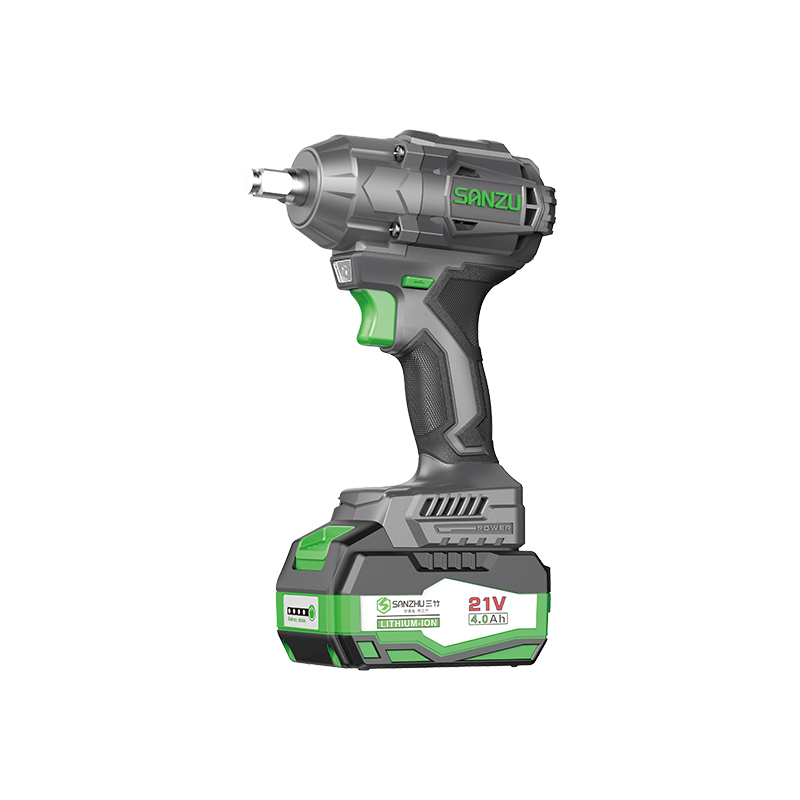
In the heavy equipment maintenance and automotive repair industries, selecting between a 1/2-inch and a 3/4-inch Cordless Impact Wrench often determines the success of a task. While they may appear similar externally, the underlying logic of power transmission, metal fatigue limits, and the compatible Socket ecosystem differ fundamentally. Understanding these professional distinctions is critical for making a precise tool investment in 2026.
Anvil size is more than just a physical connection; it directly correlates to the efficiency of Energy Transfer from the striking mechanism to the fastener.
The 1/2-inch interface is the standard configuration for most Mid-Torque and High-Torque wrenches. Its primary advantage is massive compatibility. For most Passenger Vehicles and light trucks, a 1/2-inch Anvil can handle Nut-Busting Torque exceeding 1,000 ft-lbs. However, as torque demands climb higher, the relatively thinner square drive can suffer from elastic deformation, absorbing a portion of the impact energy and reducing the effective power delivered to the bolt.
In contrast, the 3/4-inch interface offers a larger cross-sectional area, resulting in superior torsional rigidity under extreme loads. When servicing Heavy Machinery, the larger Anvil minimizes energy loss during the strike. Furthermore, compatible 3/4-inch Impact Sockets possess greater Mass. This extra weight creates higher Inertia during rotation, which is often the deciding factor in breaking loose rusted, large-diameter bolts.
In practical engineering, the choice of interface is dictated by Bolt Grade and the operational environment.
For 90% of automotive tasks—such as Lug Nuts, control arm bolts, or subframe screws—the 1/2-inch drive is the workhorse. The tool body is typically more Compact, allowing access to wheel wells and tight engine bays. If you primarily handle fasteners ranging from M12 to M20, the 1/2-inch system provides the best power-to-portability ratio.
When the work shifts to commercial trucks, cranes, or agricultural tractors, the boundary becomes clear. These machines utilize bolts of M24 grade and above, where Fastener Preload is exceptionally high. In these scenarios, a 1/2-inch Anvil is prone to Shear Off due to high-frequency metal fatigue. The 3/4-inch wrench is engineered for this "all-day, heavy-strike" duty cycle, ensuring the tool does not become a point of failure when removing heavy hydraulic brackets or axle nuts.
From a material science perspective, the rise of ultra-high-power cordless tools has pushed 1/2-inch drives to the limit of their Yield Strength.
Limitations of 1/2-inch: Even top-tier High-Torque 1/2-inch wrenches will show Anvil wear significantly faster than 3/4-inch versions when frequently subjected to 1,400 ft-lbs of impact.
Redundancy of 3/4-inch: The 3/4-inch interface provides a higher safety margin for extreme torque. It not only transfers Impact Force more effectively but also extends the lifespan of internal components by distributing stress over a larger surface area.
| Dimension | 1/2-Inch Drive | 3/4-Inch Drive |
| Primary Fastener Size | M14 - M22 | M24 - M33+ |
| Space Constraints | Tight spaces, needs Compact body | Open areas, needs Raw Power |
| Accessory Inventory | Standard 1/2" Impact Sockets | Industrial/Heavy Truck Sockets |
| Work Intensity | Intermittent use, versatile | Continuous heavy load, Durability |
Many users attempt to use a 1/2-inch wrench with an Impact Adapter to fit 3/4-inch sockets. From a professional standpoint, this is highly inefficient. Every junction creates Torque Loss, and the adapter itself often becomes the weakest link, frequently shattering under high-intensity impact. If your workflow regularly requires sockets larger than 30mm, investing in a dedicated 3/4-inch Cordless Impact Wrench is the most cost-effective path to reducing long-term operational downtime.
Is your team struggling with seized bolts on heavy-duty equipment? We can provide a 2026 performance comparison of the latest high-wattage 3/4-inch cordless platforms.
Contact Info
+86-13801463308
+86-13862872268
Nantong,Jiangsu,China

 English
 русский
 Español