2026-01-12
In the professional world of Cordless Impact Wrench technology, categorizing tools by size alone is a common misconception. The real distinctions lie in the Hammer and Anvil design, internal counterweights, and the specific Torque delivery curves. Understanding the precise boundary between these three tiers is essential for both automotive DIY enthusiasts and heavy-duty mechanical maintenance professionals to optimize efficiency and prevent fastener failure.
The Compact category is typically defined by a 3/8-inch or 1/4-inch Anvil. Its primary engineering goal is achieving the shortest possible Head Length to navigate cramped engine bays and interior components.
A Compact Impact Wrench generally delivers a Max Torque ranging from 100 ft-lbs to 250 ft-lbs. These tools utilize a lightweight internal striking mechanism designed for high IPM (Impacts Per Minute). This allows for rapid fastening without the bulk of a heavy-duty motor.
For standard Automotive DIY, the Compact wrench is the go-to tool for under-the-hood tasks. It is ideal for removing Intake Manifold bolts, Valve Cover screws, or Fender fasteners. Its low weight significantly reduces user fatigue during repetitive overhead tasks.
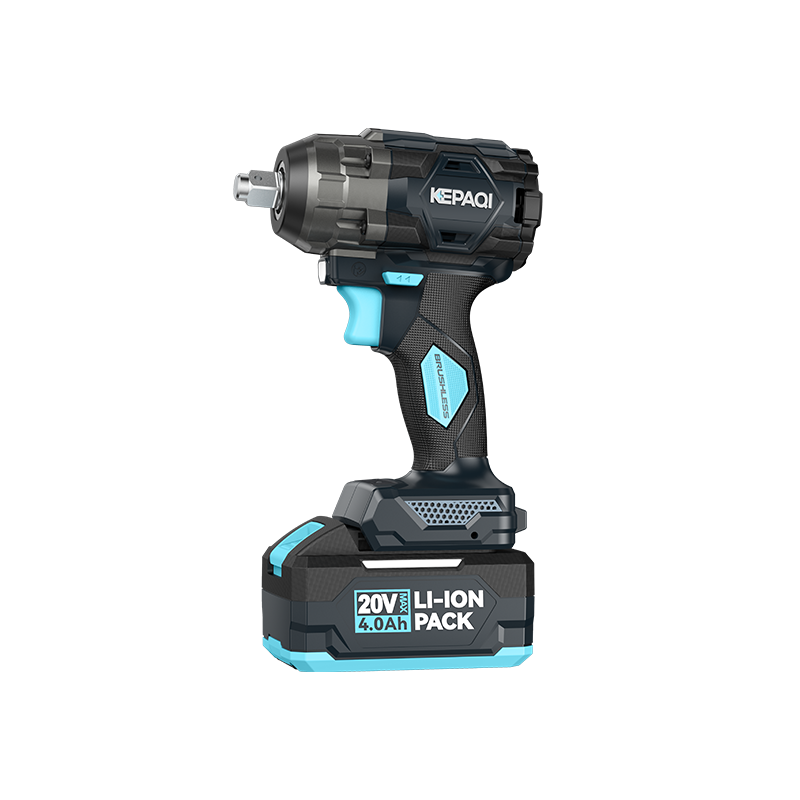
The Mid-Torque Impact Wrench currently dominates industry search volume and professional interest because it represents the "sweet spot" of power-to-weight ratio in modern cordless platforms.
The Nut-Busting Torque of a Mid-Torque unit typically sits between 450 ft-lbs and 650 ft-lbs. The engineering shift here involves a larger Brushless Motor rotor and a significantly denser striking assembly compared to the Compact models.
For the majority of passenger vehicle and SUV maintenance, the Mid-Torque serves as the functional ceiling. It provides sufficient force to break loose Lug Nuts seized by road salt and high-interference Suspension Bolts. If a fastener does not budge after five seconds of sustained Mid-Torque impact, it usually indicates the need for thermal induction rather than more raw power.
When transitioning into Heavy Machinery Maintenance, agricultural equipment repair, or commercial fleet service, the High-Torque model becomes an indispensable production tool.
These units often boast a Breakaway Torque exceeding 1,000 ft-lbs. The internal architecture features a massive Impact Chamber where every strike carries immense kinetic energy. To survive this violence, the tool body often includes advanced Battery Vibration Isolation systems to protect the Battery Pack terminals from fracturing under extreme vibration.
The boundary for Heavy Machinery is defined by fastener size—usually M24 and above—and the degree of Rust. In applications like Axle Nut removal on heavy trucks or structural industrial bolting, a Mid-Torque tool would suffer from thermal throttling or electronic controller failure. Only the High-Torque variant possesses the rotational inertia required to shear through thick oxidation layers.
[Image comparing various sizes of impact sockets from 3/8 to 3/4 inch drive]
| Feature | Compact | Mid-Torque | High-Torque |
| Torque Range | 100 - 250 ft-lbs | 450 - 650 ft-lbs | 1000+ ft-lbs |
| Drive Size | 3/8" | 1/2" | 1/2" or 3/4" |
| Automotive DIY | Excellent (Interior/Engine) | Best (Wheels/Suspension) | Low (Too heavy/Risk of snap) |
| Heavy Machinery | Accessory use only | Secondary tool | Primary Workhorse |
| Weight & Ergonomics | Ultra-Light | Balanced | Substantial |
Contact Info
+86-13801463308
+86-13862872268
Nantong,Jiangsu,China

 English
 русский
 Español