Best Impact Driver Size for Home Use and Selection Guide
Impact Drivers and Cordless Impact Wrenches: The "Twin Stars" of Home Tools
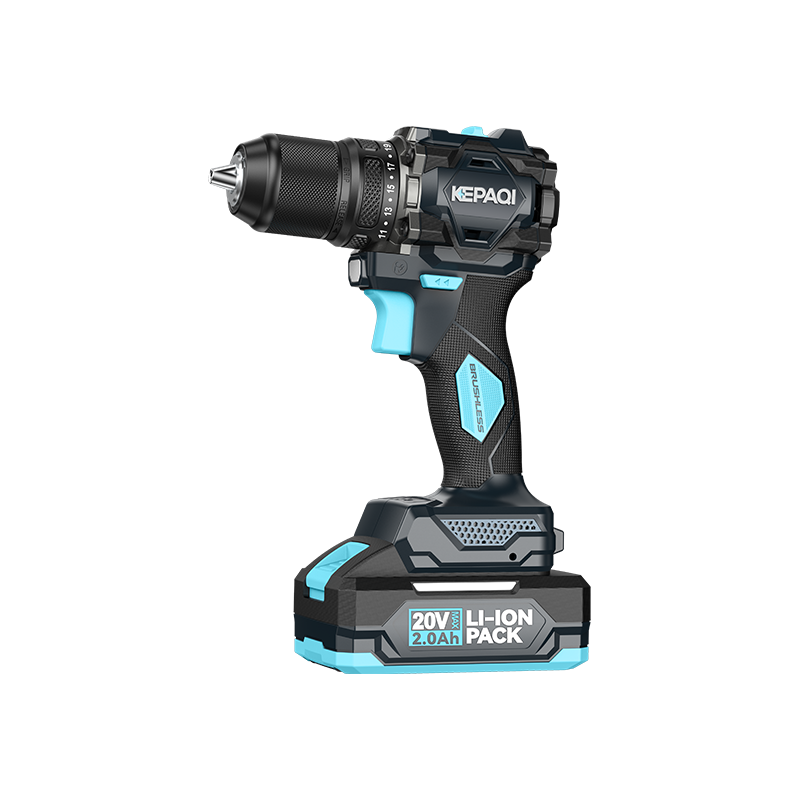
In home maintenance and DIY projects, the Impact Driver is often considered a "must-have." Its most notable feature is the 1/4-inch hex quick-change chuck. This design is specifically engineered to work with various hex-shank bits for driving screws efficiently and quickly.
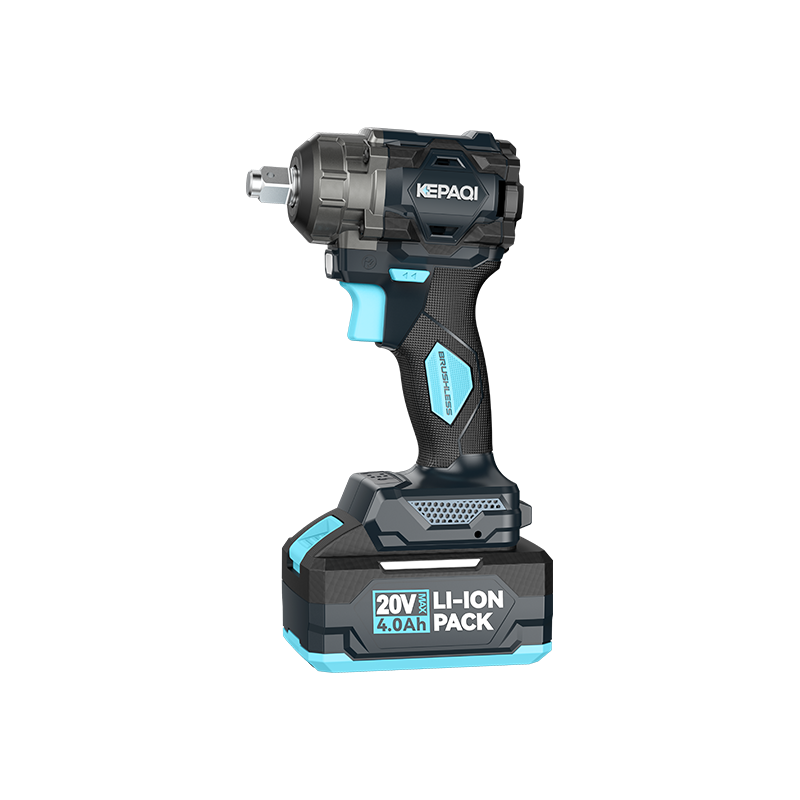
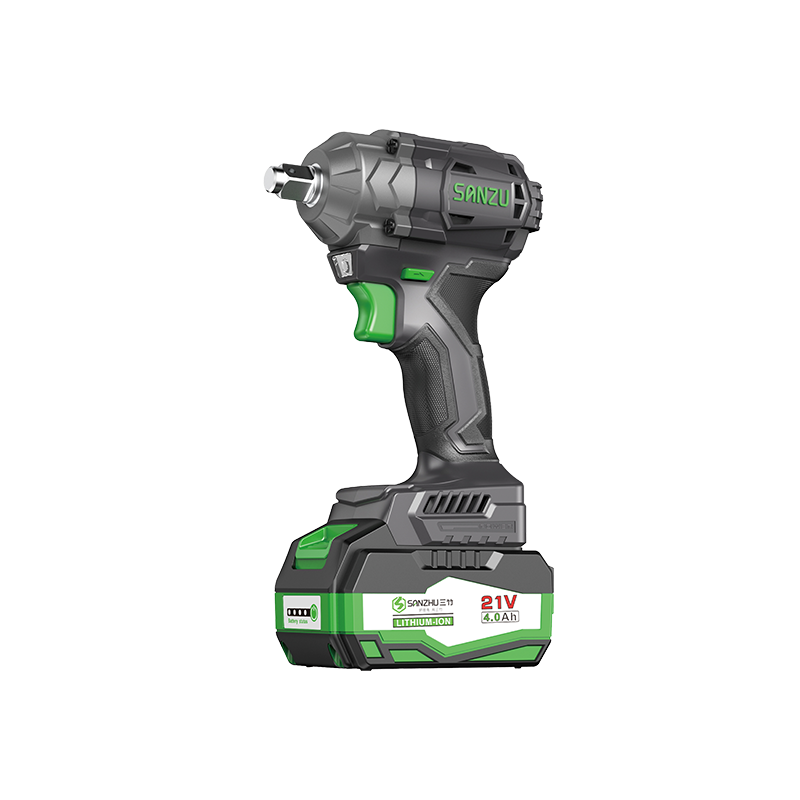
Often accompanying it is the Cordless Impact Wrench. While the two appear highly similar in appearance and both utilize an internal hammering mechanism to generate instantaneous torque, a Cordless Impact Wrench is typically equipped with a 3/8-inch or 1/2-inch square drive. For the average homeowner, the key distinction is that the impact driver is a "screw expert," while the Cordless Impact Wrench is a "bolt specialist." In heavy-duty home maintenance—such as changing car tires or fastening large connectors on an outdoor deck—the explosive power provided by a Cordless Impact Wrench is irreplaceable by a standard driver.
Why Size Matters in Home Applications
When selecting a tool, "size" refers not only to the chuck specifications but also to the physical volume and weight of the tool.
Physical Size and Compactness: Home scenarios often involve tight spaces, such as installing inside cabinets or repairing under sinks. A compact 1/4-inch driver can easily access these areas.
Significance of Chuck Specifications:
- 1/4-inch (Hex): The standard for home impact drivers.
- 3/8-inch (Square): A medium-power Cordless Impact Wrench that balances size and torque.
- 1/2-inch (Square): A heavy-duty Cordless Impact Wrench, primarily used for automotive maintenance.
Balance of Torque and Control: Larger drive sizes usually come with massive torque. Using a 1/2-inch Cordless Impact Wrench to assemble delicate furniture can easily lead to snapped screws or cracked wood.
The Golden Size for Home Use: 1/4-Inch Impact Driver Explained
For 90% of household tasks, the 1/4-inch hex impact driver is the undisputed champion.
Core Advantages
- Versatility: Whether assembling flat-pack furniture, hanging shelves, repairing fences, or installing wood flooring, the library of 1/4-inch bits is extremely vast.
- Secure Bit Retention: This size of quick-change chuck locks the bit in place, preventing it from falling out when driving long screws.
- Power Characteristics: Home-grade models typically provide about 1500 to 2000 in-lbs of torque, which is sufficient for most soft and hardwoods.
Collaboration with Heavy-Duty Tools
In some cases, a 1/4-inch driver may reach its limit. For example, when trying to remove rusted lawnmower blades or heavy-duty warehouse rack bolts, the square drive of a Cordless Impact Wrench can connect directly to sockets, providing a more stable connection and stronger "breakaway" force.
Technical Parameter Comparison Table
| Feature |
1/4" Impact Driver |
Cordless Impact Wrench (3/8" or 1/2") |
| Chuck Type |
1/4" Hex |
3/8" or 1/2" Square Drive |
| Torque Unit |
Inch-pounds (in-lbs) |
Foot-pounds (ft-lbs) |
| Standard Torque Range |
1,400 - 2,200 in-lbs |
200 - 1,000+ ft-lbs |
| Max Speed (RPM) |
Higher (Typically 3,000+) |
Lower (Typically around 2,000) |
| Primary Use |
Driving wood screws, self-tapping screws |
Loosening/tightening large bolts, lug nuts |
| Weight |
Lightweight (1.0 - 1.5 kg) |
Heavier (2.0 - 4.5 kg) |
When Do You Need to Upgrade to a Cordless Impact Wrench?
Although a 1/4-inch impact driver excels at handling most wood and light metal fasteners, its limitations become apparent in specific home tasks.
Automotive Repair and DIY Maintenance
This is the most common reason to upgrade to a Cordless Impact Wrench. Car or SUV lug nuts typically require 80 to 100 ft-lbs of torque to tighten, but due to heat, rust, or previous over-tightening, they may require over 300 ft-lbs of reverse force to remove. A standard impact driver will often just make a "clicking" sound without moving the nut. At this point, a 1/2-inch Cordless Impact Wrench is the only choice for safety and efficiency.
Heavy Timber Construction and Outdoor Projects
If you are planning to build a large deck or pergola in the backyard, you will need to drive numerous long lag bolts. When bolt diameters exceed 3/8-inch and lengths reach 6 inches or more, the internal mechanism of an impact driver may overheat. A Cordless Impact Wrench, with its larger anvil and higher torque reserves, can easily drive these heavy bolts into hardwood without overstraining the motor.
The Need for "Breakaway" Power
In home repairs, you occasionally encounter completely seized bolts, such as rusted water pipe flanges or mower blade bolts. In these high-demand scenarios, the "Nut-Busting Torque" provided by a Cordless Impact Wrench can instantly shatter rust layers, avoiding muscle strain or rounded bolt heads caused by manual wrenches.
Power Output Comparison: in-lbs vs. ft-lbs
To clearly understand the power gap, it is important to note the conversion: 1 ft-lb = 12 in-lbs.
| Application Scenario |
Recommended Tool |
Typical Spec |
Required Torque Ref |
| Assembling Furniture / Cabinets |
Impact Driver |
1/4" Hex |
200 - 500 in-lbs |
| Installing Fences / Frames |
Impact Driver |
1/4" Hex |
1,200 - 1,800 in-lbs |
| Light Machinery Maintenance |
Cordless Impact Wrench |
3/8" Square |
100 - 200 ft-lbs |
| Changing Car Tires |
Cordless Impact Wrench |
1/2" Square |
300 - 450 ft-lbs |
| Truck Suspension Repair |
Cordless Impact Wrench |
1/2" Square |
600 - 1,000+ ft-lbs |
Core Selection Criteria for Home Impact Tools
When deciding between an impact driver and a Cordless Impact Wrench, consider these technical dimensions:
- Voltage Platform (12V vs. 18V/20V): 12V Systems are extremely lightweight and perfect for 80% of daily home maintenance. 18V/20V Systems offer a broader ecosystem. If you plan to buy a high-performance Cordless Impact Wrench later, start with an 18V platform.
- Motor Technology: Always choose Brushless. Brushless motors are more efficient, generate less heat, and provide 30%-50% more battery runtime.
- Speed and Torque Modes: Modern tools often feature 3 or more settings. Using a low speed for delicate screws and full power for a Cordless Impact Wrench on tires provides the necessary flexibility.
Practical Tips and Safety Guidelines for Home Projects
Accessory Matching: More Than Just Size
The power of impact tools comes from an internal hammering mechanism, which places high demands on accessories.
- Impact Rated Bits: Impact drivers must use bits labeled Impact Rated. Standard bits can shatter under high-frequency impacts.
- Dedicated Impact Sockets: When using a Cordless Impact Wrench, never use chrome-vanadium manual sockets. Impact sockets are made of Chrome-Molybdenum (Cr-Mo) steel, which is thicker and more ductile.
Force Control During Operation
- Vertical Pressure: When driving long screws, lean your body weight slightly forward to ensure the tool stays aligned with the screw axis.
- Intermittent Impacting: When using a Cordless Impact Wrench on a stubborn bolt, if there is no movement after 5 seconds, stop and apply a penetrating lubricant.
- Prevent Over-tightening: For delicate wood structures, drive the screw in most of the way and finish with a manual wrench or use a low-speed setting.
FAQ and Knowledge Base
Q1: Can I use a 1/4" impact driver to change car tires?
Answer: Not recommended. While adapters exist, the driver's torque is usually insufficient. A Cordless Impact Wrench is the correct tool for this job.
Q2: What is the difference between a Friction Ring and a Pin Detent?
Answer: This refers to how sockets are held on a Cordless Impact Wrench. A Friction Ring allows for quick, one-handed socket changes, while a Pin Detent uses a spring-loaded pin to lock the socket very securely.
Q3: Why does my tool make a "clacking" sound?
Answer: This is the impact mechanism engaging. It means the tool is generating bursts of power to overcome resistance, which is normal operation.
Q4: Can an impact driver replace a drill for making holes?
Answer: Yes, but with limits. Using hex-shank drill bits works for wood, but the impacting mechanism may cause the hole to be less precise.
Advanced Science: Relationship Between Torque, IPM, and RPM
| Parameter |
Definition |
Impact on Home Use |
| RPM |
Motor speed |
Determines how fast you can drive a screw under low resistance. |
| IPM |
Hammering frequency |
Core Metric. Higher IPM results in smoother power delivery in hardwoods. |
| Torque |
Turning force |
The primary indicator for a Cordless Impact Wrench for breaking loose large bolts. |
Internal Mechanism Analysis
Impact tools generate power via a heavy internal striker. When resistance increases, a spring releases the striker to hit the anvil, creating high-intensity bursts of torque. This is why they have less "kickback" on the user's wrist compared to traditional drills. Power output follows the logic: Power is proportional to Torque multiplied by RPM.
Tool Maintenance and Long-term Storage
- Clean Air Vents: Regularly blow out motor vents with compressed air to prevent dust buildup.
- Monitor Battery Status: Avoid over-discharging. If the tool slows down significantly, charge the battery immediately.
- Inspect the Drive: Periodically check the square drive of your Cordless Impact Wrench for cracks. Apply a small amount of grease if the anvil becomes dry.

 English
 русский
 Español