12V or 18V/20V: Start With the Hole and the Fastener
A 12V cordless drill is the better choice for cabinet assembly, overhead driving, small pilot holes, and service work where weight matters. An 18V or 20V drill is the better choice when the job involves repeated 8 mm to 25 mm holes, decking, framing, large hole saws, spade bits, or mixed materials that demand more torque and runtime. The voltage label tells you the battery class, but the real decision comes from hole size, fastener size, material, duty cycle, and whether you want one battery platform for several tools.
For a workshop that builds cabinets, installs shelving, and drives hundreds of small screws, a compact 12V-class drill can finish the work with less wrist strain. For a crew that cuts deck boards, drills through studs, and hangs doors, an 18V/20V platform usually pays back the extra weight with faster drilling and fewer battery changes. A 20V Max label does not automatically mean more power than an 18V tool; check nominal voltage, rated torque, chuck size, and battery compatibility before comparing numbers on the box.
Voltage classes are a starting point; bit size, material, and battery platform decide the final result.
| Voltage class |
Typical work |
What to check before buying |
| 12V |
Cabinet hardware, overhead driving, small pilot holes, light maintenance |
Chuck size, clutch range, torque, battery capacity, and balance in one hand |
| 18V |
Decking, framing, larger wood holes, metal drilling, repeated fastening |
Rated torque, two-speed gearbox, chuck grip, brushless motor, and battery platform |
| 20V Max |
Similar working class as 18V nominal tools, often a marketing label |
Nominal voltage, actual pack compatibility, charger type, and whether the pack fits other tools |
| 16V / 21V platforms |
Compact and high-capacity options between common classes |
Compare delivered torque, runtime, pack fit, and spare battery availability rather than the label alone |
What Voltage Really Changes Inside a Cordless Drill
Voltage is not a single performance number. It reflects the battery pack’s electrical class, and the drill’s motor, gearbox, chuck, and electronic control determine how that energy becomes torque at the bit. A well-built 12V drill with a efficient brushless motor can outperform a low-grade 18V drill in small holes, while a poorly matched 20V drill can stall in a large hole saw if the gearbox and battery pack cannot deliver current under load.
Higher voltage usually gives the designer more room to produce torque and runtime, but it also adds battery cells, weight, and size. Lower voltage usually gives a shorter, lighter handle and better access in tight spaces. The practical result is a trade-off: 12V tools feel quicker in overhead work and fine assembly, while 18V/20V tools hold speed better in large holes and continuous drilling.
- Torque: Higher voltage platforms can support higher torque, but the final number depends on the motor and gearbox. Check rated torque in N·m, not only the voltage label.
- Speed under load: An 18V/20V drill usually maintains rpm better when a hole saw or spade bit starts cutting. A 12V drill may slow earlier in the same hole.
- Runtime: Battery capacity in Ah matters as much as voltage. A 12V 4.0Ah pack can run longer than a 12V 1.5Ah pack, while an 18V/20V 2.0Ah pack may still deliver more power in heavy drilling.
- Weight and balance: A 12V drill with a small pack is easier to hold at shoulder height. An 18V/20V drill with a large pack balances better on a bench but becomes tiring overhead.
- Platform cost: The battery and charger system often costs more over time than one drill. Choose a platform that covers the tools you actually use.
Relative Demand on the Drill by Task
10 mm metal drilling
Medium
When a 12V Drill Is the Right Tool
A 12V drill earns its place when the work is precise, repetitive, and often above chest height. Cabinet installers drive hinge screws, shelf pins, and drawer slides in tight positions. Electricians remove and refit cover plates, drill small cable routes, and drive machine screws. Maintenance technicians carry a compact drill in one hand while holding a part with the other. In these tasks, a light drill with a short head length saves more time than a heavy drill with extra torque that never gets used.
Use 12V for pilot holes around 3 mm to 6 mm in softwood, hardwood, and thin metal, for driver bits up to common furniture screw sizes, and for light plastic or drywall anchors. A compact brushless drill driver with a two-speed gearbox and a clutch gives enough control for delicate work without stripping screw heads. If the drill will also be used for occasional 10 mm holes in softwood, check the torque and battery capacity rather than assuming every 12V tool can handle it.
One practical limit matters: a 12V drill is not the right tool for continuous hole saw work, large spade bits, or long masonry drilling. The motor and battery can do a short hole, but heat builds quickly and runtime drops. For a service kit, that trade-off is acceptable. For a production bench, it becomes a bottleneck.
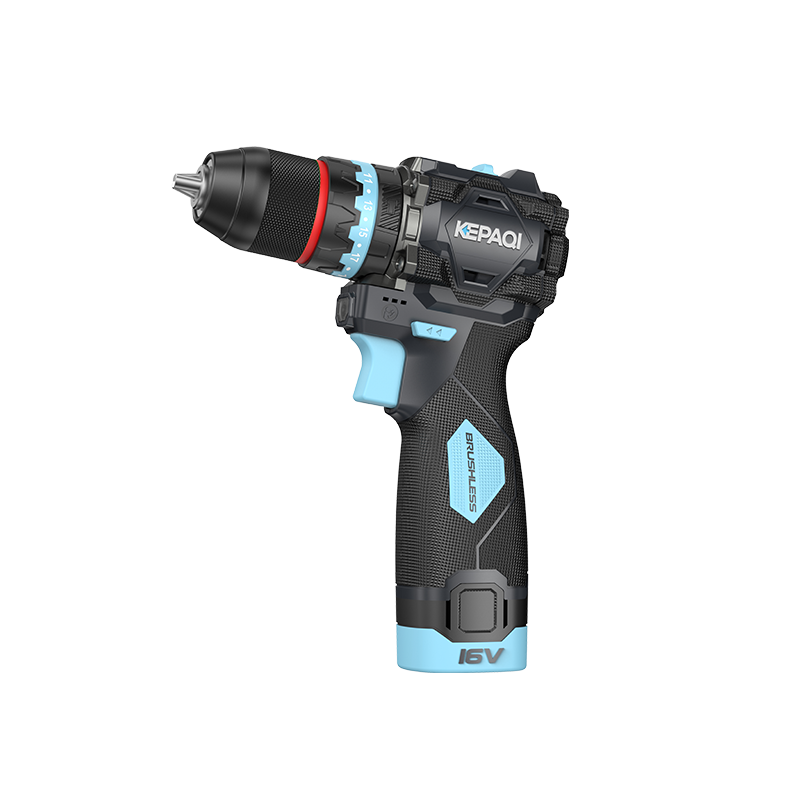
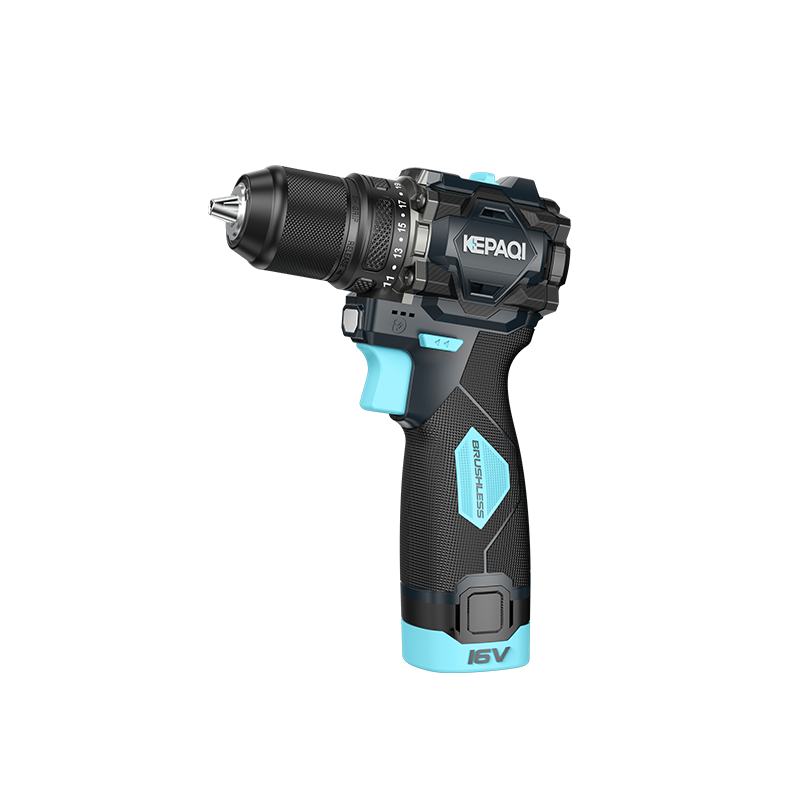 KPQ16V Compact Dual-Gear Brushless DrillCompact brushless drill with dual-gear adjustment and 55 N.m torque, well suited to cabinet work, small assemblies, and overhead driving where full-size bodies feel bulky.View Product →
A compact platform such as the KPQ Tools 16V dual-gear brushless drill sits close to the 12V class in handle size while offering more headroom for light drilling. It suits cabinet work, small assemblies, and overhead driving where a full-size 18V/20V body feels bulky. The key is to compare the actual torque, clutch settings, and battery pack against the fasteners and hole sizes in your own work, not just the class name.
When 18V or 20V Is the Better Choice
An 18V or 20V drill is the safer choice when the bit diameter grows, when the material is dense, or when the work repeats all day. Deck building, framing, fencing, door hanging, and subfloor work involve long screws, wide spade bits, and hole saws that demand torque. Metal fabrication with step bits, hole saws, and twist drills also benefits from a larger motor and a battery pack that can deliver current under load. The drill does not need to be the biggest model, but it should have enough torque and a gearbox that holds speed when the bit bites.
Choose 18V/20V when you plan to use one battery platform for several tools, such as a circular saw, reciprocating saw, angle grinder, or impact wrench. The drill becomes one part of a system, and the spare packs can move between tools. For a crew, that shared platform reduces charger clutter and spare battery variety. For a single home user, the same logic applies if the drill will be joined by a saw or outdoor tool later.
Do not use a standard drill as a substitute for a rotary hammer in concrete. An 18V/20V drill can turn a small masonry bit in brick with the clutch set correctly, but repeated concrete drilling belongs to a rotary hammer with the right hammer mechanism. If concrete is part of the work, select the drill for wood and metal and choose a separate rotary hammer for masonry.
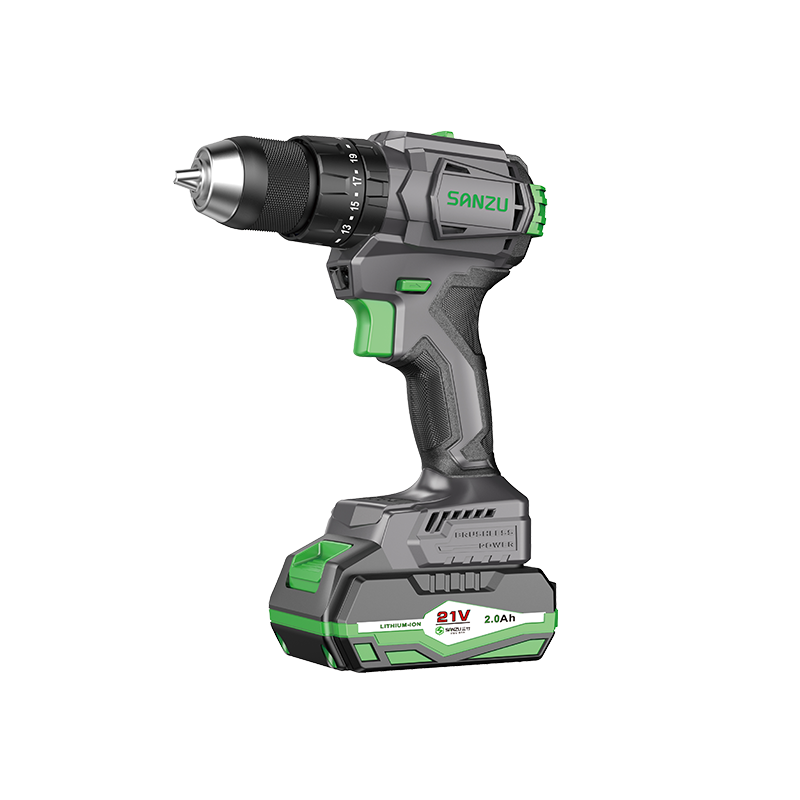
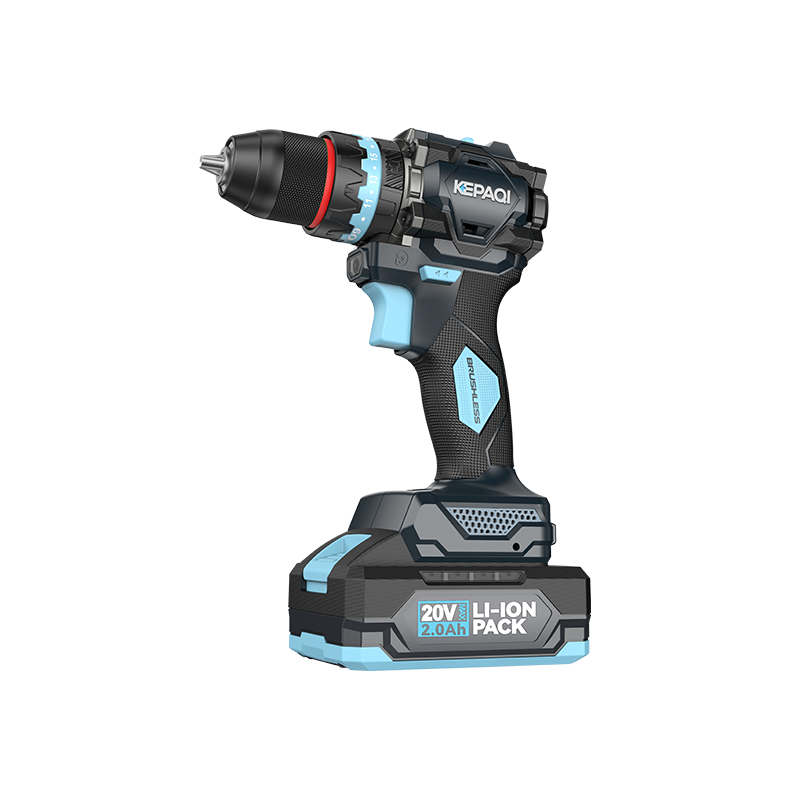 KPQ20V Lightweight Dual-Speed Brushless DrillA 20V brushless drill with 13 mm chuck and dual-speed control, suited to decking, framing, and general drilling without a heavy body.View Product →
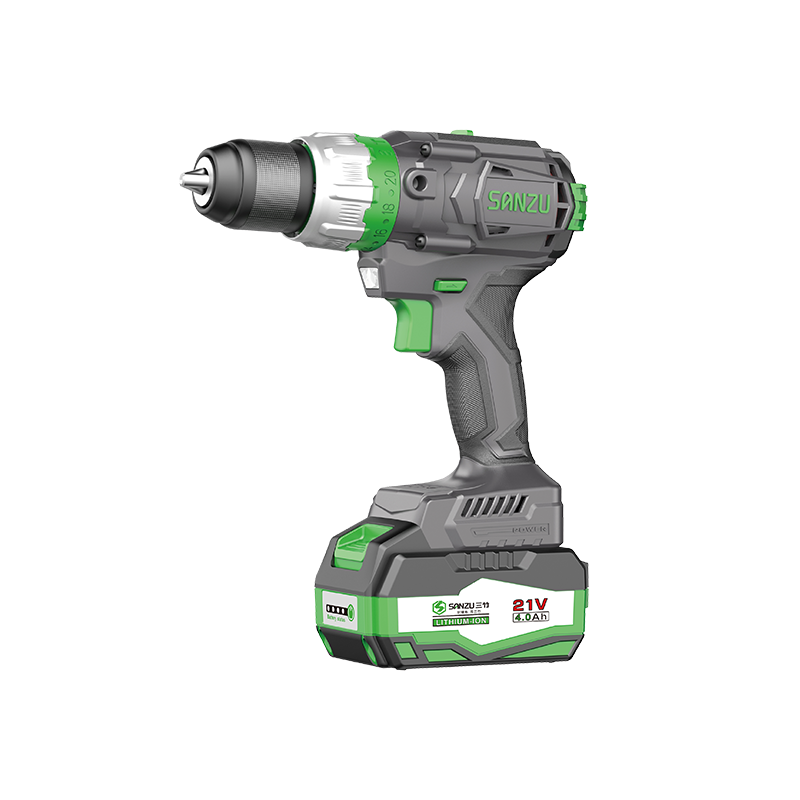
The KPQ Tools 20V lightweight variable dual-speed brushless drill is aimed at buyers who want a full-size handle and a 13 mm chuck without moving into a heavy body. It fits decking, framing, and general drilling where the bit is larger than a pilot hole but the work does not require a dedicated heavy-duty model. For continuous large-hole work, step up to a heavy-duty brushless cordless drill with a stronger gearbox and a battery pack rated for higher current.
18V vs 20V: Label, Nominal Voltage, and Battery Compatibility
Many 20V Max drills use an 18V nominal battery pack. The 20V figure refers to the peak voltage of a fully charged pack, while the nominal voltage is closer to 18V. This does not make the tool dishonest, but it does mean the label alone cannot be compared with another drill. A 20V Max drill with a 2.0Ah pack may have less runtime than an 18V drill with a 4.0Ah pack, and a compact 18V drill may produce less torque than a high-torque 20V model. Compare rated torque, battery capacity, charger time, and the tool’s intended duty cycle.
Battery compatibility is the harder constraint. A pack that fits one drill may not fit another tool in the same nominal class, and chargers are not universal across platforms. Before buying, confirm three points: the pack slides into the drill you are buying, the charger accepts that pack, and the same pack is available as a spare. If the drill will be used with a crew, standardize on one platform where possible. Mixed platforms create charger clutter and spare-pack confusion.
- Nominal voltage: The working voltage class of the pack, often 18V where the marketing label says 20V Max.
- Peak voltage: The higher number on a fresh charge; it does not replace rated torque or runtime data.
- Pack fit: Slide-on and stem-style packs are not interchangeable even when the voltage label looks similar.
- Charger match: A fast charger can reduce downtime, but only if it supports the pack chemistry and capacity.
- Spare availability: A platform with easily sourced 2.0Ah and 4.0Ah packs is more useful than one with a single bundled pack.
Match the Drill to the Material and Bit
The fastest way to choose voltage is to list the holes and fasteners you expect in a normal week. If most holes are under 6 mm in wood or thin metal, 12V is often enough. If you regularly drill 8 mm to 25 mm in wood, use hole saws, or drive long structural screws, 18V/20V is the more efficient choice. The table below is a practical starting point, not a rule that overrides the drill’s rated torque and the operator’s technique.
Use this matrix to choose by task; a 12V drill can finish light jobs, but 18V/20V platforms handle repeated larger holes with less strain.
| Task |
Typical bit or fastener |
Recommended class |
Reason |
| Cabinet hinges and drawer slides |
3 mm to 5 mm pilot holes, short screws |
12V or compact 16V |
Low torque demand, high repetition, tight access |
| Electrical cover plates and fixtures |
Machine screws, small cable holes |
12V |
Light weight and control matter more than power |
| Deck boards and fencing |
8 mm to 12 mm pilot holes, long screws |
18V/20V |
Higher torque and better speed under load |
| Framing and subfloor |
Spade bits, auger bits, structural screws |
18V/20V heavy-duty |
Large bits need torque and runtime |
| Metal brackets and rails |
Step bits, twist drills, hole saws |
18V/20V |
Metal cutting creates heat and demands consistent speed |
| Brick or block |
Small masonry bit |
Rotary hammer preferred |
A drill can turn a small bit, but repeated masonry work needs hammer action |
| Overhead service work |
Small screws and anchors |
12V compact |
One-hand balance reduces fatigue |
Torque, Chuck Size, Clutch, and Speed: The Specs That Decide Performance
Rated torque
Torque is the twisting force at the chuck. A 12V drill may be rated around the low 20s to mid 30s in N·m, while 18V/20V drills often reach higher numbers depending on the model. Do not compare only the peak torque printed on a badge. Check whether the figure is measured with a charged pack and whether the drill has a two-speed gearbox. A high torque number with a slow gearbox can feel strong in screws but slow in drilling, while a fast gearbox with low torque may stall in large holes.
Chuck size and bit grip
A 10 mm chuck accepts common drill bits and hex-shank accessories. A 13 mm chuck gives more room for larger bits and hole saw arbors. For 12V-class drills, a 10 mm chuck is common and suits light work. For 18V/20V drills used in framing or metalwork, a 13 mm chuck is more flexible. Check that the chuck grips firmly and that the drill accepts the shank style you use most, especially if you switch between drill bits and driver bits.
Clutch settings
The clutch stops the drill at a set torque so screws do not strip or sink too deep. More settings give finer control in cabinet work and soft materials. A 12V drill with a wide clutch range is often more useful for assembly than a powerful 18V drill with a narrow range. For heavy drilling, the clutch should be set to drill mode so it does not slip under load.
Two-speed gearbox
Low gear gives more torque for screws and large bits. High gear gives faster drilling in small holes. A two-speed gearbox makes a drill more versatile than a single-speed model. If you choose 18V/20V for mixed work, two speeds are worth having. If you choose 12V for assembly, a two-speed gearbox still helps when you move from driving to small drilling.
Brushless motor and electronic control
A brushless motor reduces wear and can improve efficiency, especially under repeated load. Electronic control can add soft start, overload protection, and better speed stability. These features matter more in 18V/20V tools used for long drilling cycles, but they also help compact drills run cooler in assembly work. The practical benefit is not a single headline number; it is fewer stalls, longer runtime, and more consistent speed through the hole.
Battery Platform: The Decision That Outlasts the Drill
Voltage gets attention, but the battery platform is the long-term purchase. A 12V drill with two 2.0Ah packs may be enough for cabinet installation, while an 18V/20V drill with one 2.0Ah pack may run out during a deck project. Capacity in Ah affects runtime, and the pack’s current delivery affects how well the drill holds speed under load. A larger pack does not make a weak drill powerful, but it can reduce voltage sag and keep a good drill working consistently.
Plan the platform around the tools you will add. If you expect to use a circular saw, reciprocating saw, or angle grinder, an 18V/20V platform with 4.0Ah and 6.0Ah packs makes more sense than several small 12V packs. If the work is mostly installation and service, a compact 12V or 16V platform with 2.0Ah and 4.0Ah packs keeps the kit light. For a mixed workshop, choose one main platform for heavy tools and one compact platform for overhead work, rather than trying to make one drill do everything.
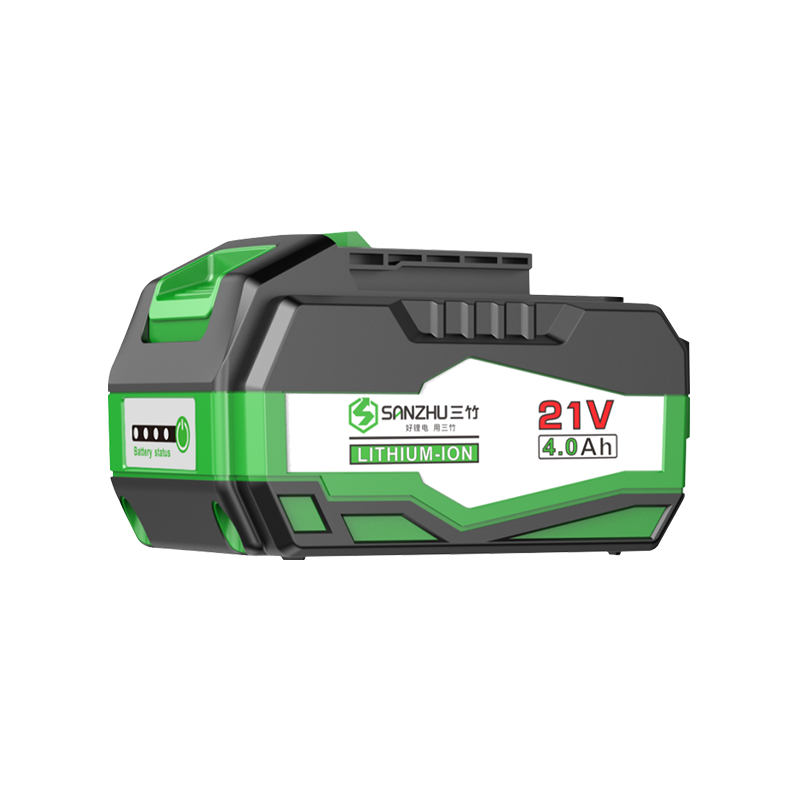
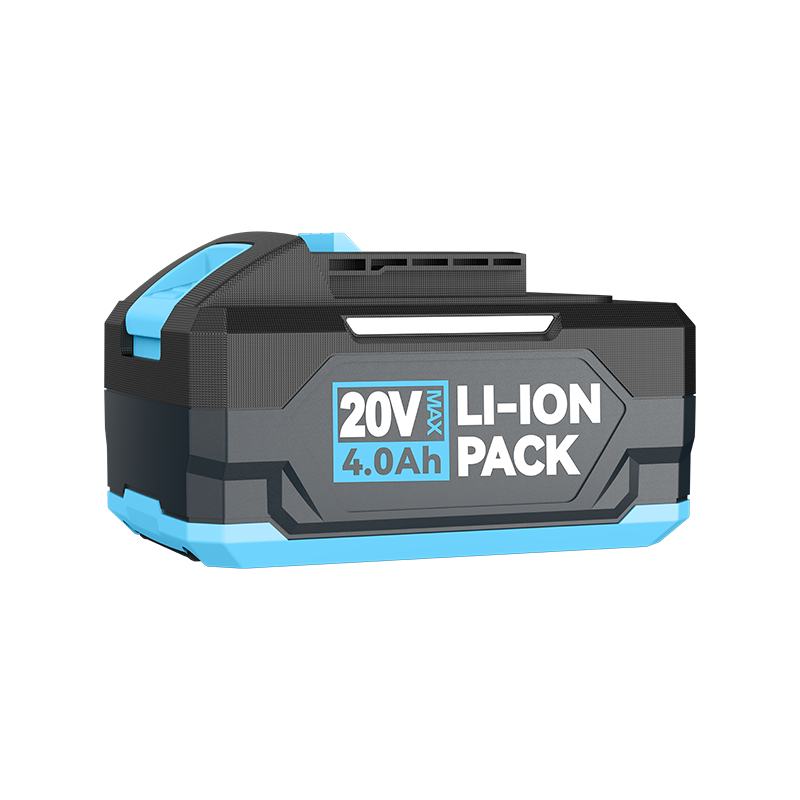 GREAT 4.0Ah Cordless Tool BatteryA 4.0Ah battery pack for cordless tools, offering a practical runtime middle ground for drilling and driving between compact and high-capacity packs.View Product →
Spare batteries should be chosen by task, not by the largest number available. A 4.0Ah pack is a practical middle ground for drilling and driving because it adds runtime without making the drill excessively heavy. For overhead work, a 2.0Ah pack may be the better handling choice. For heavy hole saw work, a higher-capacity pack can help, but the drill’s motor and gearbox still set the limit. Keep at least one spare charged pack per crew and label packs by capacity so users know which one is fitted.
2.0Ah pack
Best for compact drills, overhead work, and short assembly tasks. Lower weight, shorter runtime.
4.0Ah pack
A practical all-round capacity for drilling, driving, and mixed site work. Good balance of weight and runtime.
6.0Ah and above
Useful for heavy drilling and long shifts, but adds weight. Best when the drill is supported on a bench or held low.
Weight, Balance, and Overhead Work
A 12V drill is not simply a weaker 18V drill. It is often shorter, narrower, and lighter, which changes how the tool feels in a cabinet, above a ceiling, or under a sink. The best compact drill balances just ahead of the hand so the bit can be aimed with two fingers. If the battery pack makes the handle top-heavy, the drill will feel heavier than its scale weight suggests. Try the drill with the pack you plan to use, not with a display pack that may be different.
For overhead work, a difference of a few hundred grams becomes significant after fifty screws. A compact 12V or 16V drill with a 2.0Ah pack can be held in one hand while the other hand positions the workpiece. An 18V/20V drill with a large pack may be better on a bench or at waist height, where its weight helps stability. The right choice depends on the working position as much as the hole size.
Balance also affects control in delicate work. A lighter drill with a sensitive trigger and a fine clutch is easier to feather when driving small screws into soft material. A larger drill with more torque can twist a small screw head before the clutch reacts if the trigger is less progressive. For cabinet and furniture work, control is a performance feature, not a comfort extra.
Common Buying Mistakes
- Buying by voltage label alone: A 20V Max badge can hide an 18V nominal pack, a small battery, or a low-torque gearbox. Check rated torque, capacity, and chuck size.
- Choosing 12V for large hole saws: A compact drill can turn a hole saw in softwood once, but repeated cuts overheat the motor and drain the pack. Use 18V/20V for repeated large holes.
- Choosing 18V/20V for every small screw: A large drill can feel tiring overhead and may be too powerful for delicate assembly unless the clutch and trigger are well controlled.
- Ignoring battery platform: One drill with a unique pack can become expensive when you add a second tool. Standardize where practical.
- Using a drill for concrete: A standard drill is not a rotary hammer. Repeated concrete drilling needs hammer action and the right bit.
- Forgetting the spare pack: Runtime complaints often come from one small pack, not from the drill itself. Add a second pack before judging the tool.
- Comparing peak torque only: Speed under load, gearbox ratio, and battery current delivery matter in real holes.
FAQ: Voltage Questions Buyers Ask
Is 20V more powerful than 18V?
Not automatically. Many 20V Max tools use an 18V nominal battery pack, and the 20V figure refers to peak voltage. Power depends on the motor, gearbox, battery current delivery, and the bit in the chuck. Compare rated torque, speed under load, and runtime rather than the label alone.
Can a 12V drill drill into wood?
Yes, for small holes and light work. A 12V drill can handle pilot holes, small dowel holes, and light clearance holes in softwood and hardwood. It will slow down or stall in large spade bits, hole saws, or repeated deep holes. Use a sharp bit and let the drill do the work.
What voltage do I need for metal drilling?
For thin metal and small twist drills, a 12V drill may be enough with a sharp bit and cutting oil. For 8 mm and larger holes, step bits, or hole saws in steel, an 18V/20V drill with a two-speed gearbox and good speed control is more practical. Keep the speed low and use lubricant to control heat.
What voltage should I use for concrete?
A standard cordless drill is not the right tool for repeated concrete drilling. Use a rotary hammer with hammer action for concrete and masonry. An 18V/20V drill may turn a small masonry bit in brick, but it is not a substitute for a rotary hammer in concrete.
Is 12V enough for cabinet installation?
Often, yes. Cabinet installation involves small pilot holes, hinge screws, shelf pins, and drawer slides, usually in tight positions. A compact 12V drill with a good clutch and a light battery pack is easier to control and less tiring than a full-size 18V/20V drill.
Do I need a brushless motor?
A brushless motor can improve efficiency, reduce wear, and maintain speed under load. It is most useful in 18V/20V tools used for repeated drilling, but it also helps compact drills run cooler. A brushed drill can still work for occasional light use; the decision depends on duty cycle and expected life.
Can I use a 12V battery in an 18V drill?
No. Battery packs are not interchangeable across voltage classes unless the manufacturer designs a specific dual-voltage system. The pack mount, contact layout, charger, and electronics must match. Never force a pack onto a tool.
What voltage is best for one drill only?
If you need one drill for general home and site work, 18V/20V is the safer all-round choice because it covers larger holes and mixed materials. If most work is assembly, overhead driving, and small holes, a 12V compact drill is easier to use. Buy for the work you do most often, then add a second drill for the other tasks.
A Practical Selection Checklist
- List the three largest holes you drill in a normal week. If they are under 6 mm, start with 12V. If they are 8 mm or larger, start with 18V/20V.
- List the longest fasteners you drive. Long structural screws and repeated driving favor 18V/20V; short cabinet screws favor 12V.
- Check the working position. Overhead and tight access favor a compact 12V or 16V body; bench and framing work favor 18V/20V.
- Confirm the chuck size. A 10 mm chuck suits light bits; a 13 mm chuck gives more room for large bits and hole saw arbors.
- Compare rated torque and two-speed gearing, not only voltage. Look for speed under load and clutch range.
- Choose a battery platform that covers the next tool you plan to buy. Check pack fit, charger compatibility, and spare availability.
- Add a second battery pack before judging runtime. A 4.0Ah pack is a practical middle ground for mixed drilling and driving.
- Keep masonry work separate. Use a rotary hammer for concrete and a drill for wood, metal, and fasteners.

 English
 русский
 Español