The weekend job turns into a garage-floor struggle. A rusted lug nut refuses to move, the breaker bar flexes, and you start wondering if a cordless impact wrench would actually solve the problem. It is a fair question, because the tool market is full of claims that sound too good to be true.
The honest answer is yes — a modern cordless impact wrench is genuinely good, provided you choose the right torque class and pair it with a solid battery platform. Brushless motors and improved lithium battery cells have turned what used to be a weak convenience tool into a dependable workhorse that can handle most roadside, workshop, and construction jobs.
What Makes a Cordless Impact Wrench Good?
Impact wrenches work on a simple principle. An electric motor spins a rotating mass inside the tool, and that mass repeatedly strikes a hardened anvil in rapid succession. Each strike releases a short burst of torque, which is exactly what a stubborn fastener needs. Because the force is delivered in hammer blows rather than steady twisting, the reaction on your wrists is far less than what a breaker bar or a long lever would produce.
- Torque delivery: Peak torque matters, but so does how consistently the tool delivers it in real working conditions, especially when the fastener is already rusted or cross-threaded.
- Battery platform: A high-capacity pack with a healthy discharge rate keeps the wrench responsive even when the charge drops.
- Control features: Multiple speed modes, torque adjustments, and electronic braking let you switch between delicate fasteners and heavy bolts without changing tools.
A brushless motor is also a key part of the equation. Unlike a brushed motor, a brushless design has no physical brushes to wear out, which means less heat, better efficiency, and more consistent output during long sessions. If you want the full technical background, our brushed vs. brushless impact wrench comparison explains the differences in detail.
Torque Ratings: What the Numbers Actually Mean
Torque is the most important specification on an impact wrench. It is usually measured in Newton-meters (N·m), and in North America you will also see foot-pounds (ft-lb). The conversion is simple: 1 N·m equals roughly 0.738 ft-lb, so a 600 N·m wrench produces roughly 442 ft-lb of fastening force.
Torque classes and the jobs they handle
Typical torque classes and the work they realistically handle
| Torque level |
What it can handle |
Suggested use |
| 300–450 N·m |
Routine fasteners, interior components, small brackets |
Home maintenance, light automotive work |
| 450–700 N·m |
Lug nuts, control arms, caliper brackets, most suspension fasteners |
Automotive repair, workshop use |
| 700–1000+ N·m |
Heavy truck lug nuts, seized bolts, large equipment |
Commercial vehicles, agriculture, construction |
If most of your work is passenger-car maintenance, a 350–600 N·m range gives you more than enough capacity without forcing you into a bulky tool. If you regularly work on pickups, trailers, or farm equipment, a 1000 N·m model is the safer choice, because it delivers the extra breakaway force that corroded bolts demand.
A clean example of the compact side of this spectrum is the brushless cordless impact wrench range, which covers 350 N·m and 600 N·m levels with multi-speed control and a comfortable body.
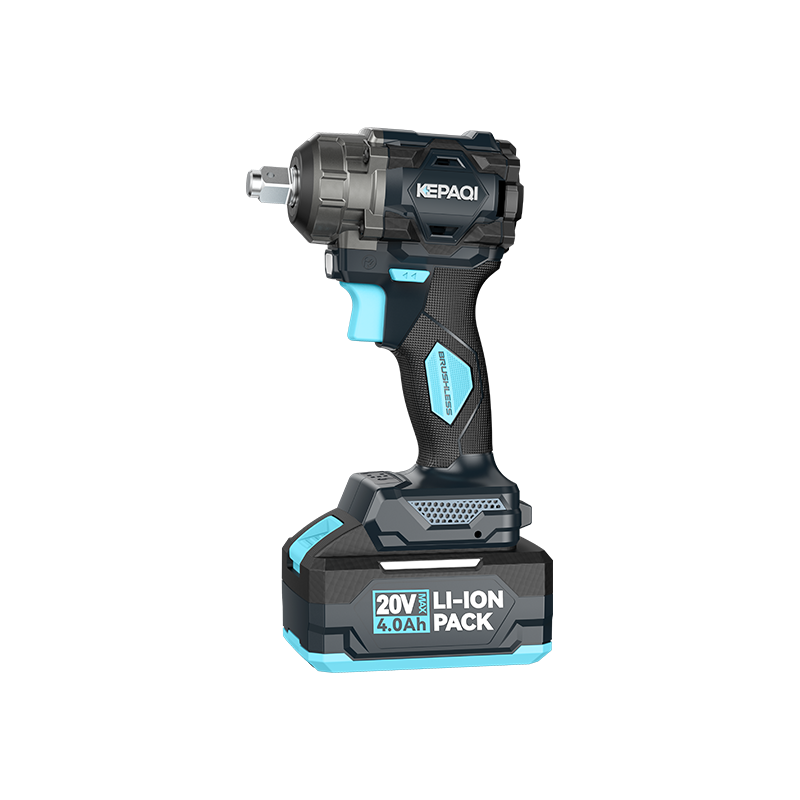 KPQ20V-350N.m 2-Speed Straight Drilling Brushless Impact WrenchThis compact cordless wrench offers 350 N·m torque with two-speed control for different materials. Its straight drilling design and rubber handle suit varied industrial tasks while maintaining comfort and balance.View Product →
Cordless, Corded, or Pneumatic: How the Landscape Has Shifted
Years ago, the standard advice was that only pneumatic impact wrenches had enough power for serious work. That argument no longer holds. Cordless models have closed the gap in nearly every category that matters for daily use.
Practical comparison of the three power sources
| Factor |
Cordless |
Corded |
Pneumatic |
| Portability |
Full freedom, no hoses or outlets |
Limited by cord length |
Limited by compressor and hose |
| Power consistency |
Depends on battery level and brushless design |
Steady, but tied to outlet voltage |
Steady only with a properly sized compressor |
| Maintenance |
Minimal; battery care is the main task |
Low; cords need occasional checks |
Higher; moisture traps, regulator, oil, and hose care |
| Noise |
Quieter than pneumatic |
Similar to cordless |
Loud, with compressor noise plus tool exhaust |
| Initial cost |
Moderate to high, depending on kit |
Lower for comparable torque |
High if you also buy a compressor |
Cordless wins for anyone who moves between vehicles, works on site, or dislikes the idea of maintaining a compressor at 7 a.m. The only remaining edge for pneumatic is sustained heavy-duty operation, such as continuous work on commercial vehicles, where a cordless tool would need battery swaps throughout the day. Even then, most users with two or three batteries report very few practical interruptions.
Where a Cordless Impact Wrench Excels
Cordless impact wrenches are not limited to one trade. Their usefulness spans several types of work, and the right configuration matters for each situation.
Automotive repair
Tire rotations, brake jobs, and suspension work are the most common tasks. A 450–600 N·m wrench with a 1/2-inch drive handles lug nuts without hesitation.
Construction and framing
Fastening structural bolts, anchors, and heavy hardware goes much faster with an impact wrench. A compact mid-torque body fits between studs and joists.
Equipment maintenance
Farm equipment, trailers, and machinery have large fasteners that corrode after a season outdoors. A 1000 N·m class wrench provides the breakaway force needed.
Facilities and DIY
For occasional maintenance at home, a light 350 N·m model is easy to handle on a ladder or under a sink. It removes stubborn fasteners without heavy equipment.
For automotive and construction work, the 600 N·m three-gear class is the sweet spot. It offers enough power for 95 percent of practical jobs, while the multi-speed control lets you avoid over-tightening smaller fasteners.
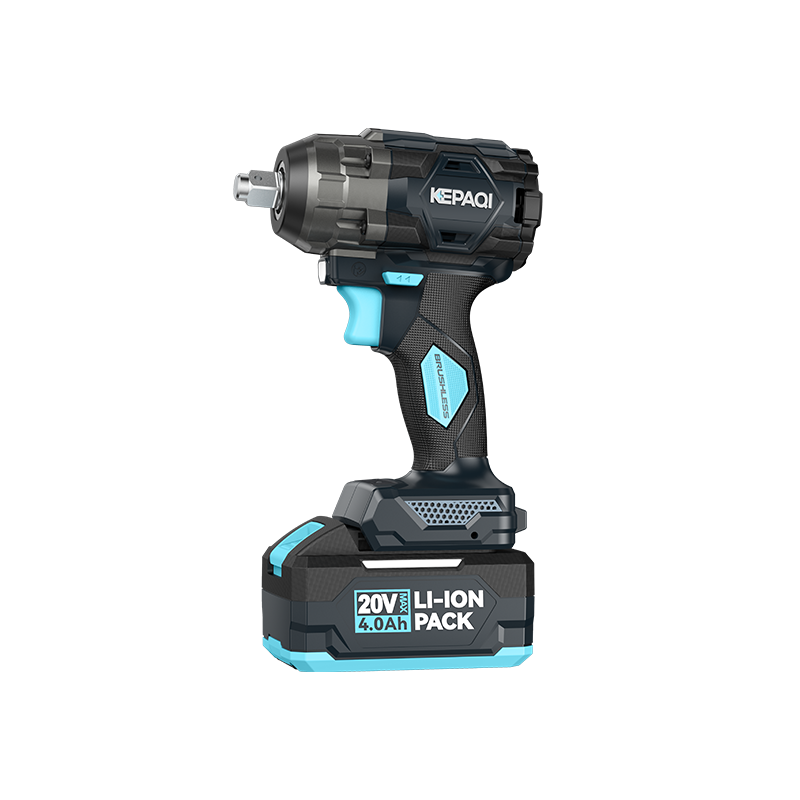 20V Three-Gear Strong Torque Brushless Impact WrenchA 600 N·m class brushless wrench with three speed settings and an ergonomic rubber grip. It handles automotive and construction fastening while reducing over-tightening on smaller fasteners and increasing battery life.View Product →
What to Check Before Buying
Beyond the headline torque number, look at the practical details that affect every job you will do:
- Drive size: 1/2-inch is the most useful size for automotive and construction. 3/8-inch suits lighter, tighter jobs, while 1-inch is reserved for heavy industrial use.
- Brushless motor: More efficient, runs cooler, and typically lasts longer than a brushed motor. It also keeps battery life more predictable during sustained work.
- Speed settings and torque modes: A two- or three-speed gearbox lets you switch from gentle fastening of small bolts to full-power removal of heavy fasteners.
- Electronic braking: This stops the output shaft quickly when you release the trigger. It matters in tight bays where a spinning socket could catch on something.
- Weight and balance: A wrench with a center of gravity close to the grip feels lighter than the specifications suggest. Always try the tool with the battery mounted.
- Lighting and visibility: An LED position light and a well-protected switch are small details, but they make a real difference under a car.
Battery Reality Check
The battery is more than an accessory. It defines how long and how powerfully you can work. A simple rule: the torque capacity of the wrench means nothing if the battery cannot deliver current under load.
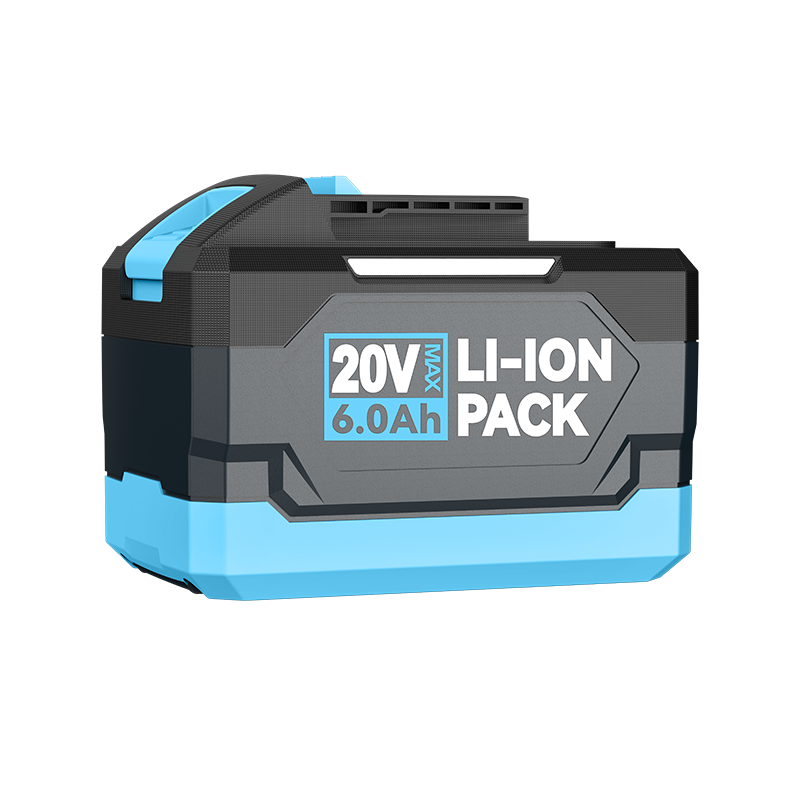
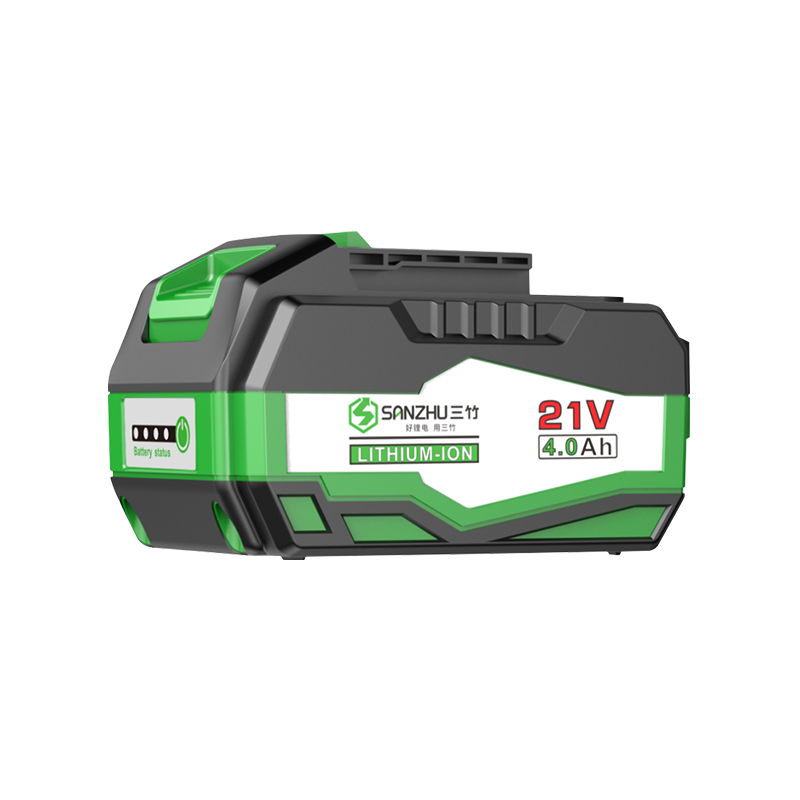
Voltage tells you the generation of the platform. A 20V or 21V system is the sweet spot for most impact wrench users, because it balances high power with a reasonable battery size. Capacity, measured in amp-hours (Ah), tells you how much energy the pack stores. For impact wrenches, a 4.0 Ah battery is a good starting point. If you regularly do heavy work, 6.0 Ah or 8.0 Ah packs will keep the tool responsive for longer sessions.
One detail that surprises first-time buyers is that impact wrenches do not draw power continuously. They draw in short, high-current bursts, and a brushless motor uses that energy more deliberately. As a result, a smaller battery can last longer than you expect, but a larger pack still extends practical runtime meaningfully.
Frequently Asked Questions
Can a cordless impact wrench remove lug nuts?
Yes. A 450–600 N·m model will remove passenger-car and light-truck lug nuts without difficulty. For severely rusted nuts, spray the area with penetrating oil and use the wrench in short pulses instead of full trigger pulls.
How much torque do I need for automotive work?
For brake jobs, tire rotations, and suspension components, 600 N·m is a comfortable target. If you work on heavy trucks or agricultural equipment, a 1000 N·m model gives you more breakaway force for seized fasteners.
Is an impact wrench the same as an impact driver?
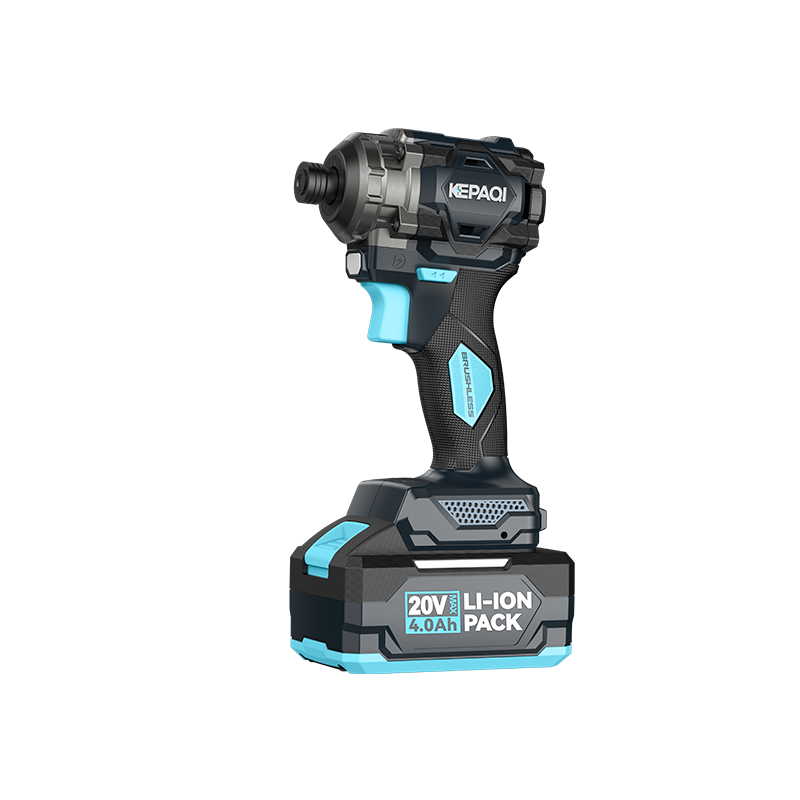
No. An impact driver is a low-torque, high-speed tool for screws and small fasteners, typically with a hex chuck. An impact wrench uses a square drive, usually 1/2-inch, and delivers much higher torque for nuts, bolts, and heavy hardware.
How long does a battery last on an impact wrench?
It depends on capacity and the resistance of the fasteners. A 4.0 Ah battery can often handle 40 to 60 lug-nut removals, while an 8.0 Ah pack will get you through most of a full day of mixed work.
Final Advice: Is It Worth Buying?
If you work on vehicles, equipment, or structures, a cordless impact wrench is one of the most practical time-saving tools you can own. The key is to pick the torque class that matches your actual workload, not the biggest number on the shelf.
- If you do light maintenance and DIY, 350 N·m is enough.
- If you do brake jobs, suspension, or general auto repair, 600 N·m is the sweet spot.
- If you work on trucks, trailers, or agricultural machinery, 1000 N·m is the level to look for.
Whichever class you choose, look for a brushless motor, a comfortable grip, and a battery system that can grow with you. A well-matched cordless impact wrench will not just be "good" — it will quickly become the tool you reach for first.
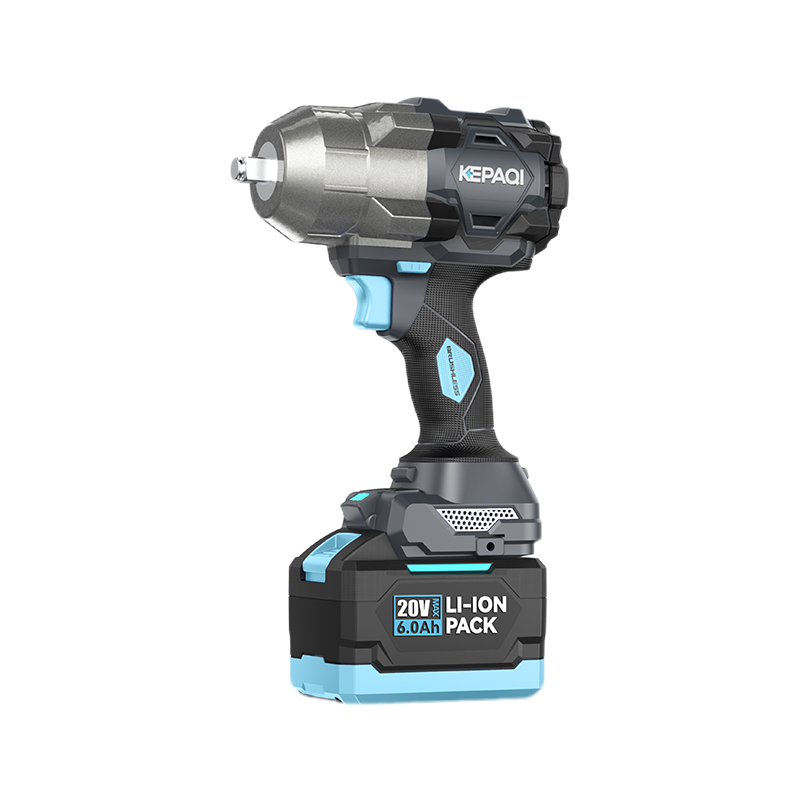 KPQ20V-1000N.m Heavy-Duty Brushless Impact WrenchBuilt for demanding jobs with up to 1200 N·m torque, this wrench features dual-mode speed control, a liquid-filled comfort grip, and a 20V Li-Ion battery system. Ideal for automotive, construction, and industrial fastening tasks.View Product →

 English
 русский
 Español