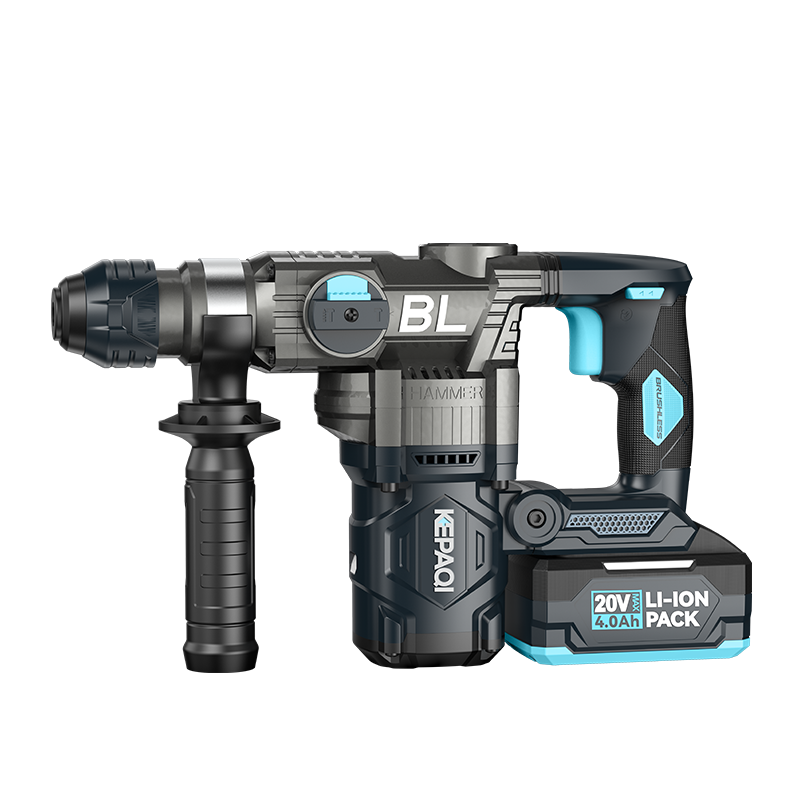
A tire shop in northern Ohio called us last winter with a problem that sounds small and costs real money. A 1/2-inch cordless impact wrench rated at 450 Nm was leaving roughly one lug nut in twelve stuck on a fleet of pickups, and the technicians had gone back to a breaker bar and a cheater pipe. The wrench was not faulty. The lug nuts were five winters old, the studs carried surface corrosion, and the true breakaway requirement on those fasteners sat closer to 550 Nm.
That gap between the torque printed on the box and the torque the fastener actually demands answers the question of which cordless impact wrench is best for lug nuts far more honestly than a brand-versus-brand comparison. So here is the conclusion before the reasoning. For passenger cars and light trucks, choose a brushless 1/2-inch wrench with a verified breakaway torque of at least 600 Nm and a 4.0 Ah battery or larger on a 20 V platform. For heavy pickups, vans and light commercial vehicles, move to 3/4-inch drive and 1,000 Nm or more. Beyond that class, a cordless wrench becomes a convenience tool rather than the primary one.
Light duty
Compact cars, crossovers and small SUVs with M12 studs. A 1/2-inch brushless wrench in the 350 to 500 Nm bracket with a 2.0 to 4.0 Ah pack handles routine tire rotation without stress.
The workhorse
Full-size pickups, vans and larger SUVs with M14 studs. This is the 600 to 1,000 Nm range with a 4.0 to 6.0 Ah pack, and it covers the largest share of real workshop demand.
Heavy line
Commercial trucks, buses and agricultural equipment. Move to 3/4-inch or 1-inch drive, 1,000 to 1,800 Nm, and an 8.0 Ah pack that can survive repeated rundowns without fading.
The rest of this guide shows where those figures come from, which accessories quietly remove 20 to 30 percent of the rated torque before it ever reaches the nut, and how to read a specification sheet so the wrench you buy still performs in its third winter of service.
Why Lug Nuts Are Harder Than the Torque Spec Suggests
A workshop manual might state 110 Nm for the wheel bolts on a mid-size sedan. That figure describes assembly, measured with clean and lightly lubricated threads, on a stud that has never been stretched by a driver with an uncalibrated air gun. It is the load required to produce a clamping force of roughly 20 to 25 kN, holding the wheel against the hub through friction rather than through the bolts themselves.
Release is a different problem. By the time the same nut has to come off, the cone seat has mated into the wheel recess, the zinc or zinc-nickel plating has worn through in spots, and road salt has produced a fine layer of iron oxide across the exposed thread. Each of those changes raises friction. Measured breakaway torque on wheels that have seen three to five winters commonly lands between 1.5 and 2.5 times the assembly figure, and three times is not unusual on the driven axle of a vehicle used through salted roads without a single wheel rotation in between.
Stud diameter sets the size of the problem before anything else does. An M12 stud on a compact car and an M22 stud on a heavy truck are not the same job, and no single wrench covers both without compromise. The table below shows the working ranges we see across vehicle classes, and it is the fastest way to decide how much tool you actually need.
How Much Torque Do Lug Nuts Really Need?
Working ranges observed on steel and aluminium wheels after typical road exposure; alloy rims with flat washers and cone seats generally release at the lower end of each band, while corroded steel wheels land at the top.
| Vehicle class |
Assembly torque |
Realistic breakaway |
Recommended wrench rating |
Drive size |
| Compact car, small SUV (M12) |
90 to 110 Nm |
180 to 250 Nm |
350 to 450 Nm |
1/2 inch |
| Mid-size sedan, crossover (M12 to M14) |
110 to 130 Nm |
220 to 320 Nm |
450 to 600 Nm |
1/2 inch |
| Full-size pickup, large SUV (M14) |
130 to 160 Nm |
300 to 450 Nm |
600 to 800 Nm |
1/2 inch |
| Light commercial van, 3/4 ton (M14 to M16) |
160 to 200 Nm |
400 to 620 Nm |
800 to 1,000 Nm |
1/2 or 3/4 inch |
| Heavy truck, bus (M20 to M22) |
450 to 700 Nm |
900 to 1,400 Nm |
1,700 Nm and above |
1 inch |
| Agricultural and construction (M20 and above) |
400 to 600 Nm |
800 to 1,200 Nm |
1,500 Nm and above |
3/4 or 1 inch |
Notice what the fourth column does. It builds in a margin of roughly 60 to 100 percent above the realistic breakaway figure for the same vehicle class. That margin is not padding for the catalogue. It absorbs three things at once: the torque lost inside the socket and extension, the voltage sag of a partly discharged pack, and the extra friction of a wheel that has not been removed since the last tire change.
A wrench chosen exactly at the breakaway figure will work on a warm day with a fresh battery and a shallow socket. It will fail on the first cold morning with a half-empty pack and a 150 mm extension. Buyers who learn this through a comeback learn it expensively.
Drive Size Decides the Ceiling, Not the Torque Figure
The square drive on the anvil is the hardest limit in the whole system. A 1/2-inch anvil accepts the sockets that fit passenger car and light truck wheel pockets, typically 17 mm, 19 mm, 21 mm and 22 mm in chrome-molybdenum steel, and the socket wall is thin enough to reach a recessed wheel bolt. Most of the automotive work in a general repair shop sits inside this envelope.
Step up to 3/4-inch drive and the anvil itself carries far more impact energy before fatigue becomes a factor, the socket walls are thicker, and the tool body grows heavy enough that a technician notices after the second wheel. This is the correct choice when the average vehicle in the bay is a one-ton van or a light commercial chassis, and it is the point at which 1,000 Nm stops being a marketing figure and becomes a working requirement.
One-inch drive belongs to heavy truck, bus and agricultural service. At that size the wrench is a two-handed tool, the sockets are supplied with retaining pins rather than friction rings, and the battery pack is measured in kilograms rather than grams.
- Adapters do not add torque. A 3/4-inch socket on a 1/2-inch wrench through a reducing adapter adds a joint, adds compliance, and typically costs 10 to 20 percent of the delivered torque.
- Socket retention matters at high torque. A friction ring that has worn smooth will let a socket walk off an anvil during a rundown, and a 900 Nm socket leaving a wheel arch is a genuine hazard.
- Anvil hardness is a specification worth asking about. A soft anvil deforms at the corners, the socket starts to rock, and delivered torque drops long before the motor shows any sign of weakness.
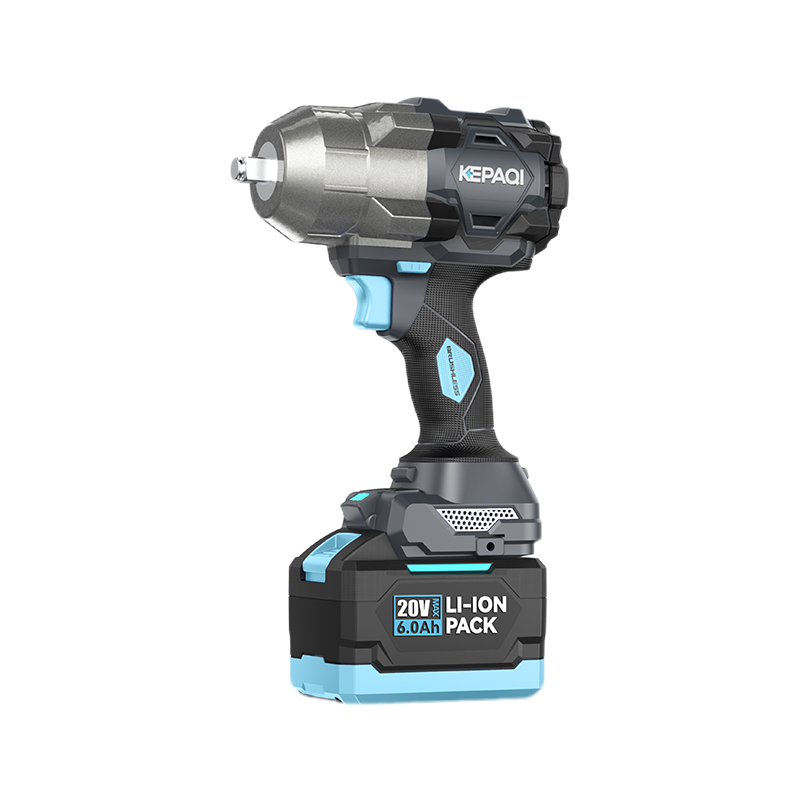 KPQ20V-1000N.m Brushless Impact WrenchThe KPQ20V-1000N.m Brushless Impact Wrench redefines professional-grade torque performance with its advanced brushless motor and innovative Impac Gear system. Engineer...View Product →
For shops that regularly see full-size pickups, a 20 V brushless unit rated at 1,000 Nm on a 1/2-inch anvil is the practical sweet spot. It reaches the breakaway figures in the table above with margin, and it still fits behind a wheel arch where a 3/4-inch body would not.
Breakaway Torque, Nut-Busting Torque and the Spec Sheet
Two numbers get printed on impact wrench packaging, and they are not the same measurement. Fastening torque describes how hard the tool can tighten a fastener on a defined joint. Breakaway torque, sometimes called nut-busting torque, describes how much load the tool can release in reverse. On most cordless impact wrenches the reverse figure runs 5 to 15 percent higher than the forward figure, which is why a wrench that struggles to tighten a stubborn bolt can still remove it.
Those numbers are also measured at the anvil, not at the nut. The gap between the two is created by the socket, the extension, the universal joint and the condition of the fastener itself. A specification sheet that quotes 1,000 Nm is telling you what the anvil delivers for a few seconds with a fully charged pack at room temperature. It is not promising 1,000 Nm at a corroded lug nut on a February morning.
When you evaluate a supplier, ask four questions about the torque claim rather than accepting the headline figure. What battery capacity was fitted during the test? What was the ambient temperature? How long was the measurement window, since most standards use a three to five second burst? And how many consecutive rundowns did the tool complete before the figure dropped below nine tenths of its starting value?
A wrench that holds 600 Nm across 200 rundowns is a better tool than one that peaks at 900 Nm on a fresh pack and settles at 520 Nm after thirty cycles. The second number never appears on a box, but it is the one that determines whether a technician finishes a tire rotation set without reaching for a breaker bar.
Battery Platform: Where Real Performance Is Won or Lost
Voltage is the least informative specification on the label. A pack marketed as 20 V maximum and another marketed as 18 V nominal often use the same cell configuration and differ only in how the marketing department rounds the number. What actually reaches the motor during a one-second impact burst is current, and current is limited by cell quality, pack resistance and state of charge.
Capacity in amp-hours describes energy, not muscle. A 2.0 Ah pack with high-drain cells can deliver more useful torque for a short burst than a 6.0 Ah pack built from low-rate cells, though it will fade sooner. In practice, capacity decides how many wheels you can complete before the pack needs charging, while cell quality decides how much torque arrives on the first nut of each wheel.
Temperature matters more than most buyers expect. Lithium-ion cells lose roughly 20 to 30 percent of their available discharge current at freezing point, and a pack left overnight in an unheated van starts the day at a disadvantage. Keeping packs indoors and rotating them through the day is a habit that costs nothing and returns measurable torque.
2.0 Ah packAbout 1 vehicle set
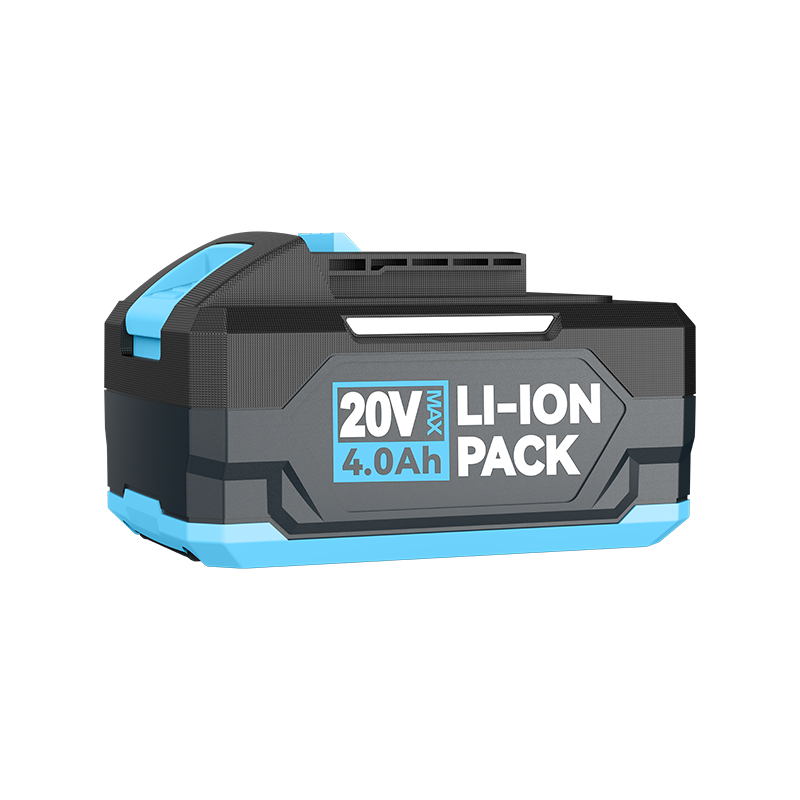
4.0 Ah pack2 to 3 vehicle sets
6.0 Ah pack4 to 5 vehicle sets
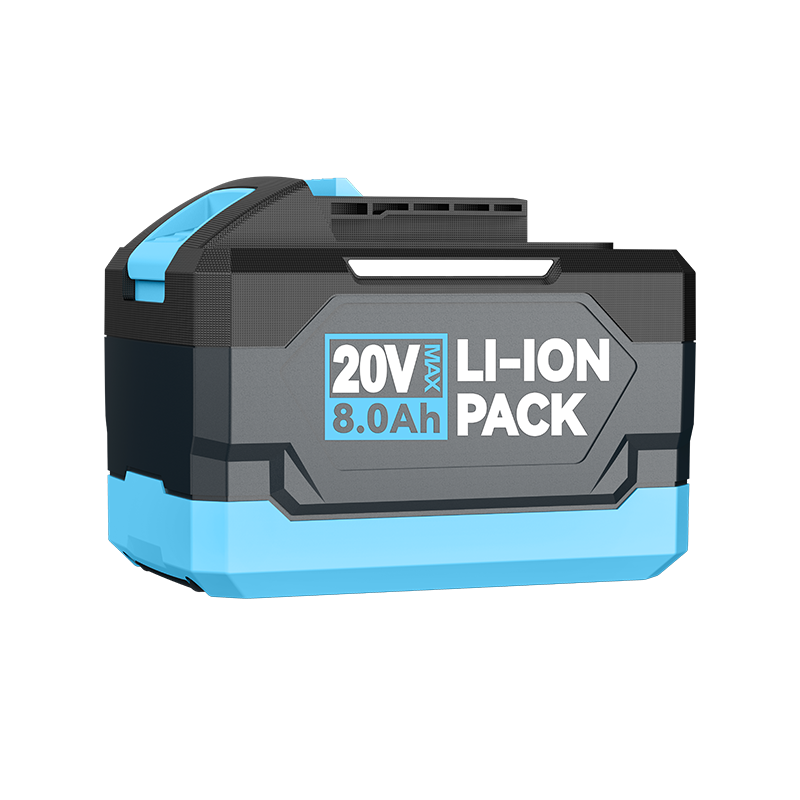
8.0 Ah packFull shift, heavy line
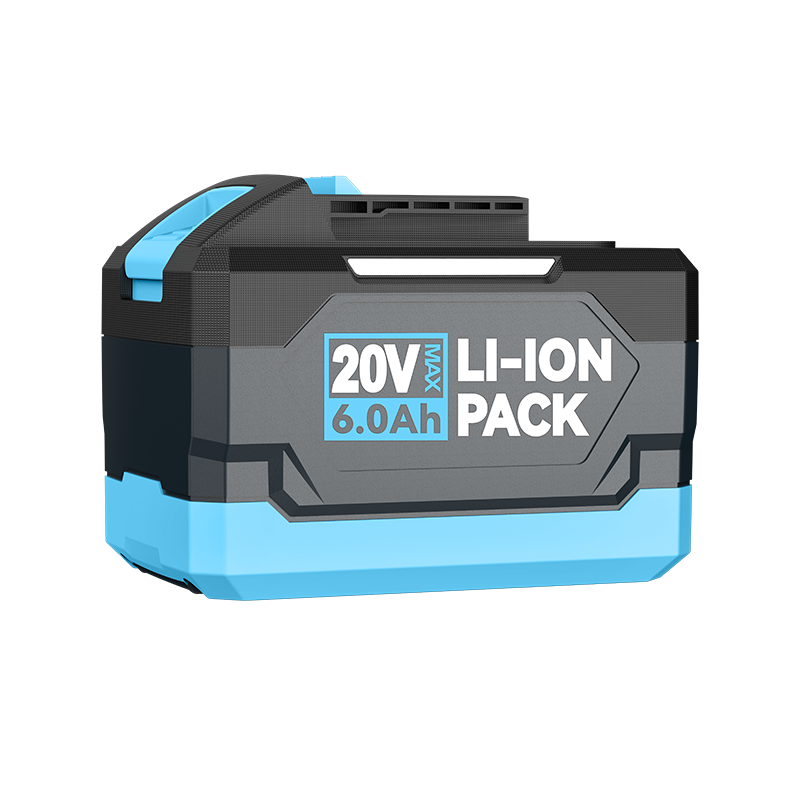 6.0AH BatteryNantong Great Tools Co., Ltd.View Product →
These figures assume four wheels per vehicle, roughly five rundowns per wheel after a tire rotation, and packs kept above 10 degrees Celsius. A 6.0 Ah pack covers most of a working day in a tire bay, and it is the capacity where the cost per completed vehicle drops sharply compared with 2.0 Ah packs that need constant swapping.
Brushless Motors and Sustained Torque
A brushed motor makes torque by pushing current through carbon brushes onto a spinning commutator. The contact is mechanical, it wears, it sparks, and it generates heat that raises winding resistance. As the motor warms up during a sequence of lug nuts, the current it can draw falls and the torque falls with it. On the fifteenth nut of a heavy pickup, the difference is easy to feel.
A brushless motor replaces that mechanical contact with electronic commutation driven by a controller. Efficiency rises from roughly 60 to 70 percent to 75 to 85 percent, meaning less of the battery's energy becomes heat and more becomes rotation. The controller also limits current, monitors temperature and shuts the tool down before the electronics are damaged, which is why brushless tools tend to survive abusive shop environments longer than their brushed equivalents.
The practical outcome for lug nut work is consistency. A well-built brushless wrench loosens the fortieth nut much like it loosened the fourth, because the motor is not losing efficiency to brush friction and the controller is managing current rather than simply switching it on and off.
Electronics also enable the working modes that make a wrench genuinely useful. Multi-stage torque settings let a technician stop at a lower stage for smaller fasteners. A bolt removal mode spins slowly after breaking a nut loose so it does not fly across the shop floor. Neither feature adds peak torque, and both reduce the number of dropped nuts, rounded heads and damaged wheels that follow a careless trigger pull.
The Socket Takes More Torque Than Most Buyers Expect
Every joint between the anvil and the nut is a place where energy is absorbed rather than delivered. A deep impact socket on a short extension is close to ideal. A universal joint stacked on a 300 mm extension is a different system entirely, and by the time the impact impulse reaches the nut, a meaningful share of the rated torque has been converted into heat and noise inside the accessory chain.
Approximate share of rated anvil torque that reaches the fastener, using impact-rated accessories in good condition with a 20 V brushless wrench at full charge.
| Setup between anvil and nut |
Torque delivered |
Typical loss |
| Shallow impact socket, direct fit |
95 to 100 percent |
Up to 5 percent |
| Deep impact socket, direct fit |
90 to 95 percent |
5 to 10 percent |
| 50 mm impact extension |
92 to 95 percent |
5 to 8 percent |
| 150 mm impact extension |
82 to 88 percent |
12 to 18 percent |
| 300 mm impact extension |
70 to 80 percent |
20 to 30 percent |
| Universal joint plus extension |
65 to 75 percent |
25 to 35 percent |
Two further details decide whether the socket survives the job. Impact sockets are made from chrome-molybdenum steel and are deliberately softer than hand sockets, because they need to flex under impulse loading rather than shatter. A chrome-vanadium hand socket used on an impact wrench can crack, and at lug nut torque levels the failure is not graceful. Six-point sockets also grip a damaged nut far better than twelve-point versions, which matters on a vehicle that has already been serviced by someone with a worn socket.
Cold Weather, Rust and the Winter Reality
Winter is where optimistic torque ratings meet their match. Salting creates surface corrosion on the exposed thread and around the cone seat, and the resulting friction increase can push a mid-size sedan close to the breakaway figures of a light pickup. Cold also reduces battery output, so the tool has less to give at exactly the moment it needs more.
Three habits solve most of it in practice. Keep the spare pack inside the shop rather than in the van overnight. Apply penetrating oil to stubborn lug nuts and wait a few minutes instead of hammering at them immediately. And when a nut does not move, work the trigger in short reverse bursts and let the impact mechanism do its job rather than holding the trigger down continuously, which drains the pack faster and heats the electronics without adding torque.
For anyone who has not yet settled a workshop routine, the practical guidance in these tips for using a brushless impact wrench mirrors what our field engineers recommend to service customers in cold regions.
Fleet operators should also account for their own environment when specifying a tool. A delivery fleet running salted roads for four months of the year will need a higher breakaway margin than a dealership in a dry climate running the same vehicles, even if the workshop manual quotes identical torque figures for both.
What Gets Tested Before a Wrench Leaves the Line
Torque is a measurement, not a slogan, and it can only be defended with instruments. In our own quality laboratory, each brushless impact wrench platform is verified on a torque transducer rather than on a torque stick, because a transducer records the actual peak in both directions across a defined measurement window.
Endurance testing follows. A production sample runs several hundred consecutive rundowns on a hard joint while the pack is allowed to discharge naturally, and the torque curve is logged from the first cycle to the last. The interesting number is not the peak at cycle one. It is the flatness of the line between cycle fifty and cycle three hundred, which shows how well the controller manages heat and how much the pack resists voltage sag.
Battery packs get their own attention, because they are assembled in house. Capacity grading, over-discharge protection, short circuit behaviour and thermal response are checked on every batch, and cells that fail the grading step never reach the assembly line. A wrench is only as strong as the pack feeding it, and a pack is only as reliable as the grading behind it.
Alongside the electrical testing, we run drop tests on the housing, thermal cycling on the electronics, and continuous fire tests to confirm that the controller will shut the tool down before the motor or the pack reaches a damaging temperature. None of that testing appears on a specification sheet, but it is the difference between a tool that produces its rated torque on the bench and one that still produces it after a year in a service van.
Compact or High Torque: The Trade-Off Nobody Explains
There is a reason experienced technicians rarely own a single impact wrench. Compact brushless units in the 350 to 500 Nm range weigh around 1.6 to 2.0 kg with the pack fitted and have a short head that slips behind a wheel arch or through a suspension gap. High-torque units at 1,000 Nm and above weigh 2.8 to 3.5 kg, and the extra length of the gearcase makes some jobs physically impossible even though the tool has ample power.
The sensible arrangement for a working shop is two wrenches sharing one battery platform. The compact tool handles the majority of the day's work, including most passenger cars, and the high-torque tool comes out for full-size pickups, corroded winter vehicles and anything that has resisted a first attempt. Sharing one platform means one charger bank, one set of spare packs, and a simpler spare parts inventory.
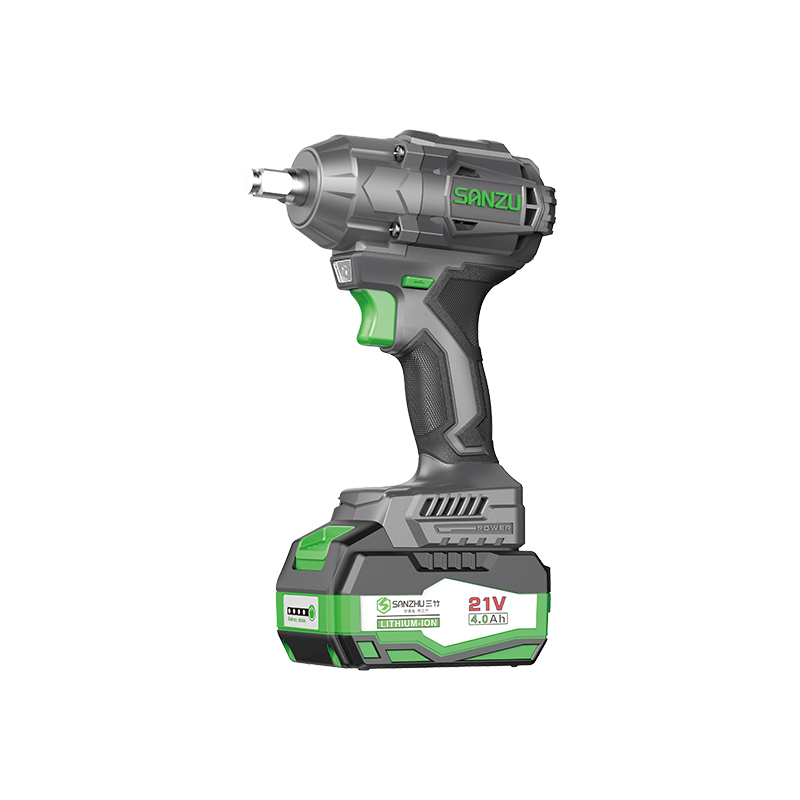 High-Torque 21V Electric Brushless Impact WrenchImpact Gear in forward and reverse mode, you can choose high-speed/low-speed gears to adapt different materials or screwsView Product →
A 650 Nm class brushless wrench sits well in the middle of that arrangement. It reaches the breakaway figures for nearly every passenger car and light truck in the table earlier in this guide, it stays manageable in one hand, and it costs considerably less than the heavy line tools that spend most of their life on a shelf.
For automotive service specifically, the requirements are slightly different again. Body shops and general repair garages spend more time on suspension and subframe fasteners than on wheels, and a compact body with a short head and precise trigger control tends to earn its place faster than a high-torque unit in that environment, which is why the sizing of a cordless impact wrench for automotive work leans toward the 500 to 700 Nm bracket rather than the maximum available figure.
How to Compare Wrenches Without a Demonstration
Buyers rarely get to run a tool against a corroded lug nut before ordering. The next best option is to compare specification sheets on the four points that actually predict performance, and to ignore the rest of the marketing copy.
- Verified breakaway torque in reverse, measured with a named battery capacity, not a peak figure measured on a bench supply.
- Battery platform voltage and pack options, including whether 4.0 Ah and 6.0 Ah packs are available on the same interface as the compact 2.0 Ah packs.
- Drive size and anvil retention type, with sockets and extensions available in the same catalogue so the accessory chain does not have to be sourced elsewhere.
- Motor type and control features, especially multiple torque stages, a bolt removal mode and thermal protection on the controller.
Everything else, including colour, case design and the number of accessories in the box, influences the purchase decision far less than it should. A wrench that reaches the right torque with the right drive size will be used every day. A wrench with a larger headline number and the wrong drive size becomes the second tool in the drawer.
For Importers and Distributors: Reading a Supplier's Torque Claim
Anyone buying cordless impact wrenches in volume faces a different version of the same question. Catalogue pages all quote impressive numbers, and the differences only appear in the field, in returns and in warranty claims. There are a handful of checks that separate a supplier with a real testing process from one that repackages a printed figure.
Ask for a test report rather than a datasheet. A report shows the measurement window, the pack used, the ambient temperature, the joint specification and the number of cycles. It also reveals unit-to-unit consistency, which is often more important than the peak value. If ten samples from a production batch vary by more than 10 percent in measured breakaway torque, the design may be sound but the process control is not, and that variance will show up as field complaints.
Ask how the battery packs are graded and assembled. Packs built from mixed cell grades will still deliver rated torque on the first day and noticeably less after fifty charge cycles. A supplier with an in-house pack assembly line and a capacity grading step can usually answer this question with a process description rather than a promise.
Ask about the platform roadmap. A single battery interface shared across impact wrenches, drills, grinders and garden tools reduces the after-sales burden enormously, because a customer who buys into the platform once will come back for batteries, chargers and additional tools rather than switching to another supplier for each category.
Finally, ask about spare parts availability for the parts that wear: anvils, switches, trigger assemblies, chargers and the retaining components for sockets. A tool that cannot be repaired economically in the destination market becomes a warranty cost rather than a repeat order, and that calculation rarely appears in the purchase price.
Five Habits That Keep Breakaway Torque Where It Started
An impact wrench is a simple machine with a handful of failure points, and most of them are influenced by day-to-day handling rather than by design.
- Store packs between 40 and 80 percent charge when the tool will sit unused for weeks. A pack left fully charged in a hot van loses capacity faster than one stored at partial charge in a cool cabinet.
- Keep the anvil and the socket interface clean. Grit and metal dust on the square drive accelerate wear at the corners, and a worn anvil lets the socket rock instead of transferring impulse cleanly.
- Never use a hand socket, a chrome extension or a universal joint from a hand tool set on an impact wrench. The steels are chosen for different loading, and the failure mode at lug nut torque is sudden.
- Rotate packs across the tools in the shop rather than keeping one pack permanently on one wrench. Even discharge and charge cycles keep the internal resistance of the cells closer together, which keeps torque delivery consistent.
- Check the socket retention ring or pin every few weeks. A socket that walks off an anvil mid-rundown damages the anvil, the socket and possibly the technician.
Frequently Asked Questions
Is a 1/2-inch impact wrench strong enough for lug nuts?
For passenger cars, crossovers and most light trucks, yes. A 1/2-inch brushless wrench with verified breakaway torque of 600 Nm and above covers the realistic range for M12 and M14 wheel studs, provided the pack is 4.0 Ah or larger and the socket fits properly. Beyond one-ton commercial vehicles, the drive size itself becomes the limiting factor and a 3/4-inch tool is the correct answer.
How much torque do I need to remove a rusted lug nut?
Plan for roughly twice the assembly torque your manual specifies, and add margin if the vehicle has seen salted roads for several winters. A wheel specified at 130 Nm can realistically demand 300 to 450 Nm after three years of exposure. Choosing a wrench at 600 Nm or above keeps a comfortable reserve for exactly that situation.
Does a higher voltage battery always mean more torque?
No. Voltage describes the platform, not the output. Two 20 V packs can deliver very different current depending on cell type, capacity and internal resistance, and it is current that produces torque during an impact burst. A well-built 4.0 Ah pack with high-drain cells frequently outperforms a cheap 6.0 Ah pack under impact loading.
Can I use a 3/4-inch socket on a 1/2-inch impact wrench with an adapter?
You can, but you should not expect the rated torque to reach the nut. The adapter introduces an additional joint that absorbs impulse energy, and losses of 10 to 20 percent are typical. It is acceptable as an occasional solution for a single stubborn fastener, not as a routine shop practice.
Why does my impact wrench lose power as the battery drains?
All cordless tools lose some output as state of charge falls, because cell voltage drops and the current available for each impact burst falls with it. Brushless tools with a current-limited controller hold their output flatter than brushed tools, and a higher capacity pack with low internal resistance extends that plateau. If output drops sharply within a few minutes of a full charge, the pack itself is usually the weak point.
How long should a cordless impact wrench last in a tire shop?
In heavy daily use, expect the battery packs to be the first wear item, typically after 500 to 800 full charge cycles, and the anvil and socket interface to show measurable wear after a similar period. Motors and controllers on brushless tools commonly outlast both. Keeping a spare pack and a spare anvil in the shop is cheaper than replacing a wrench mid-shift.
What is the difference between fastening torque and breakaway torque?
Fastening torque is the maximum the tool applies when tightening. Breakaway torque is the maximum it releases when loosening. On most cordless impact wrenches the reverse figure is 5 to 15 percent higher, and it is the number that matters when the question is whether a stubborn wheel will come off.
Working Out Your Own Number in Ten Minutes
The right wrench is not a universal answer, it is an arithmetic result. Start with the heaviest vehicle you service on a normal week, look up its stud diameter, and read the realistic breakaway figure from the table earlier in this guide. Add 40 percent for accessories and battery sag, then a further 20 percent if those vehicles see salted roads or long service intervals between wheel removals. The result is the minimum breakaway rating your wrench needs, and it is usually higher than the number a buyer would have guessed.
From there, the rest of the decision is straightforward. Match the drive size to the sockets the job requires, choose a battery platform that offers at least a 4.0 Ah pack alongside smaller options, and confirm that the motor is brushless with a controller that manages current and temperature rather than simply switching on. If the supplier can show you the measurement conditions behind the torque figure, the tool will very likely still be doing its job long after the receipt has been filed away.

 English
 русский
 Español