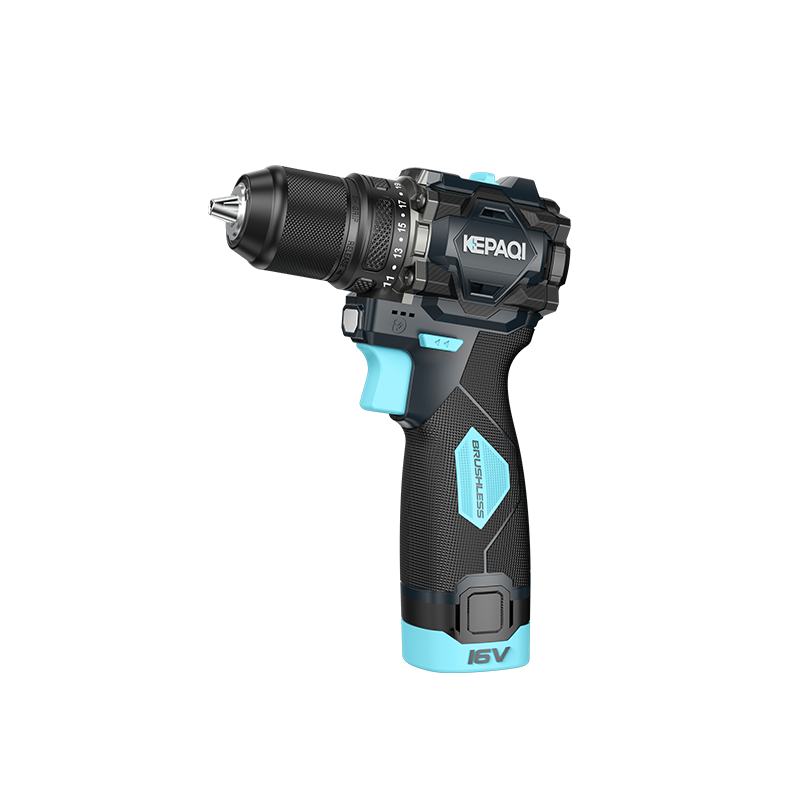
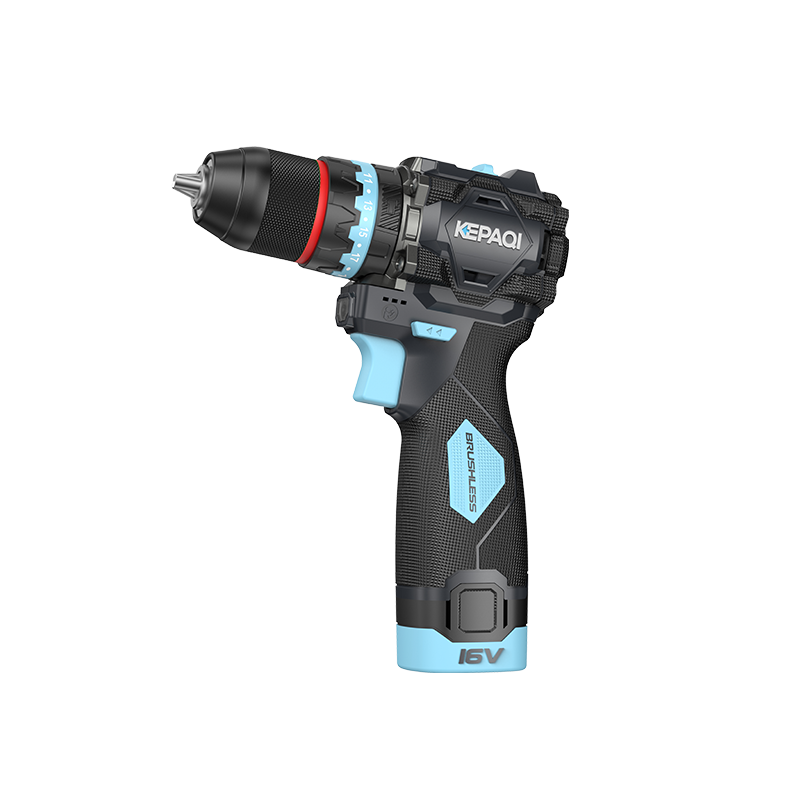
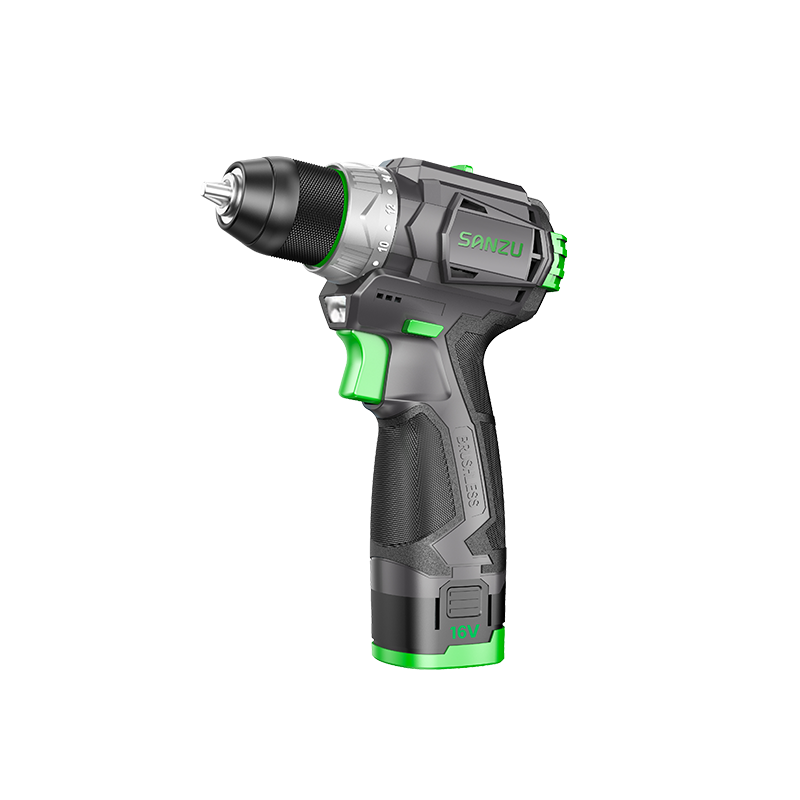
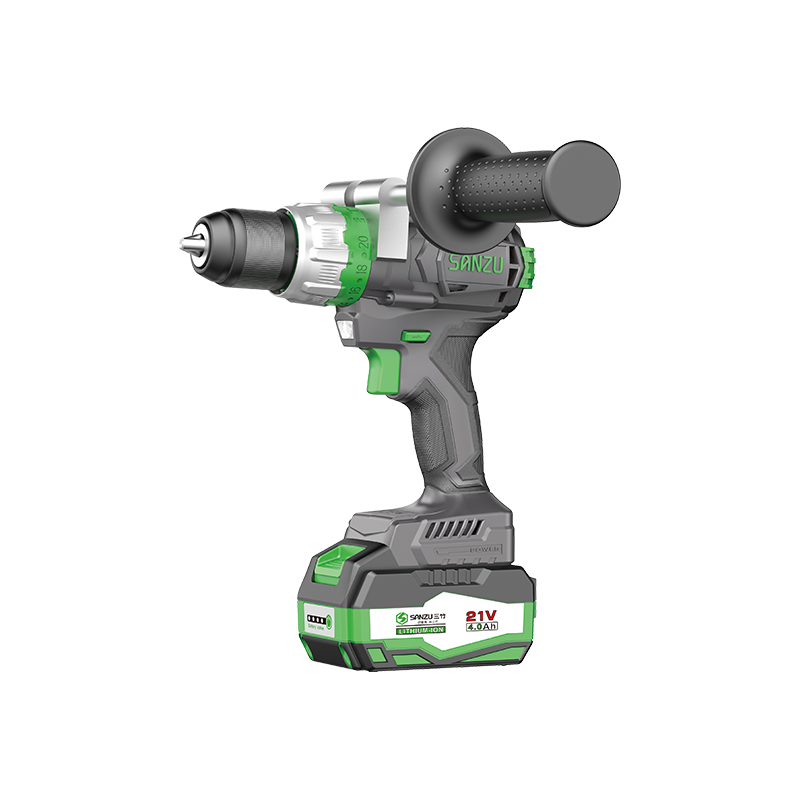
Brushless vs Brushed Cordless Tools: The Short Answer First
If you use a cordless tool more than four or five times a week, the brushless upgrade pays for itself. If the tool comes off the shelf a few times a year, a brushed model still delivers the better cost-per-use figure. The dividing line is not brand prestige, voltage label or how the tool looks on a shelf; it is duty cycle, meaning how hard and how long you run the motor before it cools down.
That conclusion sounds unglamorous, but it saves real money. In our own production and field testing, the price difference between an equivalent brushed and brushless cordless drill sits somewhere around 20 to 40 percent, and that gap only makes sense when the working hours are there to absorb it. A brushed motor with carbon brushes rated for 200 to 500 working hours is an honest, dependable component. A brushless motor rated past 1,000 hours is a different economic animal entirely.
50–200 h Typical carbon brush service life before replacement
1,000 h+ Expected motor life on a well-built brushless platform
10–20 pts Usable efficiency gap that converts into run time per charge
What makes this comparison harder than it looks is that "brushless" is not a single specification. Two tools can both carry the word on the box and behave nothing alike, because the electronics that replace the brushes are where much of the engineering budget actually goes. A cheap controller on a good motor will overheat; a well-tuned controller on a modest motor will outlast it comfortably.
So the real question is not whether brushless is better in the abstract. It is whether the specific tool in front of you has a motor, a controller and a battery platform that stay inside their thermal limits during the work you actually do.
What Physically Separates a Brushed Motor From a Brushless Motor
A brushed motor is mechanically elegant in its simplicity. The rotor carries copper windings; a pair of carbon blocks pressed against a segmented commutator feeds current into those windings as the shaft turns. The switching happens in physical contact, thousands of times a minute, and that contact is the entire failure mode. Carbon wears, copper wears, and fine conductive dust is deposited inside the housing as a by-product.
A brushless motor removes the mechanical contact. The permanent magnets move to the rotor, the windings move to the stator, and a circuit board switches the current electronically. The tool needs to know the rotor position to do this, either from Hall effect sensors or from back-EMF sensing that reads the voltage the spinning magnets induce in the coils.
Three consequences that follow directly
- No consumable wear part. Nothing rubs, so nothing has to be replaced on a schedule. There is no brush dust accumulating on the armature.
- No sparking at the commutator. Sparking is where a portion of incoming energy leaves as heat and light instead of torque. Removing it lifts efficiency by roughly 10 to 20 percentage points at comparable loads.
- Electronic control instead of resistive control. Speed regulation, soft start, electronic braking and stall protection all become firmware behaviour rather than a mechanical switch.
The trade-off is a different set of failure modes. A brushless tool will rarely die from wear; it dies from a cooked controller, a failed sensor, or moisture reaching the board. That matters when you judge how much protection and thermal design the tool actually carries.
Buyers often assume the brushless premium is a marketing margin. In reality it maps to a fairly fixed bill of materials. Understanding the breakdown tells you whether a suspiciously cheap brushless offer has quietly removed something you need.
Indicative cost structure of comparable cordless tools in the same voltage class and body size.
| Cost element |
Brushed build |
Brushless build |
Practical impact |
| Motor assembly |
Wound rotor with commutator and brush holders |
Stator windings plus rotor magnets |
Brushless motor itself is not dramatically more expensive |
| Control electronics |
Simple switch or basic speed module |
Full driver board with switching FETs |
Largest single contributor to the price difference |
| Rotor position feedback |
Not required |
Hall sensors or sensorless detection |
Adds cost and adds a component that can fail |
| Thermal design |
Airflow over brushes and commutator |
Heatsink path for the board |
Cheap units skip this and overheat under load |
| Consumable spares |
Brush set, occasionally a commutator |
None in normal service |
Ongoing saving that offsets the purchase premium |
Read that table from the bottom up and the payback logic becomes obvious. The brushed tool asks for less money at the counter and more money later. The brushless tool asks for more at the counter and almost nothing later, provided the electronics survive. That proviso is the whole argument.
Efficiency, Heat and Continuous Load Behaviour
The efficiency number is the one most often quoted and least often understood. When a manufacturer states that a brushless motor reaches around 85 percent efficiency while a brushed equivalent sits near 70 percent, that gap does not mean the tool is 15 percent stronger. It means 15 percent less of the energy drawn from the battery is converted into heat inside the motor.
Heat is the currency you should be counting. Every extra watt of internal heat raises winding temperature, and winding temperature is what ultimately destroys insulation. A motor running 30 degrees cooler lasts disproportionately longer, and it also avoids the electronic derating that cuts power when the controller senses trouble.
Energy delivered to the bit versus energy lost as heat at a representative working load
Brushed motor
~70% useful
Brushless motor
~85% useful
Run time index
+20% to +30%
Figures are representative ranges observed across 16V to 21V cordless platforms; actual values vary with load profile, ambient temperature and battery state of charge.
In daily use, the practical result is that the same battery pack finishes more work on a brushless tool before it needs to go back on the charger. That is worth more than a spec sheet suggests, because the cost of a cordless tool is spread across the tool and the batteries that feed it. If you carry three packs to a site instead of five, the brushless premium has already partially repaid itself.
The second effect shows up under sustained load. Brushed motors lose torque as they heat and as brush contact degrades. Brushless motors hold speed more steadily, and a competent controller will taper output rather than let the motor cook. That predictable behaviour matters most in tools with a continuous cutting or grinding action, where a sudden stall is both a quality problem and a safety problem.
Side-by-Side Comparison Across the Factors That Matter
The table below compresses the comparison into the attributes buyers actually evaluate. Where a range appears, it reflects real variation between entry-level and professional builds rather than a single tested sample.
Direct comparison of brushed and brushless cordless tools across performance, durability and ownership factors.
| Attribute |
Brushed cordless tool |
Brushless cordless tool |
| Motor service life |
Approximately 50 to 200 working hours before brush replacement |
Commonly beyond 1,000 hours with no scheduled wear part |
| Efficiency at load |
Roughly 65 to 75 percent |
Roughly 80 to 90 percent |
| Heat generation |
Higher; commutator sparking adds a heat source |
Lower; heat concentrated mainly in the control board |
| Speed control quality |
Steps and drops under load |
Smoother, often with multiple electronic modes |
| Braking response |
Coasts to a stop |
Electronic brake stops the accessory quickly |
| Weight and balance |
Often slightly heavier for the same output |
Typically more compact per unit of torque |
| Noise and vibration |
Brush friction adds high-frequency noise |
Quieter motor, though gearing noise remains |
| Dust and moisture tolerance |
Reasonably tolerant; no sensitive board |
Depends heavily on sealing of the controller |
| Purchase price |
Lower |
Higher by roughly 20 to 40 percent |
| Maintenance burden |
Brush inspection, dust cleaning, occasional replacement |
Bearing and cooling path checks, no brush service |
Scenarios Where the Upgrade Genuinely Pays Back
Abstract comparisons rarely convince anyone. What convinces people is recognising their own working pattern in a specific case. The following four scenarios are the ones where brushless returns the clearest advantage, based on how the tools are loaded in practice.
Automotive fastening and wheel work
A cordless impact wrench doing lug nuts and suspension bolts runs in short, brutal bursts. Torque consistency matters, and so does recovery time between fastening sequences. A brushless motor with a controlled three-stage torque setting holds its output as the tool heats, which is exactly what a technician needs on the fourth wheel rather than the first.
Metal grinding and cutting
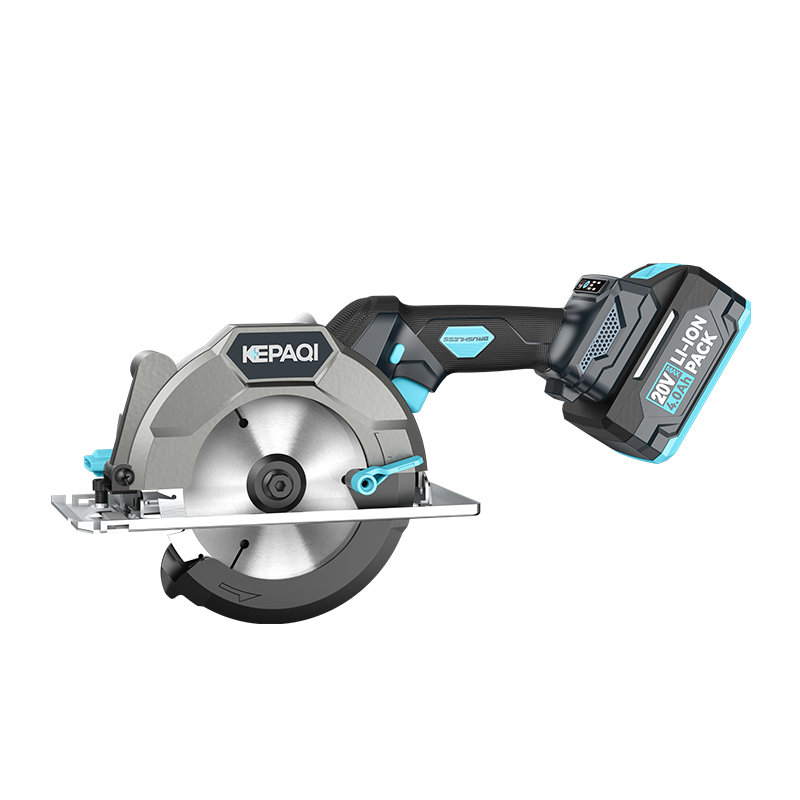
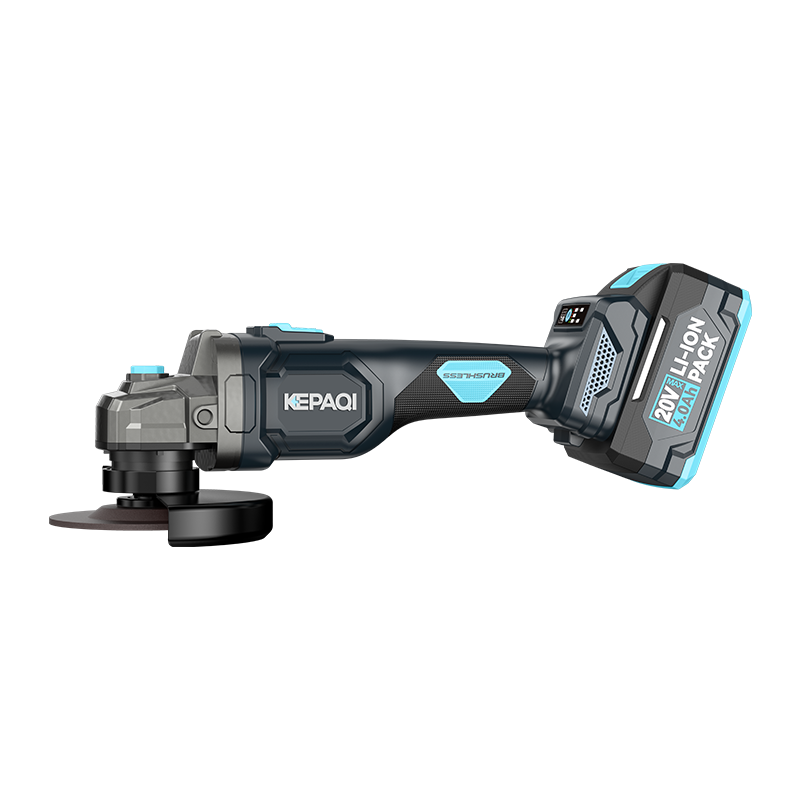
An angle grinder under continuous disc pressure is the harshest duty cycle in the cordless range. Brushed motors here burn through brushes faster than in any other tool, and the sparking plus metal dust combination accelerates wear at the commutator. Brushless models also benefit from electronic braking, which shortens the interval before the tool can be set down safely.
Concrete drilling and light demolition
Hammer drills and rotary hammers spend most of their energy producing impact rather than rotation, and the vibration environment is hard on any mechanically commutated motor. Brushless hammer platforms generally hold impact energy more consistently and reduce the current spike that trips battery protection on smaller packs.
Landscaping and orchard pruning
Pruning shears are used in thousands of short cycles per day, which is a duty profile that destroys brushed motors through pure cycle count. Brushless shears sustain cutting force without thermal sag and give the operator a consistent trigger response across a full shift.
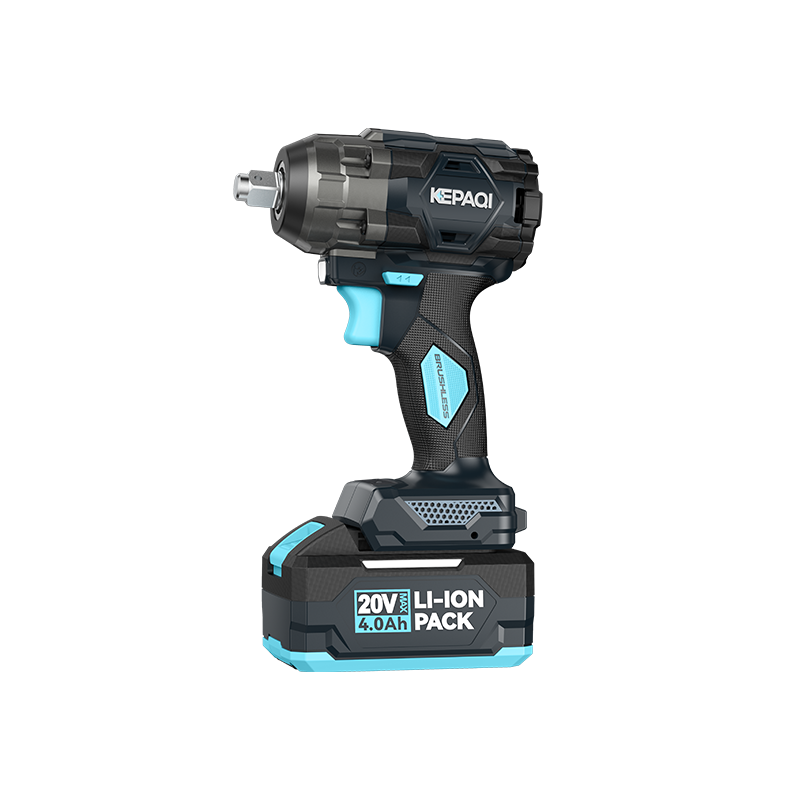 KEPAQI 20V Brushless Impact Wrench with Three-Gear TorqueFor high-intensity fastening, this 20V brushless wrench offers three torque gears up to 600 N.m, forward/reverse modes and a built-in LED.View Product →
The common thread is not torque. It is the ratio of running time to cooling time. Any tool that runs hot for long stretches, or repeats a high-load action thousands of times a shift, is where the brushless architecture stops being a luxury and becomes the cheaper option.
Scenarios Where Brushed Tools Still Win
Honesty about the limits of an upgrade is more useful than enthusiasm for it. There are several situations where a brushed tool is the correct purchase, and pushing brushless into those cases simply raises cost without improving outcomes.
Occasional household use
A drill that hangs in a garage and comes out for shelf brackets and flat-pack furniture may accumulate twenty hours of running time in a decade. Brush life is irrelevant at that duty level, and the money is better spent on a second battery or a better chuck.
Mixed-fleet stocking decisions
When a distribution range has to cover many price points, a brushed economy tier keeps an accessible entry option on the shelf. The key is that the difference is stated plainly rather than hidden behind identical-looking packaging.
Dust-heavy environments without sealed electronics
In some environments, an exposed controller board is a liability. A brushed motor with no sensitive electronics can be more forgiving of coarse dust and intermittent moisture than a poorly sealed brushless unit. If the sealing is good, this advantage disappears; if it is not, brushed survives longer.
Rapid replacement and shared tooling
Sites that treat cordless tools as consumables and replace them frequently get limited value from a long-life motor. In those conditions the purchase price dominates the calculation and the brushless premium is difficult to justify.
The Battery Platform Is Half of the Decision
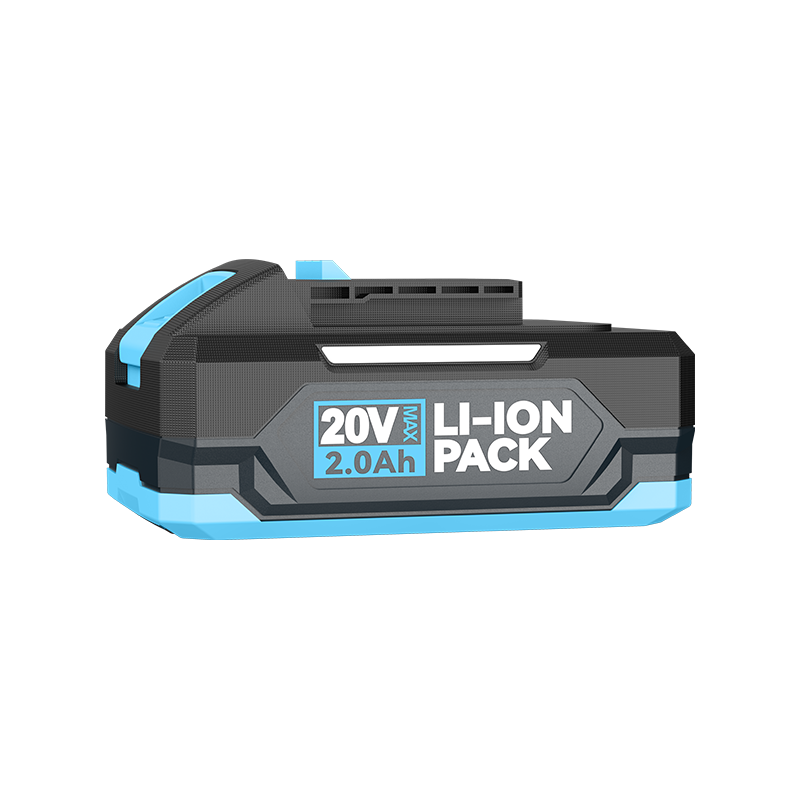
Buyers frequently compare a brushed drill against a brushless drill and forget that both are only as good as the pack behind them. A brushless motor pulling from a tired 1.5Ah pack will underperform a brushed motor on a healthy 4.0Ah pack, and no amount of motor technology fixes that.
Three battery parameters do most of the work. Capacity in amp-hours sets how long the tool runs between charges. Continuous discharge capability sets whether the pack can feed a high-draw tool without voltage sag. Cell quality sets how many charge cycles you get before capacity drops noticeably, with reasonable packs delivering several hundred cycles before performance becomes an issue.
What to check before committing to a platform
- Whether the same pack fits drills, grinders, wrenches and garden tools, so one investment covers the whole range
- Whether chargers are shared across voltage classes or require separate purchases
- Whether the battery management board balances cells and protects against over-discharge under heavy load
- Whether replacement packs remain available years after the tool is discontinued
- Whether high-capacity packs physically balance the tool or make it front-heavy
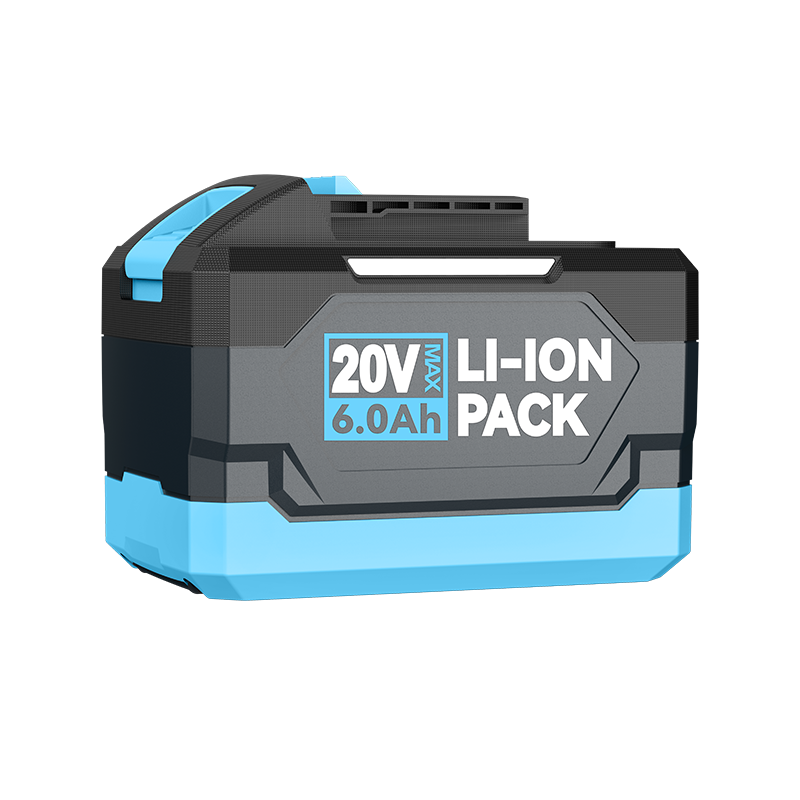 GREAT 6.0AH Battery Pack AccessoryA 6.0AH battery option in the GREAT accessory range, positioned between 4.0AH and 8.0AH packs for users comparing capacity.View Product →
A practical rule we apply in our own battery assembly and testing lines: match the pack to the tool's worst-case draw, not its average draw. A grinder or rotary hammer that momentarily pulls far more current than a drill will expose a weak pack immediately, and the resulting voltage sag looks like a motor problem when it is really a battery problem.
How to Spot a Poorly Built Brushless Tool Before You Buy
Because the brushless label is cheap to print, evaluation has to go beyond the word on the box. These are the checks that separate a genuinely engineered tool from a motor with an undersized board bolted behind it.
- Listen to the start. A well-tuned controller brings the motor up smoothly and predictably. A harsh or stuttering start usually indicates crude commutation logic.
- Feel the trigger through the range. Speed should track trigger travel progressively. Dead zones at the bottom and sudden jumps near the top mean a low-resolution control circuit.
- Run it under real load for several minutes. If output fades noticeably before the battery is depleted, the thermal path is inadequate even if the motor is good.
- Check the brake. A brushless tool should stop the accessory in a second or two. A slow coast suggests the controller is not managing regeneration.
- Ask how torque is rated. Peak torque measured for a fraction of a second is not the same as sustained working torque. A supplier who can explain the test method is usually a supplier worth dealing with.
- Inspect the sealing around the electronics. Look at where the board sits relative to the cooling airflow and whether dust has a direct path to it.
- Confirm the protection features. Over-temperature cutoff, over-discharge protection and stall detection should all be present on a professional-grade tool.
None of these checks require a laboratory. They require ten minutes with the tool under realistic conditions, which is the only test that reflects what the buyer will experience after the carton is opened.
Service Life and Maintenance Expectations in Practice
Brushless does not mean maintenance-free, and treating it that way is how tools fail early. The wear parts simply move. Bearings still wear. Cooling paths still clog with dust. Grease in the gearbox still breaks down. What changes is that the motor itself stops being a scheduled service item.
On a brushed tool, brush inspection is the routine check that catches problems before they become failures. Worn brushes arc, arcing heats the commutator, and a hot commutator scores the copper. Catching it early costs a brush set; catching it late costs the tool.
On a brushless tool, the routine checks shift to the controller and the airflow around it. Compressed air through the cooling vents, a check that the board is not sitting in a dust trap, and a listen for bearing noise will cover most of the maintenance burden. Electronics fail more often from heat and contamination than from component wear, which means cleaning is genuinely preventive rather than cosmetic.
Three-year ownership comparison based on a professional user running the tool roughly 400 hours per year.
| Cost line |
Brushed tool |
Brushless tool |
| Purchase price index |
100 |
130 to 140 |
| Brush sets over three years |
Three to five sets |
None |
| Workshop labour for servicing |
Recurring, often unplanned |
Minimal |
| Downtime events |
Higher, concentrated mid-project |
Lower |
| Battery consumption per task |
Baseline |
Roughly 15 to 25 percent lower |
| Residual value after three years |
Low |
Meaningfully higher |
The downtime line is the one that rarely appears in a purchasing spreadsheet and almost always appears in a project schedule. A brush failure mid-shift costs more than the brushes, the labour and the tool combined when a crew is standing around waiting.
Matching Motor Type to Tool Category
Not every tool benefits equally. The value of brushless scales with duty cycle and with how precisely the tool must control its output. The breakdown below reflects how the trade-off actually lands across common cordless categories.
Strong case
Impact wrenches and impact drivers
High torque demand, repeated bursts, and a strong need for consistent output. Brushless control also enables multiple torque modes that protect smaller fasteners from over-tightening.
Strong case
Angle grinders and cutting tools
The heaviest continuous current draw in cordless work. Efficiency gains translate directly into run time, and electronic braking is a genuine safety feature rather than a convenience.
Clear benefit
Drills and hammer drills
Compact brushless motors allow shorter bodies at the same power level, which improves control in overhead and confined work. The run-time advantage matters on multi-hour installs.
Clear benefit
Pruning shears and garden tools
Extremely high cycle counts per shift. Brush wear is the limiting factor on brushed versions, and the brushless alternative removes that ceiling entirely.
Marginal
Light-duty screwdrivers
Low current draw and short duty cycles mean brushed versions remain competitive. The upgrade is justified by ergonomics more than by motor life.
Marginal
Occasional-use DIY drills
Where total lifetime running hours stay low, the brushless premium has little opportunity to repay itself. Battery quality and chuck runout matter far more.
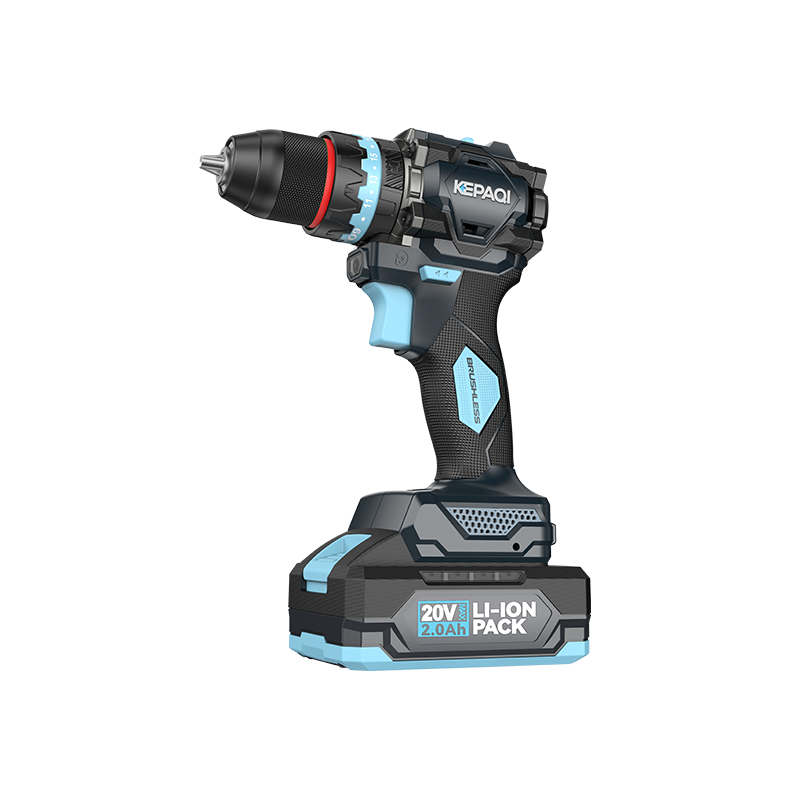 KEPAQI Lightweight Variable Dual-Speed Brushless DrillA compact 20V brushless drill with dual-speed control, 55 N.m torque and 0.85 kg body for drilling, driving and one-handed overhead work.View Product →
Where brushless also earns its place quietly is in size. Because the magnets sit on the rotor and the windings on the stator, designers can build a shorter, better-balanced body for the same output. In overhead drilling or one-handed work, that difference is felt immediately and has nothing to do with the spec sheet.
Frequently Asked Questions
Is brushless always more powerful than brushed?
No. Efficiency is not the same as peak output. A large brushed motor can out-torque a small brushless one. What brushless delivers more reliably is sustained output: the ability to keep producing near its rated torque without fading as heat builds.
Can I replace brushes myself, and does it make financial sense?
On most cordless tools, yes, if the replacement part is available and the commutator is still in reasonable condition. Whether it makes sense depends on the tool's value. On an inexpensive brushed drill, a brush set plus labour can approach a meaningful share of the tool's price, which shifts the economics toward replacement.
Does brushless improve battery life?
It improves run time per charge, typically by 15 to 25 percent at comparable loads. It can also extend the pack's calendar life indirectly, because lower current draw per task means fewer deep discharges and less heat exposure for the cells.
Why do some brushless tools feel weaker than brushed ones?
Three common reasons: the controller limits current to protect itself, the battery pack cannot supply the transient current the motor asks for, or the gearing is optimised for speed rather than torque. Any of these produces a tool that looks good on paper and feels flat in the hand.
Is brushless worth it for a tool I use once a month?
Usually not on motor-life grounds. There are secondary reasons to choose brushless anyway, such as a more compact body, better speed control or electronic braking, but those are convenience arguments rather than financial ones.
Do brushless tools need special maintenance?
They need different maintenance. There is no brush service, but the cooling path and the controller area should be kept clear of dust, and bearing noise should be monitored. Keeping the electronics cool is the single most effective habit for long service life.
Can brushed and brushless tools share the same battery?
Within the same platform and voltage class, usually yes, provided the pack's discharge capability meets the brushless tool's demand. A low-capacity pack that worked acceptably on a brushed drill may sag noticeably on a brushless grinder.
How much should the price difference realistically be?
For comparable bodies, batteries and accessories, expect roughly 20 to 40 percent. A brushless tool priced barely above a brushed equivalent is worth inspecting closely, because something in the motor, the controller or the battery has been economised to reach that number.
Does brushless matter for wet or dusty conditions?
It changes the risk profile. A brushed motor tolerates coarse contamination reasonably well because there is no sensitive circuit board. A brushless tool depends entirely on how well the controller is sealed. Good sealing is an advantage; poor sealing is a vulnerability.
Which single factor predicts long brushless life?
Thermal management. If the controller stays cool and the motor vents stay clear, the electronics will typically outlast the mechanical parts around them. If heat has nowhere to go, motor quality will not save the tool.
Putting the Decision in Order
Work through the question in the sequence that reflects how the cost actually accrues. Start with duty cycle: how many hours per week will this tool run, and how long does it rest between runs? If the answer is more than a few hours weekly, the brushless premium has a route to repay itself. If it is not, the money is better spent on battery capacity and mechanical build quality.
Next, check the platform rather than the individual tool. A brushless drill that locks you into a battery family with no grinder, wrench or garden tool in it is a partial upgrade at best. Shared packs and shared chargers are where multi-tool savings accumulate.
Then examine thermal design. Look at where the controller sits, whether air reaches it, and whether the housing gives heat a path out. This factor separates two tools that carry the same specification label and behave completely differently in month eighteen.
Finally, price the consumables honestly. Add up brush sets, servicing and downtime across the period you intend to keep the tool, and compare that total against the purchase premium. In most professional settings the arithmetic lands clearly on one side. In most occasional-use settings it lands on the other, and there is no shame in either result.
The upgrade is worth it when the tool works hard enough to wear out. It is not worth it when the tool spends most of its life on a shelf. Everything else, from voltage labels to the colour of the housing, is detail.

 English
 русский
 Español