I. Starting Your Tool Comparison Journey
Introduction: The Torque King vs. The Speed Expert in the Tool Box
In modern professional repair, construction, and home DIY projects, power tools are undoubtedly key to increasing efficiency. Among these, the Cordless Impact Wrench and the Impact Driver are two types of high-efficiency fastening tools that, while similar in appearance and purpose, possess fundamental functional differences.
Both tools utilize an internal impact mechanism, meaning they don't just rotate; they apply rapid, repetitive blows (impacts) during rotation. This generates significant force far exceeding that of a standard drill or power screwdriver, allowing them to easily handle stubborn fasteners.
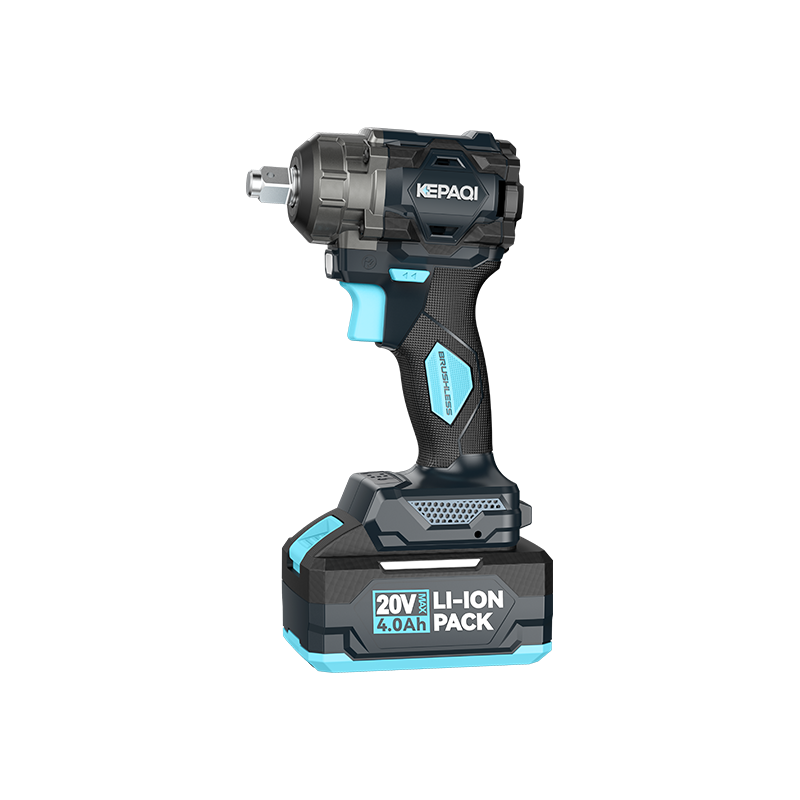
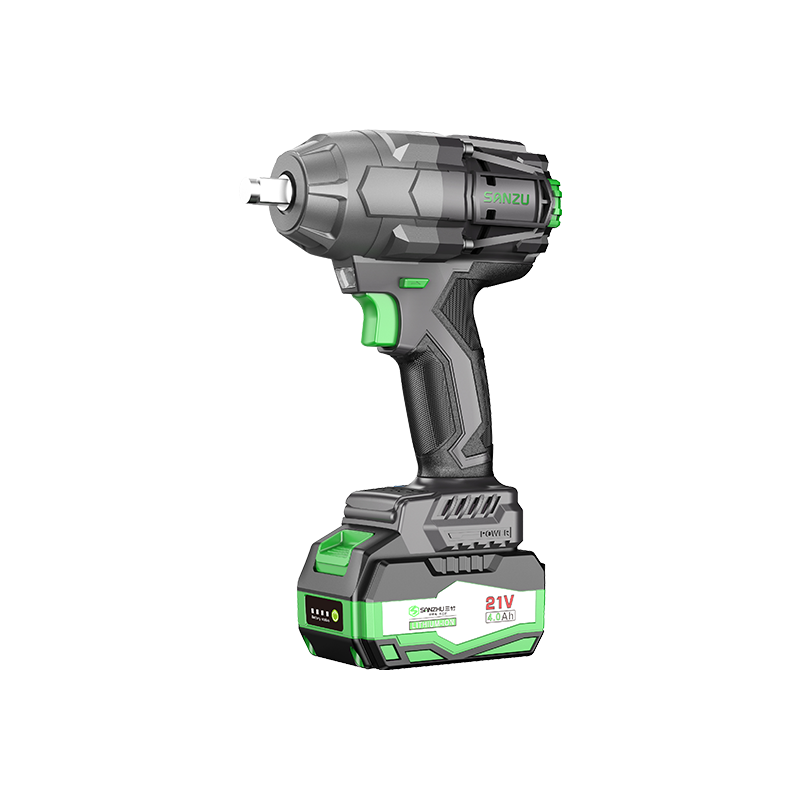
The Cordless Impact Wrench, as its name suggests, is a heavy-duty tool designed for tightening and loosening nuts and bolts. It is hailed as the "King of Torque" in the tool box, owing to its incredibly high torque output. Whether in an automotive repair shop or during the maintenance of heavy machinery, the Cordless Impact Wrench is the professional's primary choice.
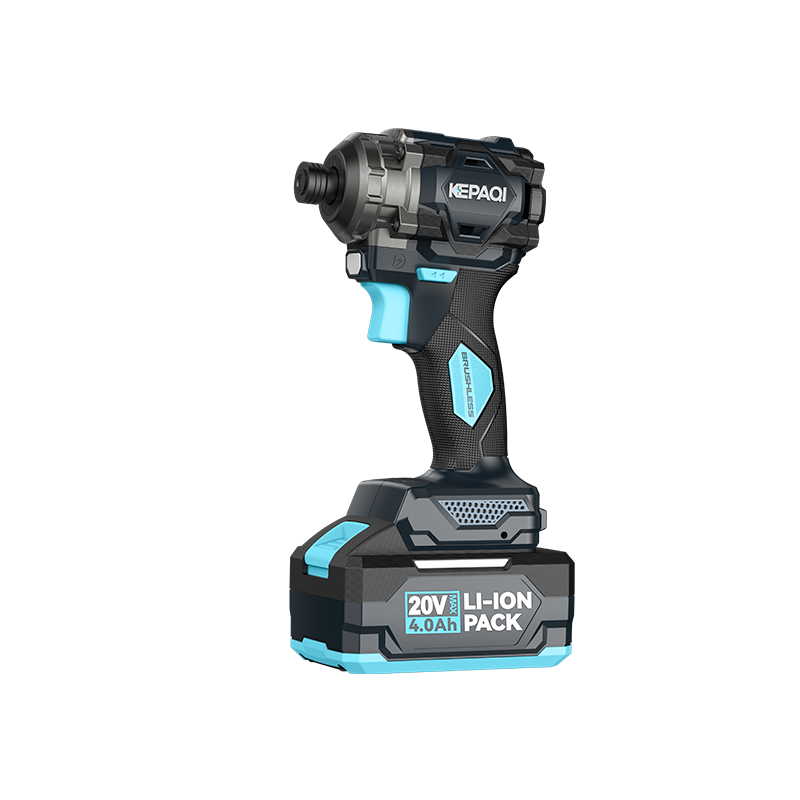
The Impact Driver, on the other hand, can be considered the "Speed Expert." It is smaller and lighter, primarily used for rapidly driving and removing screws and small fasteners. It excels in tasks like carpentry, deck building, or cabinet installation, where a large volume of screws needs to be driven.
The Purpose of This Article: Helping You Make the Right Choice Between the Cordless Impact Wrench and the Impact Driver
Because both the Cordless Impact Wrench and the Impact Driver employ an impact action, many unfamiliar with power tools often confuse them. However, choosing the wrong tool can not only reduce your work efficiency but also risk damaging the fasteners or the tool itself.
- For example, attempting to loosen a lug nut on a car tire with a torque-deficient Impact Driver is nearly impossible.
- Conversely, using a high-torque Cordless Impact Wrench to drive small wood screws might easily snap the screw or damage the material.
This article aims to clearly differentiate these two tools through an in-depth, detailed comparison and contrast, highlighting their core differences, respective advantages, and suitable applications. We will focus on analyzing their key performance parameters, helping you understand which tool is best for your specific needs, ensuring you can:
- Improve Work Efficiency: Choose the most appropriate power tool for the job.
- Avoid Fastener Damage: Precisely match the tool's torque to the fastener's requirements.
II. Deep Dive into the Cordless Impact Wrench
What is a Cordless Impact Wrench?
The Cordless Impact Wrench is a high-torque power tool engineered to tackle high-resistance fasteners, especially nuts and bolts. Being battery-powered, it eliminates the restriction of cords, greatly enhancing flexibility when working outdoors, underneath vehicles, or far from a power source.
Definition and Working Principle:
The working principle of the Cordless Impact Wrench is based on its internal "Hammer and Anvil" impact mechanism. When the tool senses that the rotational resistance exceeds its turning capacity, the internal weighted hammer rapidly and repeatedly strikes the anvil. This tangential, momentary impact force converts rotational torque into a powerful burst of energy, overcoming the tremendous resistance on the fastener. This pulsed impact mechanism is the core reason it can loosen or tighten traditional tools cannot handle.
Key Features and Components:
| Component/Feature |
Description |
| High-Torque Motor |
Typically equipped with a brushless motor for greater efficiency and sustained high torque output. |
| Anvil |
The external interface, usually a 1/4 inch, 3/8 inch, 1/2 inch, 3/4 inch, or 1 inch square drive, used for connecting sockets. |
| Impact Mechanism |
The internal hammer and anvil system responsible for generating tangential impact force. |
| Variable Speed Trigger |
Allows the operator to control the rotation speed and impact frequency as needed. |
| Mode Selection |
Many models offer multiple torque settings or “auto-stop” modes to prevent over-tightening. |
In-Depth Understanding of High Torque Output:
The greatest advantage of the Cordless Impact Wrench is its incredible torque capability. Professional heavy-duty models can deliver torque outputs up to 1500 ft-lbs (approximately 2000 Nm) or even higher. This power is crucial in the following situations:
- Loosening Seized Fasteners: Overcoming bolts seized by rust, corrosion, or those that have been “locked” by over-tightening.
- Ensuring Critical Fastening: Torquing fasteners to high specifications (such as automotive wheel lug nuts) as per manufacturer requirements, ensuring safety and reliability.
Common Uses and Applications of the Cordless Impact Wrench
The applications of the Cordless Impact Wrench almost universally revolve around handling high-torque nuts and bolts, making it a core tool for heavy-duty and professional work.
- Heavy-Duty Applications:
- Automotive Repair: Changing tires, dismantling suspension components, exhaust manifold bolts, and engine mounts.
- Heavy Machinery Maintenance: Maintaining fasteners on large machinery such as trucks, tractors, agricultural equipment, and excavators.
- Structural Assembly: Tightening large structural bolts on construction sites or in steel frame assembly.
- Industrial and Professional Environments: Involving maintenance in maritime, aviation, and large infrastructure projects.
Professional Brands and Market Overview of the Cordless Impact Wrench
Professional Brands: Industry leaders' product lines and technical features in the Cordless Impact Wrench sector make them reliable choices for professionals in various applications. High-performance models focus on providing the industry's highest breakaway torque and fastening torque, and continuously innovate in battery technology, brushless motor efficiency, and ergonomics to meet various professional demands, ranging from 1/2 inch mid-torque to 1 inch high-torque requirements.
III. Decoding the Cordless Impact Driver
What is a Cordless Impact Driver?
The Cordless Impact Driver is a compact, lightweight cordless tool specifically designed for efficiently driving and removing screws and small to medium-sized fasteners. While it also employs an impact mechanism, its core function differs fundamentally from the Cordless Impact Wrench's focus on high-torque nuts and bolts; it prioritizes speed, precision, and preventing screw head slippage (Cam-Out).
Definition and Working Principle:
The impact action of the Cordless Impact Driver is not the primary force of tangential (rotational) impact, as is the case with the Cordless Impact Wrench, but rather an axial assist. When the tool encounters resistance while driving a screw (e.g., the screw starts to struggle entering hardwood), the internal spring and weight block mechanism activate, generating rapid, brief axial impacts.
This impact serves two main purposes:
- Assisting Rotation: The impact effectively increases momentary torque, helping the tool overcome resistance and continue rotating.
- Preventing Cam-Out: The impact mechanism focuses energy along the axis of the fastener, reducing the reactionary force on the user's wrist. This allows the user to apply more stable pressure, preventing the bit from slipping out of the screw head or stripping the screw slot.
Key Features and Components:
| Component/Feature |
Description |
| High-Speed Motor |
Typically focuses on a higher Revolutions Per Minute (RPM) for fast driving. |
| Hex Shank Chuck |
Standard 1/4 inch quick-release chuck, used for rapidly swapping hex shank bits, drills, or socket adapters. |
| Compact Body |
The body is designed to be more slender and lighter than the Cordless Impact Wrench, facilitating maneuverability in tight spaces. |
| Dual Action |
Provides both continuous rotation (Rotational) and rapid pulsed impact (Axial Impact). |
Common Uses and Applications of the Cordless Impact Driver
Due to its compact size and excellent screw-driving capability, the Cordless Impact Driver is a versatile tool in construction, renovation, and home maintenance, with a wide range of applications:
- Light to Medium-Duty Applications:
- Carpentry and Framing: Rapidly driving long wood screws, self-tapping screws, and lag bolts for building wooden structures, framing, and decks.
- Renovation and Installation: Installing cabinets, doors and windows, drywall, and assembling various furniture pieces.
- Electrical and Plumbing: Driving screws through metal tracks and light steel beams.
- Home and DIY Projects:
- Everyday repairs, assembling flat-pack furniture, installing brackets, and general household maintenance.
IV. Key Differences Between Cordless Impact Wrenches and Impact Drivers
Understanding the key performance and design differences between these two tools is fundamental to making the correct choice. The table below compares the core specifications and design philosophies of the two tools:
| Feature |
Cordless Impact Wrench |
Cordless Impact Driver |
| Core Function |
Tightening and loosening nuts and bolts |
Driving screws and small fasteners |
| Torque Output |
Very High(usual >300 ft-lbs, professional grade up to >1500 ft-lbs) |
Medium to Medium-High(usual<250 ft-lbs) |
| Primary Applications |
Automotive repair, heavy machinery, structural steel |
Carpentry, renovation, electrical, drywall |
| Output Interface |
Square Drive Anvil: 1/2 inch, 3/4 inch, etc. |
Hex Shank Quick-Release Chuck: 1/4 inch |
| Accessory Type |
Impact Sockets |
Hex shank bits, drill bits, and socket adapters |
| Size and Weight |
Larger, heavier(to accommodate the powerful impact mechanism and battery) |
Compact, lightweight(for one-handed and tight-space operation) |
| Impact Direction |
Primarily Tangential (Rotational) Impact |
Axial (Along the Axis) Impact aids rotation |
Torque Output: Determining Power and Application Range
Advantage of the Cordless Impact Wrench:
The Cordless Impact Wrench is designed to deliver maximum torque, to handle fasteners that require immense force to loosen or tighten.
- The torque capability of a Cordless Impact Wrench is typically measured in Newton-meters (Nm) or foot-pounds (ft-lbs), usually from entry-level 150 ft-lbs extending to industrial 1500 ft-lbs and beyond. This immense power is key to its ability to effortlessly remove rusted exhaust bolts or securely fasten truck tires.
- The Cordless Impact Wrench is suitable for handling larger diameter fasteners, for example, 1/2 inch, 5/8 inch, or larger bolts, which require precise and powerful high torque to meet safety specifications.
Torque Limitations of the Impact Driver:
While the torque output of the Cordless Impact Driver is significantly higher than that of a standard drill, it typically falls within the 100 ft-lbs to 250 ft-lbs range.
- Impact on Application Range: Although this torque is sufficient to rapidly drive a 6 inch screw into hard wood, it is virtually powerless against fasteners on automobiles or heavy equipment. Attempting to tackle high-torque nuts with an Impact Driver will not only waste time but may also damage the tool and the fastener.
Size and Weight: The Trade-Off Between Portability and Power
The design of the Cordless Impact Wrench sacrifices some portability for the sake of ultimate power. Its internal impact mechanism is larger, and coupled with a high-power motor and larger battery pack, results in a greater overall size and weight. This design delivers the required power, but it also means that prolonged operation or working overhead will cause user fatigue more easily.
In contrast, the compact design of the Cordless Impact Driver is one of its biggest selling points. It is shorter and lighter, allowing it to easily fit into cabinets, tight corners, or crowded areas under a hood. In situations requiring one-handed operation or continuous screw driving for extended periods, the Impact Driver offers superior ergonomic benefits and maneuverability.
Attachment and Socket: Differences in Tool Interface
The interface of the Cordless Impact Wrench is a square drive anvil, which requires the use of specialized Impact Sockets. These sockets are made from tougher steel and have thicker walls to withstand the tremendous instantaneous torque and impact force generated by the impact wrench without cracking or deforming.
The Cordless Impact Driver features a 1/4 inch hex shank quick-release chuck, which accepts various hex shank accessories: screw bits, drill bits, hole saws, and hex sockets (via an adapter). This design allows for extremely fast accessory changes and is versatile, but the torque it can handle is far less than that of the Cordless Impact Wrench and its dedicated sockets.
Noise Levels: Work Environment and User Safety
All tools employing an impact mechanism will generate higher noise levels than non-impact tools. However, because the Cordless Impact Wrench is designed to produce significantly higher maximum torque than the Impact Driver, the impact intensity generated by the internal hammer and anvil collision is also greater, typically resulting in higher noise levels.
| Characteristic |
Cordless Impact Wrench |
Cordless Impact Driver |
| Typical Noise Level |
Higher(Often exceeds 100 dBA during impact operation) |
Lower(Often in the 90 dBA - 100 dBA range during impact operation) |
| Impact on User |
Hearing protection must be worn; caution advised in indoor or noise-sensitive areas. |
Hearing protection recommended; more suitable for prolonged use than an impact wrench. |
In professional environments, such as automotive repair shops, the frequent use of high-torque Cordless Impact Wrench models demands that operators strictly adhere to safety protocols and wear hearing protection. Although the Impact Driver is slightly quieter, hearing protection should still be used during prolonged operation or when working in enclosed spaces.
Impact Mechanism: Comparison of Internal Working Principles
Although both are referred to as “impact” tools, their internal impact mechanisms differ fundamentally in design goal and the way they generate force:
- Cordless Impact Wrench (Tangential Impact): The impact wrench focuses on tangential impact on the rotation axis. Its design goal is to deliver very high, repeated torque pulses in a very short amount of time. This mechanism directly targets the static friction and seizing forces around the nut or bolt, aiming to provide maximum burst force during loosening and tightening.
- Cordless Impact Driver (Axial Assist): The Impact Driver provides is axial impact (along the axis of the screw) to assist rotation. Its impact is designed to prevent rotational slippage when the torque encounters resistance, and to increase the speed of screw driving, but its tangential (rotational) burst force is far less than that of the impact wrench.
This difference in mechanism dictates their suitability: the Cordless Impact Wrench excels at “breaking free” and “locking down” nuts and bolts; the Impact Driver excels at “fast” and “stable” screw driving.
V. Cordless Impact Wrench: Pros and Cons
The key to making a choice lies in clearly understanding the advantages and limitations of each tool.
Pros:
- High Torque for Heavy-Duty Applications: This is the core strength of the Cordless Impact Wrench. It can deliver massive torque, effortlessly handling rusted, corroded, or over-tightened fasteners. In areas requiring ultra-high torque, such as on vehicle chassis, heavy equipment, and industrial piping, it is irreplaceable.
- Suitable for Large Bolts and Nuts: Due to its powerful nature and standard square drive interface, it can efficiently and reliably handle 1/2 inch and larger fasteners, ensuring they meet strict torque specifications.
- Increased Professional Efficiency: In professional settings requiring repeated removal and installation of high-torque fasteners (such as tire service or assembly line work), the Cordless Impact Wrench significantly reduces working time.
Cons:
- Generally Larger and Heavier: To accommodate the powerful impact mechanism and large capacity battery, the Cordless Impact Wrench’s volume and weight are usually larger, increasing fatigue and operational difficulty during prolonged or confined-space operations.
- Potential for Damage: If its huge torque lacks precise torque control or is misused, it can easily over-tighten or snap small fasteners, and may even damage the material.
- Not Suitable for Smaller Fasteners: For driving small, low-torque fasteners like wood screws, it is not only performance over-kill but also less efficient and precise than the Impact Driver.
VI. Cordless Impact Driver: Pros and Cons
Pros:
- Lighter and More Compact: The Impact Driver is designed to be lightweight, making it easy to carry and operate in confined spaces. This makes it an ideal choice for construction sites, home repairs, and overhead work.
- Faster Driving Speed: The motor speed (RPM) of the Impact Driver is generally higher than the Cordless Impact Wrench, allowing it to excel at rapidly driving a large volume of screws and small fasteners, greatly improving assembly efficiency.
- Prevents Cam-Out: The impact mechanism effectively counteracts the reactionary force of the fastener, helping the operator keep the bit firmly seated in the screw head, reducing wear on both the screw head and the bit.
Cons:
- Lower Torque Compared to Impact Wrenches: The torque output of the Impact Driver has clear limitations compared to the Cordless Impact Wrench, making it unsuitable for heavy-duty applications or large, seized nuts and bolts.
- Not Suitable for Very Large or Seized Fasteners: Attempting to loosen a car lug nut or a large machinery bolt with an Impact Driver will likely fail and may burn out the tool.
- Noise: Although quieter than an impact wrench, it is still louder than a standard drill or screwdriver when in impact mode.
VII. Making the Right Decision: How to Choose the Right Tool for Your Needs
The choice between a Cordless Impact Wrench and an Impact Driver is not about whether one tool is “better” or the other is “worse,” but about the degree of match between the tool and the task. By evaluating your primary work needs, the type of fasteners involved, and the work environment, you can ensure you invest in the tool that maximizes your efficiency.
Consider the types of projects you'll be working on
The type of project is the primary factor determining the required torque level and tool size.
| Project Type |
Core Requirement |
Recommended Tool |
| Automotive Repair / Heavy Machinery |
High torque, breaking seized bolts, precision tightening |
Cordless Impact Wrench |
| Construction Framing / Deck Building |
Fast driving of long screws, moderate torque |
Cordless Impact Driver |
| DIY / Furniture Assembly / Indoor Renovation |
Driving light screws, compactness, ease of use |
Cordless Impact Driver |
| Industrial Maintenance / Large Equipment |
Ultra-high torque, handling large fasteners |
Cordless Impact Wrench |
Guiding Principle:
- If your tasks require handling bolts larger than 1/2 inch or 13 mm in diameter, or you frequently need to loosen seized fasteners that haven't moved for years, then choosing a powerful Cordless Impact Wrench is necessary.
- If your daily work involves driving a large volume of screws (e.g., 3 inch or longer wood screws), or working in tight spaces like cabinets, the lightweight and fast Impact Driver will be your primary workhorse.
Assess the size and type of fasteners you'll be using
The size and type of fastener directly determine the required torque and tool interface.
| Fastener Type |
Typical Torque Requirement |
Applicable Tool Interface |
Recommended Tool |
| Large Nuts/Bolts(e.g., M16/5/8") |
Extremely High(>300 ft-lbs) |
Square Drive Socket |
Cordless Impact Wrench |
| Medium Nuts/Bolts(e.g., M10/3/8") |
Medium-High(80 ft-lbs - 200 ft-lbs) |
Square Drive Socket |
Cordless Impact Wrench |
| Long Wood Screws/Self-Tappers |
Moderate(to prevent snapping) |
Hex Shank Bit |
Cordless Impact Driver |
| Small Screws/Cabinet Screws |
Low(emphasizing speed and precision) |
Hex Shank Bit |
Cordless Impact Driver |
- Large Bolts and Nuts: Their torque requirements usually exceeded the capacity of an Impact Driver. Even the smallest Cordless Impact Wrench can provide sufficient break-away force.
- Screws and Small Bolts: The Impact Driver's precision control and faster speed make it the preferred choice for driving screws. Using a high-torque Cordless Impact Wrench to drive screws carries a risk of damage far greater than the reward.
Think about the work environment and available space
The size and weight of the tool have a huge impact on its operability in a specific environment.
- Tight/Overhead Work: When working under a hood, inside cabinets, or climbing a ladder for overhead work, you need a tool that is as small and light as possible. In this case, the compact design of the Cordless Impact Driver is unmatched.
- Open/Ground-Level Work: If your work area is spacious, such as in a workshop or an open construction site, the larger bulk and weight of the Cordless Impact Wrench can be overlooked, because the power advantage it provides is more critical.
Interpretation of Performance Metrics and Specifications
After determining whether you need a Cordless Impact Wrench or an Impact Driver, understanding the key performance specifications will help you select the right model.
| Specification |
Unit |
Significance for Cordless Impact Wrench |
Significance for Cordless Impact Driver |
| Max Torque |
ft-lbs or Nm |
Crucial Metric. Represents the ability to loosen the most stubborn bolts. |
Secondary Metric. Affects performance when driving the longest screws. |
| Max Speed (RPM) |
Rpm |
Affects fastening speed, but torque is prioritized in impact mode. |
Crucial Metric. Affects the efficiency and speed of driving screws. |
| Impact Rate (IPM) |
IPM (Impacts Per Minute) |
Affects the speed and effectiveness of loosening stubborn fasteners. |
Affects the frequency of impact assistance, improving driving efficiency. |
| Square Drive Size |
1/2", 3/4" etc. |
Determines the tool's class and the matching socket size. |
Not applicable (usually 1/4" hex shank). |
When choosing a Cordless Impact Wrench: Focus on the torque specification. Typically, a 1/2 inch drive model is the standard for automotive and general repair, providing 300 ft-lbs to 600 ft-lbs of torque, sufficient for most tasks.
When choosing an Impact Driver: Focus on the speed (RPM) and compactness to ensure fast and flexible operation.
VIII. Advanced Considerations and Tool Care
For any power tool, beyond core functionality and performance, battery technology and proper maintenance are also crucial factors in ensuring the tool's investment value and service life. These advanced factors are particularly important for the high-energy consuming Cordless Impact Wrench.
Battery Platform and Ecosystem
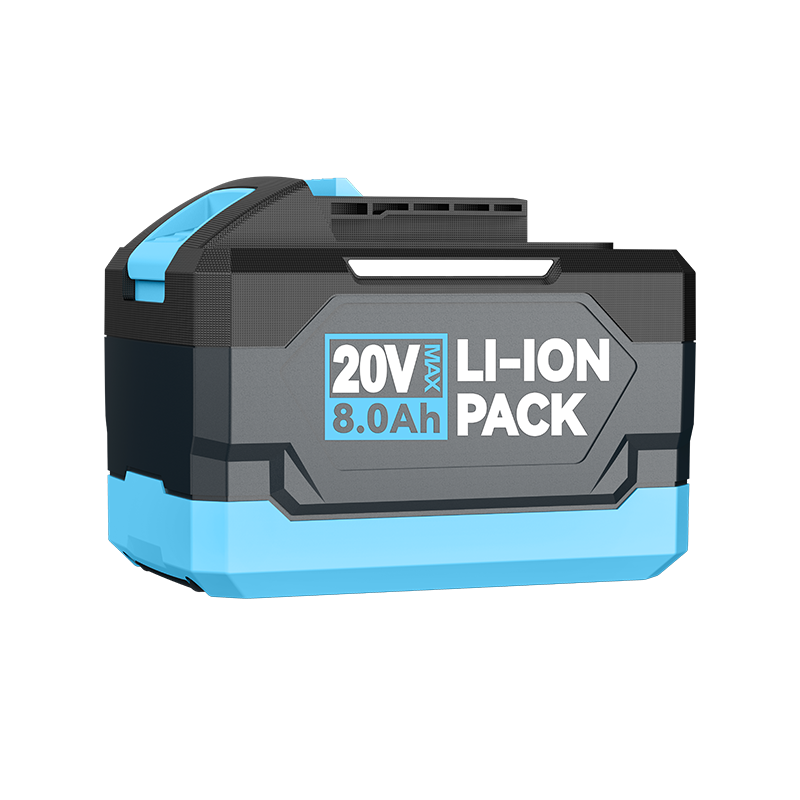
When selecting a Cordless Impact Wrench or an Impact Driver, the battery platform is a critical deciding factor. This involves the tool's runtime and sustained performance, especially under high-intensity workloads.
- Cordless Impact Wrench’s High Energy Consumption Needs:
- Voltage: Heavy-duty Cordless Impact Wrench models often require a higher voltage platform (e.g., 18V or 20V series, or even dual-battery 36V/ 40V series) to meet their immense power demand. Low-voltage or small-capacity batteries cannot deliver or sustain the large instantaneous current required to break free stubborn bolts.
- Amp-Hours (Ah): For an impact wrench, large Amp-hour batteries (5.0 Ah and above) are recommended to ensure sufficient runtime to complete a full day of automotive or mechanical repair work.
- Impact Driver’s Efficiency Advantage:
- Compatibility: Because Impact Drivers are efficient and require relatively lower torque, they typically work well with both compact (2.0 Ah or 3.0 Ah) and standard batteries from the same brand.
- Ecosystem Value: The first step for many users when choosing a tool is to commit to a unified battery platform, allowing one battery to power all the brand's tools, such as drills, saws, the Cordless Impact Wrench, and the Impact Driver.
| Consideration Factor |
Cordless Impact Wrench |
Cordless Impact Driver |
| Recommended Battery Capacity |
5.0 Ah and above(to ensure prolonged high-load work) |
2.0 Ah - 5.0 Ah(flexible choice based on work intensity) |
| Voltage Requirement |
Tends towards higher voltage platform, to provide maximum power |
Industry standard voltage is fine, emphasizes light weight |
| Runtime |
Battery life is heavily affected by the frequency of high-torque operations |
Has a relatively long runtime, suitable for continuous driving tasks |
Proper Maintenance and Use
Regardless of whether you choose a Cordless Impact Wrench or an Impact Driver, correct maintenance and usage practices will extend the life of the tool and its accessories, and ensure safe and efficient task completion.
Cordless Impact Wrench’s Socket Selection: Use Impact-Rated Accessories
- Impact Sockets are Mandatory: Standard Chrome Vanadium steel sockets must never be used on a Cordless Impact Wrench. These standard sockets are designed for manual wrenches and cannot withstand the tremendous instantaneous torque generated by an impact wrench, making them highly prone to cracking and potentially causing serious injury from flying debris.
- Impact-rated Sockets are usually made of Chrome Molybdenum steel and are black (distinguished from the bright silver color of standard sockets). They have thicker walls and higher impact toughness.
Torque Control and Precision Fastening
- Preventing Over-Torque: Especially with high-torque Cordless Impact Wrench models, directly using the maximum setting to tighten critical fasteners can lead to over-stressing or even snapping the bolt or nut.
- Control Methods:
- Multi-Setting Modes: Use a low torque setting or an “Auto-Stop” mode on the tool for initial fastening.
- Final Check: After completing the initial tightening with the impact wrench, it is mandatory to use a calibrated Torque Wrench for the final precise tightening and verification, ensuring the fastener reaches the manufacturer's specified safe torque value.
Routine Cleaning and Storage of the Tool
- Keep Clean: Especially after use in automotive or construction environments, clear any dust, grease, or dirt from the tool and battery contacts.
- Safe Storage: Store the tool in a dry place, away from extreme temperatures. This is crucial for protecting battery life and the tool's internal electronic components.
IX. Frequently Asked Questions (FAQs)
This section addresses several common questions regarding the Cordless Impact Wrench and the Impact Driver, helping you solidify your selection knowledge and ensure safe and effective use.
Do I need to own both a Cordless Impact Wrench and an Impact Driver?
Answer: For most individuals who work on both automotive repair and home/construction projects, yes, owning both tools is the ideal choice for maximum efficiency and flexibility.
| Goal |
Recommended Tool |
Reason |
| Heavy Loosening/Tightening |
Cordless Impact Wrench |
Provides the necessary high torque for nuts and bolts. |
| Rapid Screw Driving |
Cordless Impact Driver |
Offers high rotation speed and a compact body for screws and small fasteners. |
If the budget is limited and your work is concentrated in one area:
- Only for automotive or heavy maintenance: Prioritize purchasing a Cordless Impact Wrench.
- Only for carpentry, renovation, or DIY: Prioritize purchasing an Impact Driver.
Can a Cordless Impact Wrench be used for drilling?
Answer: Technically yes, but it is inefficient and not recommended as a primary drilling tool.
The Cordless Impact Wrench is designed for impact tightening/loosening of nuts and bolts. To mount a drill bit, you would need a special Square Drive Adapter to connect a hex shank or standard drill chuck.
- Problem: The rotation speed (RPM) of an impact wrench is typically much lower than a dedicated drill, making the drilling process slow. More importantly, the high-intensity impact mechanism of the impact wrench will activate during drilling, which can damage the drill bit, the material, or lead to inaccurate drilling.
- Recommendation: Use a standard drill or an Impact Driver for drilling tasks, as they provide more stable rotation and higher speed, resulting in a smoother, more efficient drilling experience.
How can I prevent the Cordless Impact Wrench from over-tightening my bolts?
Answer: Due to the immense torque of the Cordless Impact Wrench, over-tightening is a serious risk that can lead to stripped threads or broken bolts. Methods to prevent over-tightening include:
- Using Torque Limiting Settings: Many mid-to-high-end Cordless Impact Wrench models feature multiple power or torque modes. During the tightening process, the low setting or an “Auto-Stop” mode should be used for initial fastening.
- Using Torque Sticks: This is an external accessory, shaped like a long socket extension, that limits the maximum applied torque by absorbing excess impact energy. They are pre-calibrated, for example, a 100 ft-lbs limiting stick.
- Final Check: The most important step. After initial tightening with the impact wrench, it is mandatory to use a calibrated Torque Wrench for the final precise tightening and verification, ensuring the fastener reaches the manufacturer's specified safe torque value.
Can an Impact Driver be used to remove car lug nuts?
Answer: In most cases, no, this is not recommended.
Car lug nuts typically require 80 ft-lbs to 150 ft-lbs or higher torque to loosen and tighten.
- Loosening: Nuts can be seized or rusted from use, and the necessary break-away torque often exceeds their rated tightening torque. The torque of an Impact Driver (usually below 250 ft-lbs) is often insufficient for these stubborn fasteners, or only adequate for nuts that have already been broken loose with a manual tool.
- Recommendation: Removing and installing tire lug nuts is a classic application for the Cordless Impact Wrench. A 1/2 inch drive Cordless Impact Wrench should be used, along with proper torque management practices.
What is the main difference in maintenance between the Cordless Impact Wrench and the Impact Driver?
Answer: Both are brushless motor tools, and their general maintenance needs are similar (cleaning, battery care). The main difference lies in accessory wear:
| Maintenance Difference |
Cordless Impact Wrench |
Cordless Impact Driver |
| Primary Accessory Wear |
Impact Sockets(need regular checking for cracks or wear) |
Hex Shank Bits(bits wear out quickly, requiring a large stock) |
| Motor Wear |
Impact mechanism and motor are under greater stress from continuous high-torque impact |
Impact mechanism pressure is lower, motor wear is higher due to high-speed operation |

 English
 русский
 Español