What Is an Impact Wrench? A Quick Overview
You're trying to remove a rusted lug nut at the side of the road. The breaker bar flexes, your knuckles scrape the pavement, and the nut won't give in. You've asked yourself the same question most mechanics have: how does an impact wrench work? The short answer involves a hammer, an anvil, and a well-timed collision.
An impact wrench is a socket-drive power tool engineered to deliver high torque to fasteners with minimal physical effort from the operator. Unlike a manual ratchet or a standard drill, it produces torque in rapid, intense pulses rather than as one continuous twisting force. Those pulses, generated by an internal hammer striking an anvil, are what let it break loose bolts that would defeat a human arm.
Drive size defines the tool's working range:
- 1/4-inch: light fasteners, interior trim, small equipment
- 1/2-inch: passenger-car lug nuts, suspension components, general repair
- 3/4-inch: trucks, buses, and agricultural machinery
- 1-inch: structural steel, mining, and heavy construction
The contrast with a hand tool is the key to understanding everything else. When you pull a ratchet, your arm supplies steady force and absorbs the full reaction. An impact wrench concentrates the motor's energy into a spinning hammer, then releases it in controlled mechanical impacts. That single design change explains both the enormous torque and the surprisingly low fatigue.
The Core Mechanism: Hammer, Anvil, and Angular Momentum
Every impact wrench relies on three mechanical components:
- The motor, which provides rotational power.
- The hammer, a spinning mass that stores kinetic energy.
- The anvil, which carries the square drive and transfers torque to the socket.
The operating cycle repeats continuously while you hold the trigger:
- The motor accelerates the hammer to high speed.
- The hammer rotates away from the anvil, accumulating angular momentum.
- A cam profile or pin causes the hammer to re-engage the anvil.
- The stored rotational energy is released into the anvil in a sudden impact.
- The hammer rebounds, disengages, and the motor accelerates it again.
Most impact wrenches cycle at 1,500 to 2,500 impacts per minute (IPM). The secret behind the massive torque is angular momentum: a spinning hammer stores energy proportional to its mass and speed, and when it locks onto the anvil, that energy enters the output shaft in milliseconds. The instantaneous torque at the anvil can dramatically exceed the motor's continuous rating.
Why Doesn't the Impact Wrench Jerk Your Wrist?
The reaction question surprises almost everyone. If the tool generates hundreds of newton-meters of torque, why doesn't your wrist feel it?
The answer is torque duration. A manual ratchet applies continuous torque; your wrist opposes it for the whole pull. An impact wrench delivers torque in millisecond pulses. The hammer hits the anvil, transfers its energy, and disengages immediately. Your hand receives perhaps twenty sharp pulses per second, with relaxation gaps in between. The extreme peaks are brief enough that the average reaction force stays manageable.
Mechanics also matter. Because the impact is rotational and very short, part of the reaction is absorbed internally by the hammer and its springs rather than being passed to your hands. That is why a 1,000 N·m impact wrench can feel more controllable than a 200 N·m hand ratchet on a difficult bolt.
Inside the Hammer-Anvil Mechanism: Pin Clutch and Twin-Hammer Designs
Not every impact mechanism works exactly the same. The two mainstream designs are pin clutch and twin hammer.
Pin clutch mechanisms use a spring-loaded pin that rides along the anvil surface. When the pin drops into a recess, it locks the hammer to the anvil, and the stored energy is delivered as one impact. The pin then pops back out, and the cycle restarts. These designs favor one or two impacts per revolution, with strong force per strike.
Twin hammer mechanisms use two hammers opposite each other. They strike the anvil alternately, producing two impacts per revolution. That raises the impact frequency and makes the tool feel smoother when running fasteners down, although each individual impact carries somewhat less energy.
The trade-off guides the design of different tool classes. Large 1-inch drive wrenches usually favor single-impact mechanisms with maximum breakaway force for huge bolts. Compact 1/2-inch tools tend to prioritize higher cycling frequency because automotive work benefits from speed. The better choice depends entirely on whether you spend your time breaking fasteners free or running them down all day.
Power Sources Compared: Pneumatic, Corded, and Cordless
The hammer-anvil mechanism is identical in principle across all impact wrench types. The real difference is the power source.
Pneumatic wrenches run on compressed air and drive a rotary vane motor. They give the best torque-to-weight ratio and tolerate continuous professional use, which is why shops with air systems stay pneumatic. The drawback is the compressor, hoses, and water-trap maintenance that comes with the territory.
Corded electric wrenches plug into any outlet and deliver steady torque without needing compressed air. They work well in home workshops and fixed stations, but the cable can be genuinely awkward when you are working under a car or up on scaffolding.
Cordless wrenches have transformed the market over the last decade. A 20V brushless model now produces 350 to 1,000 N·m, overlapping with mid-range pneumatics, with none of the hoses. For vehicle repair on the road or in a home garage, a cordless impact wrench for automotive work is the most practical configuration.
Pneumatic, corded, and cordless impact wrenches share the same hammer-anvil mechanism; only power delivery and mobility differ.
| Feature |
Pneumatic |
Corded Electric |
Cordless |
| Power source |
Compressed air |
Wall outlet |
Lithium-ion battery |
| Typical torque range |
Highest |
High |
350–1,000 N·m (20V class) |
| Mobility |
Limited by hose |
Limited by cord |
Fully portable |
| Best setting |
Professional shop |
Home workshop |
Automotive, field work |
| Key limitation |
Needs air compressor |
Needs power outlet |
Battery runtime |
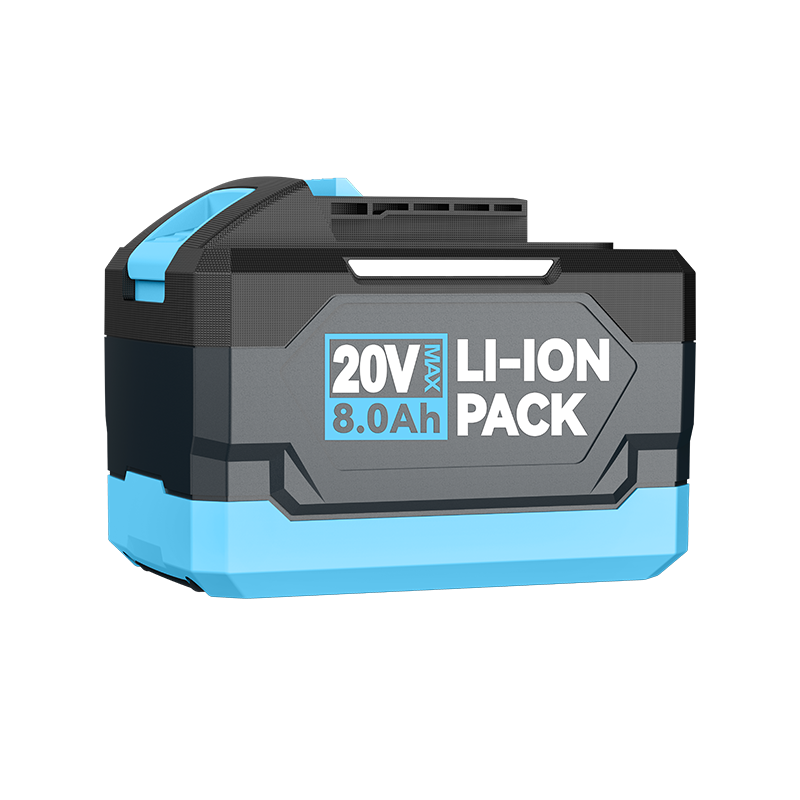
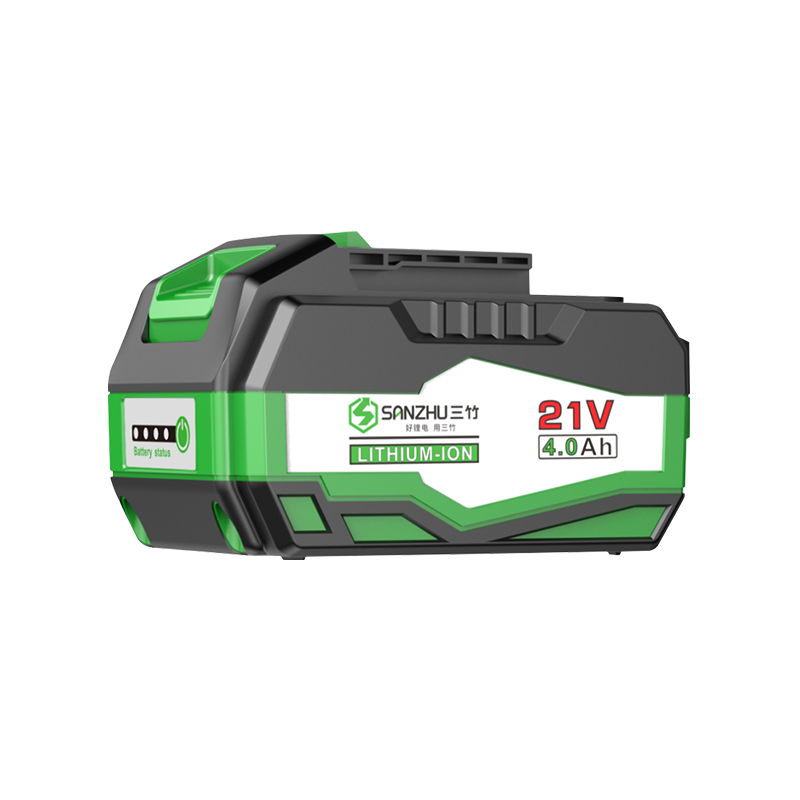
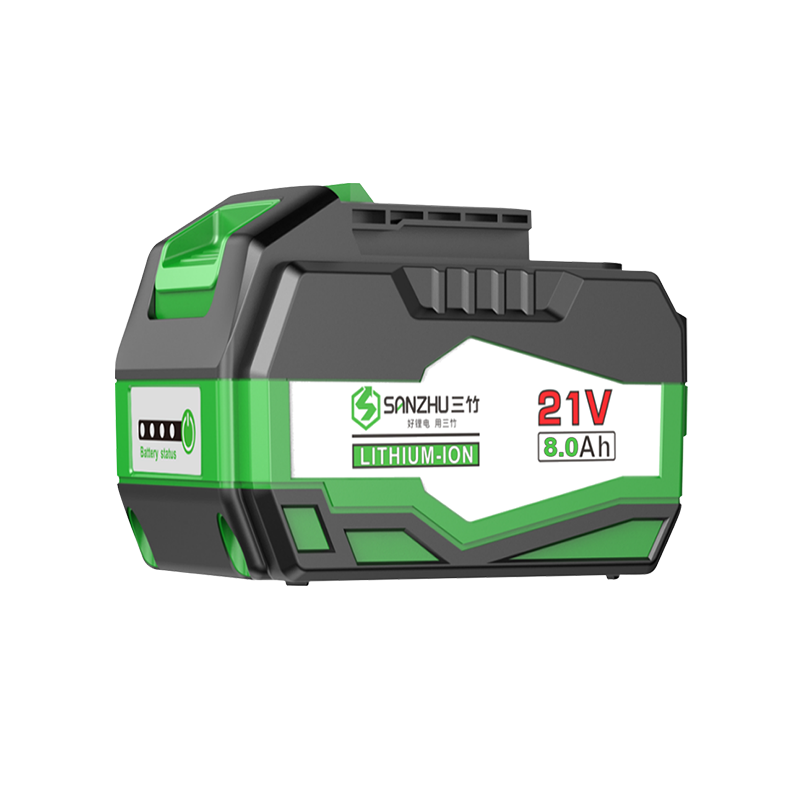
Battery voltage is the main performance indicator. A 16V tool handles light duty; 20V and 21V platforms supply the current a high-torque brushless motor needs for sustained work.
How Brushless Motors Change Impact Wrench Performance
A brushed motor pushes current through carbon brushes onto the spinning commutator, creating friction, heat, and wear. A brushless motor replaces that mechanical contact with an electronic controller that switches current between stator coils, so there are no brushes to wear out.
For an impact wrench, brushless technology delivers three practical benefits:
- Higher efficiency. Less energy lost to friction means more of the battery reaches the hammer, giving you more impacts per charge.
- Longer tool life. Carbon brushes are the main wear part in electric motors; removing them eliminates the most common failure point in a tool that vibrates constantly.
- Consistent impact energy. The electronic controller holds motor speed steady under load, so each hammer strike carries similar force. That matters when you remove a row of wheel bolts and want the last one to come off as easily as the first.
The marriage of a brushless motor and the hammer-anvil mechanism is what allows compact cordless wrenches to reach 600 to 1,000 N·m. If you want the engineering details behind that, the companion article on how the brushless impact wrench works goes deeper into motor control and efficiency.
What You Should Look For When Choosing an Impact Wrench
Once you understand the mechanism, choosing a wrench comes down to five factors.
- Maximum torque. Match the rating to your tasks. A 300–350 N·m wrench handles home repair and passenger-car wheels. Heavy automotive and light construction need about 600 N·m. Industrial fasteners and structural steel start at 1,000 N·m.
- Drive size. Match the square drive to your sockets. 1/2-inch is the automotive standard; 3/4-inch and 1-inch serve heavier jobs.
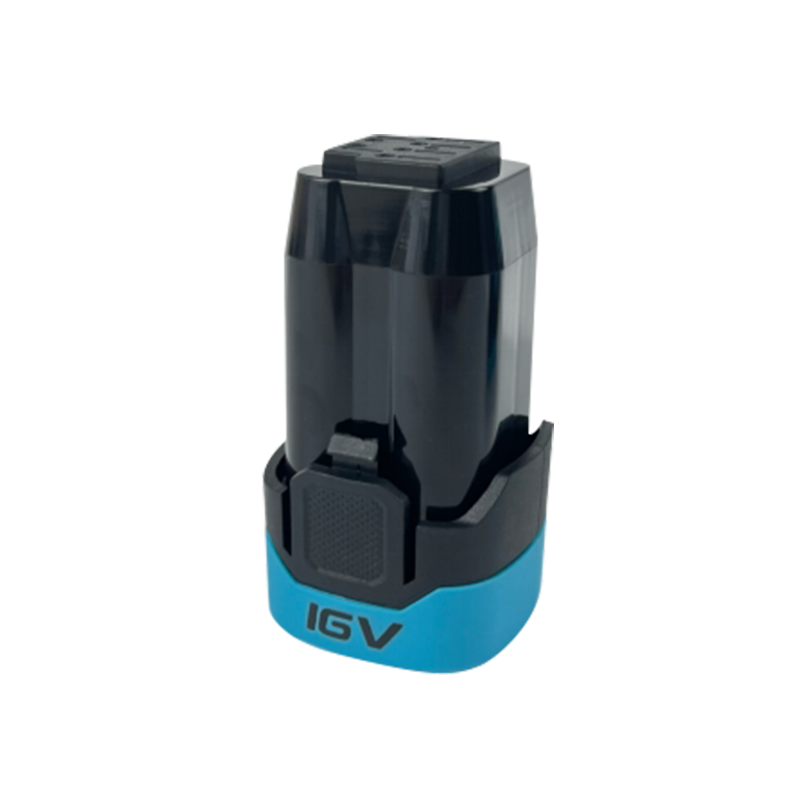
- Battery platform. Stay in the same voltage family as your other tools so batteries and chargers interchange.
- Speed and torque adjustment. Adjustable modes are what make a tool genuinely useful. Three-gear control lets you run fast for removing bolts, moderate for assembly, and gentle for final torque. A brushless impact wrench with three-gear adjustment
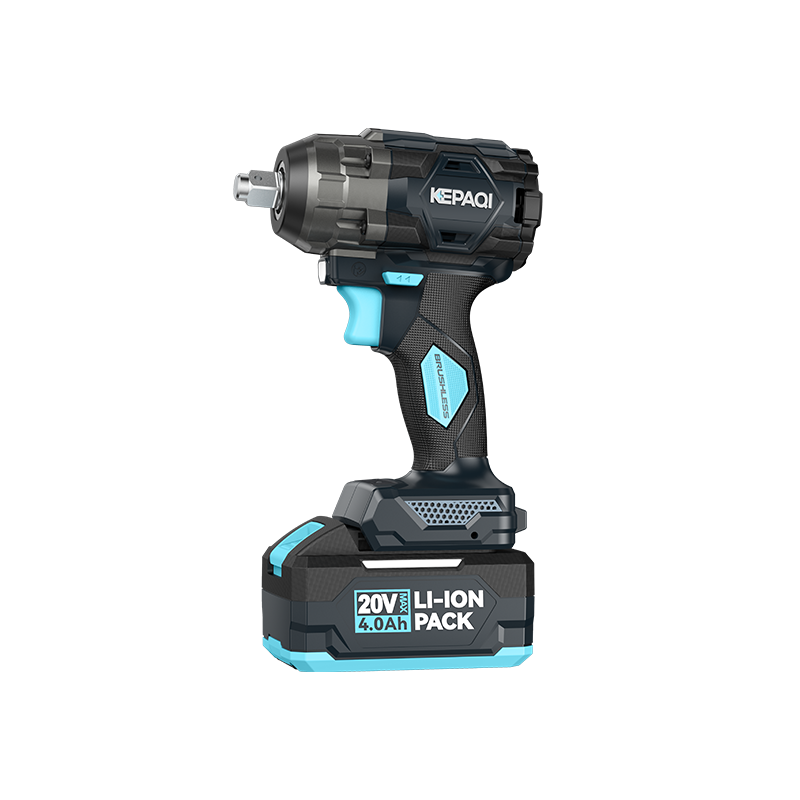 Custom 20V Strong Torque Three-gear Adjustment Brushless Impact Wrench SuppliersNantong Great Tools Co., Ltd. is China 20V Strong Torque Three-gear Adjustment Brushless Impact Wrench Suppliers and OEM 20V Strong Torqu...View Product → in the 600 N·m range covers both difficult removals and careful reinstallation, which is why it is the most popular configuration among automotive owners.
- Weight and ergonomics. One extra pound is easy to forget in the store and impossible to ignore after an hour of overhead work. Test the grip and balance before you buy.
Torque range is the simplest way to match an impact wrench to its intended workload.
| Torque range |
Realistic workload |
| 300–350 N·m |
Home DIY, passenger-car wheels, light repair |
| 600 N·m |
Heavy automotive, suspension work, light construction |
| 1,000 N·m and above |
Industrial fasteners, structural steel, heavy equipment |
Final Verdict: Is an Impact Wrench Worth It?
If you replace tires, overhaul suspensions, service vehicles, or maintain heavy equipment, an impact wrench is one of the best tool investments you can make. It turns a ten-minute struggle with a seized bolt into a three-second release and spares your elbows and wrists the strain of repeated manual torque.
If your fastening jobs are occasional and easy to reach, a manual ratchet and a breaker bar are enough. The practical test is simple: frequency and intensity. If you fight stubborn fasteners several times a year, buy one. Choose cordless for versatility, match the torque range to your real workloads, and remember that adjustable speed control matters more in daily use than the maximum number printed on the box.

 English
 русский
 Español