On a damp roadside, a lug nut that has been torqued to spec for months can behave like a welded component. Breaking it free with a breaker bar costs time, effort and body weight. A cordless impact wrench removes that bolt in a fraction of a second because it does not rely on steady twisting force alone; it delivers repetitive high-energy impacts that crack the corrosion bond. In our factory test sequence, a 20 V brushless impact wrench rated at 600 N·m released corroded M14 wheel studs in under two seconds without the operator having to brace against the vehicle.
The conclusion is straightforward: a modern cordless impact wrench is no longer a convenience upgrade but a core fastening tool for automotive, construction and maintenance work. The important part is choosing the right torque class, motor type and battery platform for the fasteners you actually handle. The sections below explain how those decisions affect daily performance, with numbers and factory-level checkpoints rather than general advice.
Why a Brushless Motor Is the Non-Negotiable Baseline for an Impact Wrench
Start with the motor because it determines how hard the impact mechanism can hit, how long the tool can sustain that hitting, and how much heat the housing has to get rid of. Brushed motors still appear in cheap cordless impact wrenches, but the difference becomes obvious after ten consecutive bolts rather than on the first one. Carbon brushes wear, contact resistance rises, and the commutator generates sparks that erode the internal parts. As the brush gear degrades, the motor loses speed and torque, which means fewer impacts per minute and weaker deliverable torque.
A brushless motor replaces the mechanical commutation with an electronic controller that energizes the coils in sequence. The rotor is a permanent magnet, so there are no brushes to wear out and no sparks to generate ozone or heat. Because the heat source moves from the rotor to the stator housing, a brushless design also cools more effectively. In our durability lab, brushless impact wrenches hold their rated torque for longer continuous cycles than equivalent brushed units, and the current draw stays flatter when the tool is pushed against a stuck fastener.
There is also a practical dimension. A brushless controller can deliver peak current instantly when the hammer needs to be re-cocked. That responsiveness translates into faster impact recovery, which is exactly what makes high-torque models feel violent rather than sluggish. For a buyer evaluating long-term cost, the absence of brush replacement and the improved thermal behavior typically make brushless motor impact wrenches the standard recommendation for workshops and site crews.
In short, if the purchase decision is between brushed and brushless, the answer is brushless. The remaining questions are about torque, battery capacity and how the tool fits the specific fasteners you handle.
Torque Ratings: What 350 N·m, 600 N·m and 1000 N·m Actually Mean
Torque is the headline number on every cordless impact wrench, but it is also the most misunderstood. A rated torque value is not a guarantee that every fastener of a given size will break free. It describes the maximum output the tool can deliver under controlled conditions, usually with a fully charged battery and a specific test joint. Fastener condition, thread lubrication, socket fit and impact duration all change the real-world result.
That said, torque classes map reasonably well to common bolt sizes. A 350 N·m class tool is designed around M10 to M12 fasteners. That range covers most passenger car lug nuts, suspension links, small structural clamps and machine guards. A 600 N·m class tool moves up to M14 and M16 fasteners, which appear on truck wheels, trailer hitches, steel beam connections and agricultural equipment. A 1000 N·m class tool reaches M18 to M24 bolts, the kind used in heavy equipment, railway track maintenance, large flange joints and industrial structural steel.
Typical bolt size coverage by torque class
Torque classes based on common fastener sizes, not maximum breakaway claims.
| Torque level |
Fastener range |
Typical work |
Handling |
| 350 N·m |
M10–M12 |
Passenger car wheels, small brackets, light structural assembly |
Compact body, easy in tight spaces |
| 600 N·m |
M14–M16 |
Truck wheels, trailer bolts, steel erection, farm equipment |
Balanced weight and power |
| 1000 N·m |
M18–M24 |
Heavy machinery, railway, large flanges, industrial erection |
Longer body, often 3/4-inch drive |
Our advice is to choose the torque class that covers the largest bolt you remove on a regular basis, not the largest bolt you can imagine. A heavier 1000 N·m unit is tiring to hold overhead and unnecessary for wheel work. A 350 N·m unit that fits into an engine bay is faster for small fasteners but will struggle on suspension bolts that have been exposed to moisture and road salt. For most mixed workshops, the 600 N·m class is the practical sweet spot because it handles passenger vehicles and light commercial trucks without making the tool too bulky.
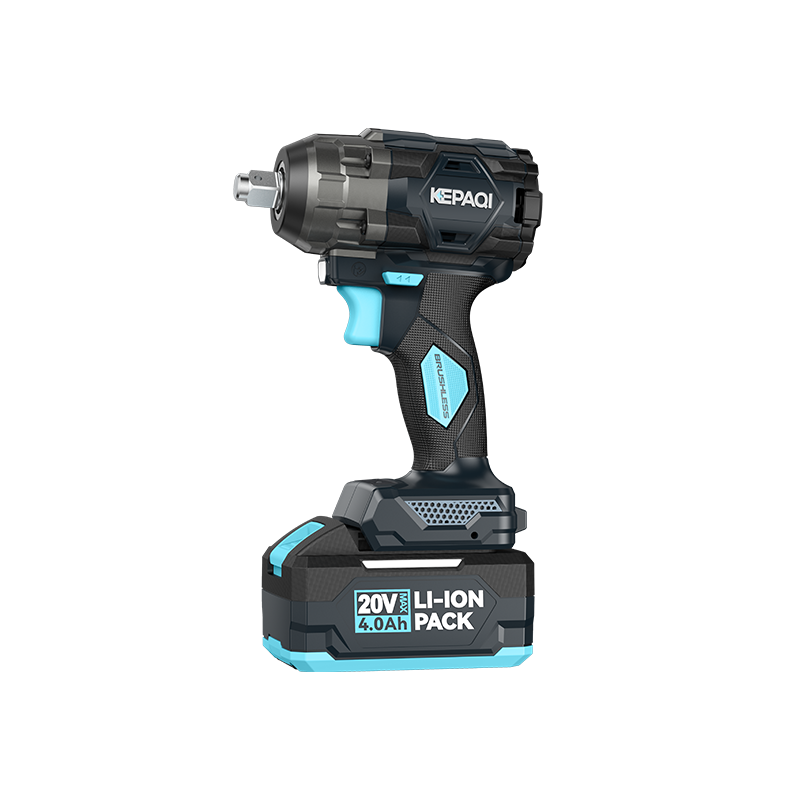 GREAT 20V Brushless Impact Wrench with 600 N·m Max TorqueThis three-speed cordless wrench suits mixed workshops needing a practical middle-ground torque class without the bulk of heavier models.View Product →
Battery Platform: 16V, 20V and Capacity Planning That Matches the Work Day
Torque comes from the combination of motor, impact mechanism and battery delivery. A battery with high internal resistance cannot supply the current needed for a large brushless motor, no matter how strong the motor is. This is why voltage platforms matter. In the cordless impact wrench range, 16 V models serve light and occasional work, while 20 V models support the higher torque classes. Note that a 20 V battery reaches roughly 21 V at full charge, which is why some listings use 21 V as a marketing figure. The mechanical platform is the same.
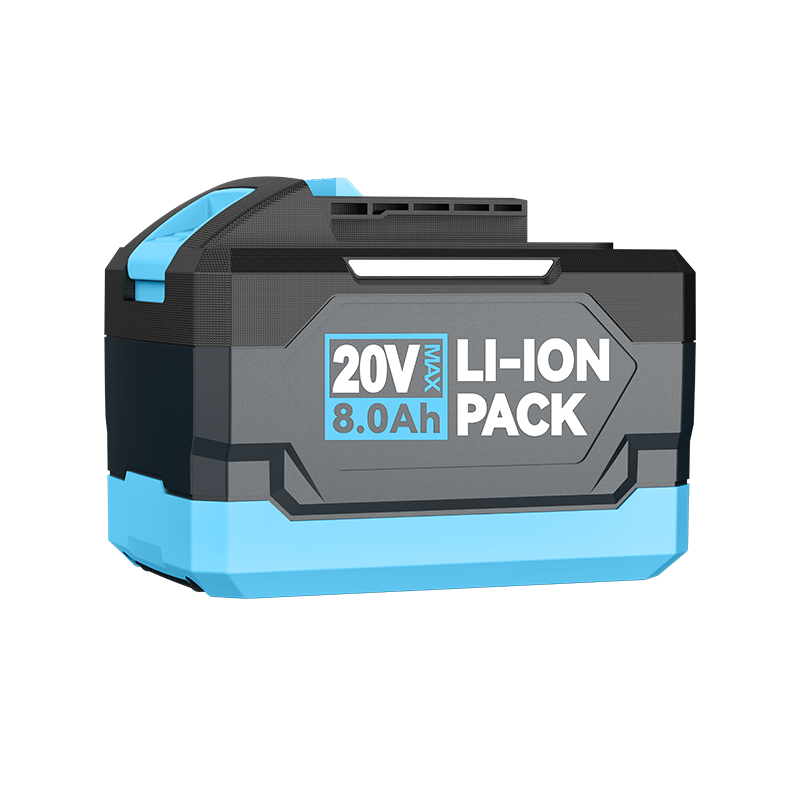
Capacity, measured in Ah, decides how many fasteners you can drive before the tool slows down. A 1.5 Ah pack is fine for a few wheel changes. A 4.0 Ah pack covers a full day of mixed repair work. A 6.0 Ah or 8.0 Ah pack gives a long runtime for continuous use on construction sites, though it adds weight to the tool. The right choice depends on whether you grab the wrench five times a day or keep it running for hours.
Estimated fastening cycles on a 600 N·m class wrench with M16 bolts
Field estimates from our test bench; actual counts vary with bolt condition, temperature and impact duration.
| Battery capacity |
Voltage |
Estimated cycles with 600 N·m class |
Best fit |
| 1.5 Ah |
16V / 20V |
30–50 |
Occasional use, one or two wheels |
| 2.0 Ah |
16V / 20V |
50–80 |
Light maintenance |
| 4.0 Ah |
20V |
100–200 |
Daily workshop use |
| 6.0 Ah |
20V |
150–250 |
Construction and long shifts |
| 8.0 Ah |
20V |
200–350 |
Heavy continuous fastening |
Battery performance also changes with temperature. Cold packs deliver less current and show a stronger voltage drop under load. A high-capacity pack is more forgiving in winter because its internal resistance is lower relative to the load. Charger matching matters too. A charger rated for the capacity of the pack will finish the charge in a reasonable time without pushing excessive current into the cells.
For workshops that want one platform across drills, grinders and wrenches, the 20 V system is the safer investment. It gives you the headroom to run high-torque tools while staying compatible with lighter tools in the same lineup. Our own 20 V impact wrench line is designed to share the same battery and charger family, so adding a high-torque unit does not require a second charging system.
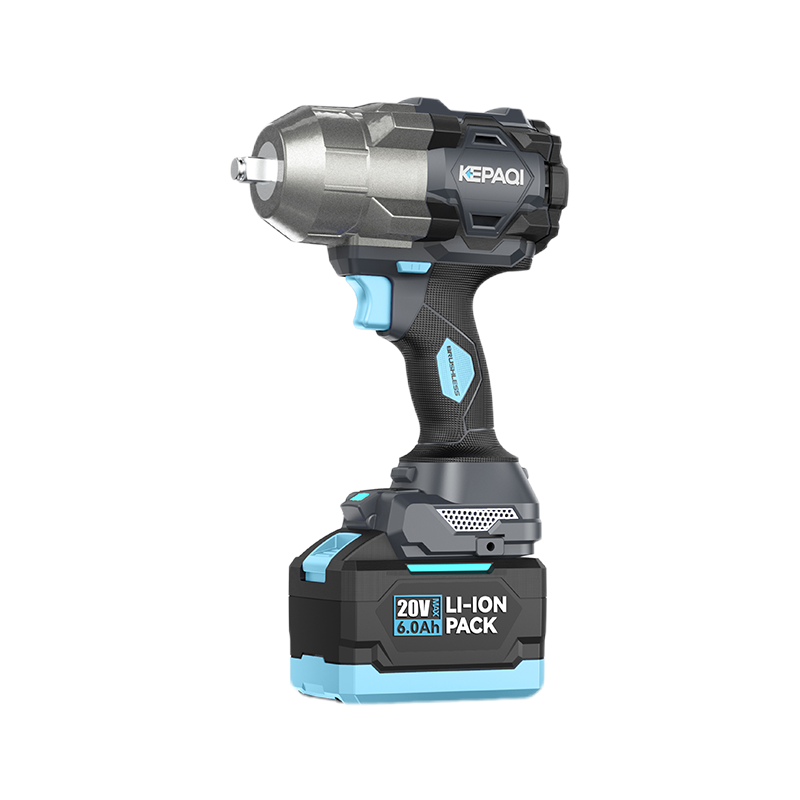 GREAT 20V Heavy-Duty Brushless Impact Wrench up to 1200 N·mBuilt for professional automotive and industrial tasks, this high-torque model shares the 20V platform and features dual-speed control for demanding fasteners.View Product →
Inside the Hammer-Anvil System: Where Impact Energy Comes From
The motor drives a rotating hammer that is connected to the output shaft through a spring-loaded cam mechanism. When resistance on the socket builds up, the hammer compresses the spring, separates from the anvil, and then slams forward again with rotational force. Each engagement delivers a short but powerful pulse of torque to the fastener. This is why an impact wrench can break loose a rusted bolt without transferring that massive reaction force back to the operator.
The number of impacts per minute and the energy of each impact determine how quickly a fastener comes loose. Two mechanisms with the same torque rating can behave differently because one may produce frequent lighter hits, while the other produces fewer but stronger hits. For corroded fasteners, a higher impact rate is usually better because it breaks the corrosion bond through repeated shock rather than through prolonged maximum twisting. For tightening operations, controlled impact energy reduces the risk of overtightening.
Durability of the hammer-anvil system is where manufacturing quality becomes visible. The anvil needs a hardened contact surface to resist repeated deformation, and the hammer needs tight clearances so energy is not lost to internal play. In our factory, we run impact mechanisms through continuous load testing and inspect the contact faces for wear. A well-made unit should show minimal wear patterns after thousands of cycles, while a poorly made one can lose impact efficiency within weeks.
The practical consequence for users is simple. If the tool spends most of its life on rusty bolts, the impact frequency and anvil quality matter as much as the peak torque number. If the tool is used mainly for assembly work, the speed control and shutdown response become more important.
Compact vs High-Torque: Physical Limits of a Cordless Design
Everything in a cordless impact wrench is a trade-off between power and reach. A high-torque unit requires a larger motor, a heavier hammer-anvil assembly and a wider battery, all of which push the weight up and lengthen the body. A compact unit keeps the head short and the center of gravity close to your hand, but it cannot physically contain the components needed for 1000 N·m of output. Recognizing this trade-off helps you avoid the common mistake of buying either the most powerful model or the smallest model without considering the actual working position.
Compact class
- Torque range: about 120–350 N·m
- Drive size: 1/2-inch or 3/8-inch
- Body length: short, good for engine bays
- Best for: wheel lugs, brackets, small maintenance
Mid-torque class
- Torque range: about 400–650 N·m
- Drive size: 1/2-inch
- Body length: moderate
- Best for: truck wheels, suspension, general steel
High-torque class
- Torque range: above 700 N·m
- Drive size: 3/4-inch or 1-inch
- Body length: long, often two-handed use
- Best for: heavy machinery, railway, large bolts
Weight becomes a deciding factor when the wrench is used above shoulder height or in tight vertical positions. A high-torque model held at arm’s length on a machine frame is exhausting after a few joints. The solution is often to keep a compact unit for fast small fasteners and a larger unit for the heavy jobs. Workshops that cannot justify two tools tend to choose the mid-torque class because it balances coverage and fatigue.
Another physical limit is drive size. A 1/2-inch square drive is standard for passenger vehicle and light truck work. A 3/4-inch drive is used above roughly 700 N·m because a 1/2-inch socket and anvil would risk failure under the extra stress. Buyers sometimes assume that a 3/4-inch drive socket can be adapted down to 1/2-inch for smaller jobs, and it can, but the adapter adds length and reduces the impact transfer slightly.
Which Applications Can a Cordless Impact Wrench Cover?
Cordless impact wrenches have replaced pneumatic tools in many service and assembly roles, not because battery power is better in every way, but because it removes the compressor hose and the waiting time. The application range depends on torque, speed control and battery runtime. Below are the main scenarios we see from customer feedback and testing.
Automotive repair
Wheel lugs, suspension arms, brake caliper brackets and exhaust clamps are the daily diet of an automotive impact wrench. A 350–600 N·m brushless model with a 1/2-inch drive is enough for most vehicles up to light trucks.
Construction and steel erection
Structural bolts, temporary supports, formwork hardware and anchor bolts on site need higher torque and longer runtime. A 600 N·m class unit with a 4.0 Ah or larger battery handles the typical M14–M16 bolts found in steel frames.
Heavy maintenance and industrial work
Machinery guards, flange bolts, track hardware and large agricultural implements can exceed 700 N·m. A 1000 N·m class wrench with a 3/4-inch drive and high-capacity battery is the right choice for repetitive heavy fastening.
In the automotive category, the shape of the tool is almost as important as the torque. A straight body with a short head reaches wheels and suspension points without removing adjacent parts. The addition of a variable-speed trigger and a reverse mode lets the operator control the final degree of torque rather than relying on feel. Many of our customers use the same tool for removal and for assembly, simply by switching the impact mode to a lower setting and using a torque stick for final tightening.
Construction work brings a different set of demands. The wrench is often exposed to dust, vibration and occasional drops. A rubberized handle, sealed trigger and a battery latch that keeps the pack locked during heavy impact become important. For cordless impact wrench for automotive use in particular, the compact body and LED light are practical features that improve speed and accuracy in low-light conditions.
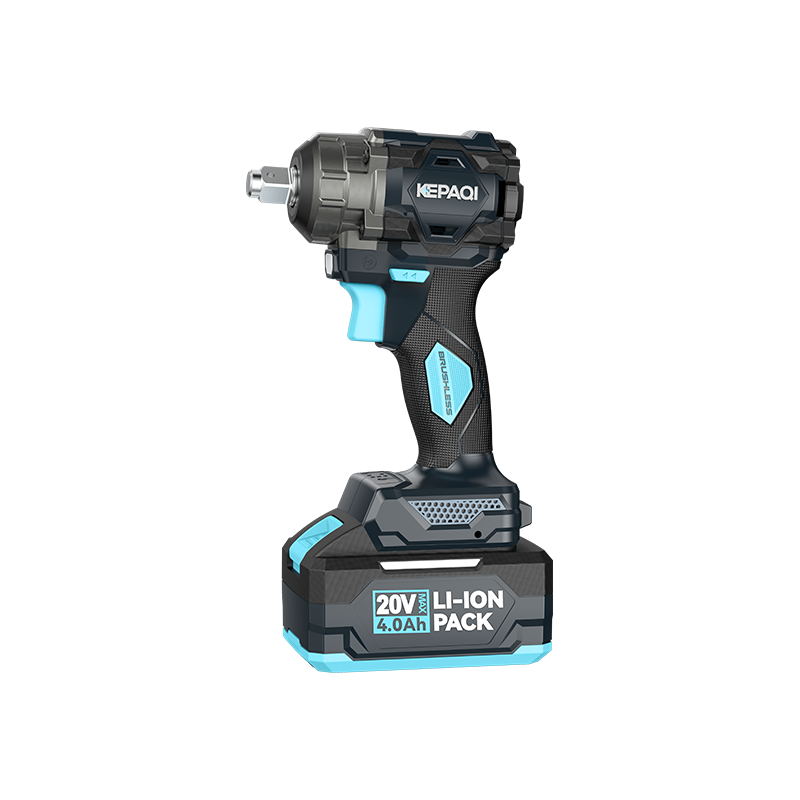 GREAT 20V Compact Brushless Impact Wrench with 350 N·m TorqueA lightweight, adjustable-speed wrench ideal for construction and low-light work, offering reliable disassembly and drilling across various materials.View Product →
Factory-Level Quality Checks That Matter Before a Unit Is Shipped
A cordless impact wrench is only useful if the torque measurement is consistent, the battery keeps working under load, and the mechanism survives months of field use. Our role as a manufacturer is to verify those three points before the tool is packed. The process starts with the motor: each brushless motor is tested for current draw, coil resistance and hall-sensor timing. A motor with an unstable signal will cause the electronic controller to switch erratically, which produces weak impacts and extra heat.
The battery pack then goes through a separate line. Cells are sorted by internal resistance before assembly, because a weak cell in a series pack limits the whole pack’s discharge current. The welding between cells is inspected, and the battery management system is checked for over-current, over-discharge and temperature protection. This matters for impact wrenches because the current peaks in an impact event can be sharp, and a weak pack can trigger protection early or drop voltage so much that the tool feels underpowered.
Finally, the complete tool is run on a torque tester to verify the output against the rated specification. We record the torque curve across the first minute of operation, not just the first burst, because heat and voltage sag gradually affect output. A quality tool should still produce close to its rated torque after sustained use, not only on a fully charged battery with a cold motor.
Buyers evaluating a supplier should ask for three things:
- Torque verification data for the specific model, measured on a calibrated tester after the tool has warmed up.
- Battery pack aging test results, including the number of charge-discharge cycles before capacity drops below 80 percent.
- Impact mechanism durability evidence, such as continuous load test records or photographs of internal parts after testing.
These checks are not theoretical. In our own facility, we operate a quality testing laboratory, a battery assembly workshop and a battery test system, because the packaging of a tool is a separate responsibility from the design of its components. The result is a product that behaves predictably when it reaches a workshop in another country.
Frequently Asked Questions About Cordless Impact Wrenches
Can a cordless impact wrench fully replace a pneumatic impact wrench?
For most mobile and workshop work, yes. A high-torque brushless cordless model with a 20 V battery platform delivers enough impact energy for wheel work, structural bolts and light industrial fastening. Pneumatic tools still win in continuous production lines where a compressor is already available and operators use the tool all day without stopping. The cordless advantage is independence from hoses, valves and compressor maintenance.
What torque do I need for car wheel lugs?
Passenger car lug nuts are typically tightened to 90–120 N·m, which sounds far below 350 N·m. However, the impact wrench needs extra capacity to break loose rusted or overtightened lugs. A 350 N·m class unit is generally the minimum for comfortable wheel work. For trucks and commercial vehicles, 600 N·m or more is recommended.
Why does my impact wrench have gear or speed modes?
An impact wrench operates at full speed, which is excellent for removal but risky for assembly. Speed and gear modes reduce the rotational speed and impact intensity so that the user can approach final torque gradually. Using a high speed mode to tighten a small bolt will often overtighten it. Lower modes also help when working with softer materials or thin-walled fittings.
What drive size should I choose?
For most automotive and construction work, 1/2-inch is the standard size because sockets are widely available and the anvil is strong enough up to about 650 N·m. For high-torque models above 700 N·m, a 3/4-inch drive is safer because the larger anvil surface distributes the impact load and resists twisting fatigue. Avoid using a 1/2-inch socket on a 1000 N·m tool through a cheap reducer.
Can I use one battery across different cordless tools?
If the tools use the same voltage platform and the same battery connector, yes. This is one of the main reasons to stay within a single product family. A 20 V 4.0 Ah battery can be shared between a drill, an impact wrench and a circular saw, which reduces the total cost of backup batteries and charging equipment.
Start with the largest bolt you regularly remove, because that defines the torque floor. Then consider whether your hand needs to fit into tight engine bays, because that defines the size ceiling. For many mixed workshops, a 600 N·m brushless model on a 20 V platform covers wheel work, suspension and light structural bolting in one tool. If the fasteners go beyond M24, step up to the 1000 N·m class and keep a lighter unit for everyday speed.

 English
 русский
 Español