The Evolution of Portable Power: Why the Cordless Angle Grinder Dominates Modern Job Sites
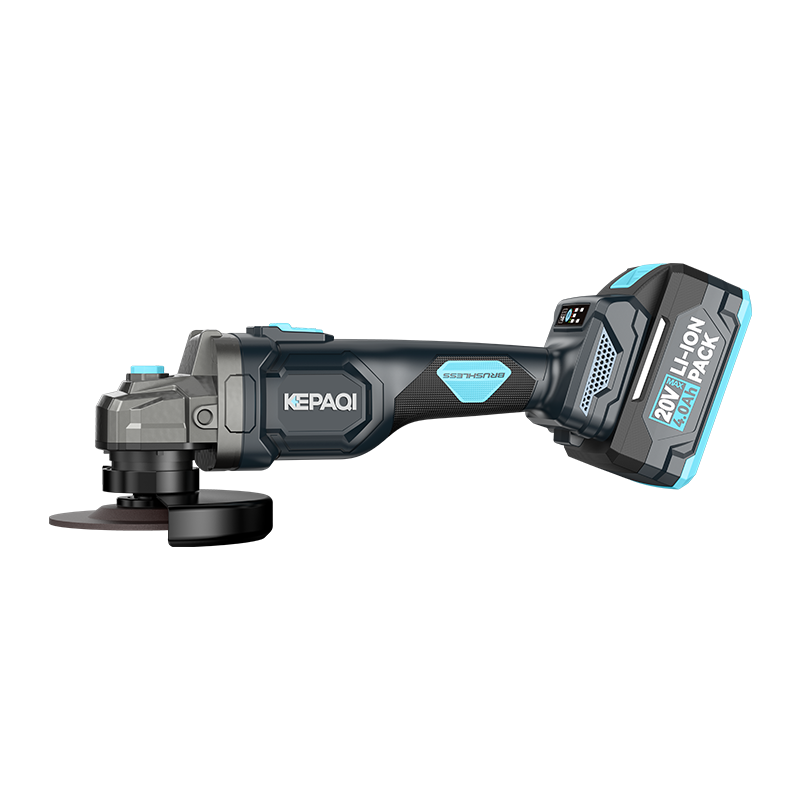
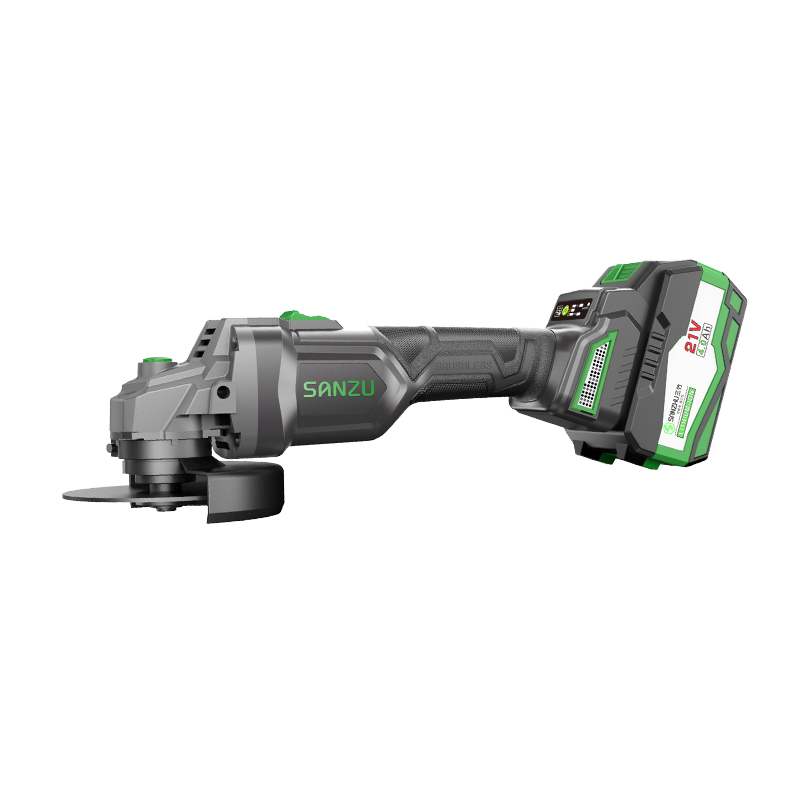
In modern industrial and construction sectors, the evolution of portable tools marks a significant leap in productivity. The popularity of the Cordless Angle Grinder is more than just removing a power cord; it represents a triple breakthrough in battery chemistry, motor engineering, and industrial design.
Breaking the Tether: The Shift from Pneumatic and Corded Tools
For a long time, high-intensity metal cutting and grinding tasks relied on corded grinders or pneumatic tools. While corded tools provide stable power, their limitations are particularly prominent on complex job sites. Dragging cables not only limits the operating radius but also creates serious safety hazards and time costs in scaffolding, narrow spaces, or outdoor environments without power. The Cordless Angle Grinder has completely solved this pain point. With the maturity of high-discharge rate battery technology, modern cordless equipment can provide power output comparable to corded tools, allowing operators to achieve a highly efficient "grab-and-go" workflow.
The Impact of Brushless Motor Technology on Cordless Angle Grinder Torque and Longevity
Brushless motor technology is the core reason the Cordless Angle Grinder can challenge traditional tools. Compared to traditional carbon brush motors, brushless motors regulate current through an electronic controller, eliminating energy loss and heat generated by physical friction. Regarding Energy Efficiency, brushless motors are typically over 30% more efficient than brushed motors, meaning the same battery can provide longer runtime. For Constant Torque, the electronic control system compensates for power in real-time during heavy-duty grinding, ensuring that RPM does not drop significantly under load. In terms of Maintenance Costs, because there is no carbon brush wear, the motor life is significantly extended, reducing downtime in industrial environments.
Analyzing the Power-to-Weight Ratio: How Modern 18V and 20V Systems Rival 1000W Corded Counterparts
The core design of an industrial-grade Cordless Angle Grinder lies in balance. While providing sufficient cutting force, the tool must remain lightweight to reduce wrist fatigue during long hours of operation. Modern 18V or 20V systems achieve extremely high power density through optimized internal structures.
| Feature |
Traditional Corded Grinder (Approx. 1000W) |
High-Performance Cordless Angle Grinder (18V/20V) |
| Power Source |
AC Power (Requires continuous connection) |
Li-ion Battery (Ready to use) |
| Motor Type |
Mostly Brushed Motor |
Mostly High-Performance Brushless Motor |
| Speed Under Load |
Excellent |
Excellent (Dependent on electronic feedback) |
| Weight (With Power) |
2.0kg - 2.5kg |
2.3kg - 2.8kg (Including 5.0Ah battery) |
| Mobility/Flexibility |
Limited by cord, tripping hazard |
Unlimited, suitable for heights and complex spaces |
| Start Speed |
Instant start |
Soft start (Protects motor and operator) |
| Maintenance Frequency |
Requires regular carbon brush replacement |
Virtually maintenance-free |
Essential Components and Engineering of a High-Performance Cordless Angle Grinder
A high-performance Cordless Angle Grinder is more than just a combination of a battery and a motor; its internal construction involves rigorous collaboration between electrical and mechanical engineering. To maintain continuous power output under high loads, every core component must meet industrial standards.
Battery Cell Chemistry: The Role of High-Output Lithium-Ion in Maintaining Constant RPM Under Load
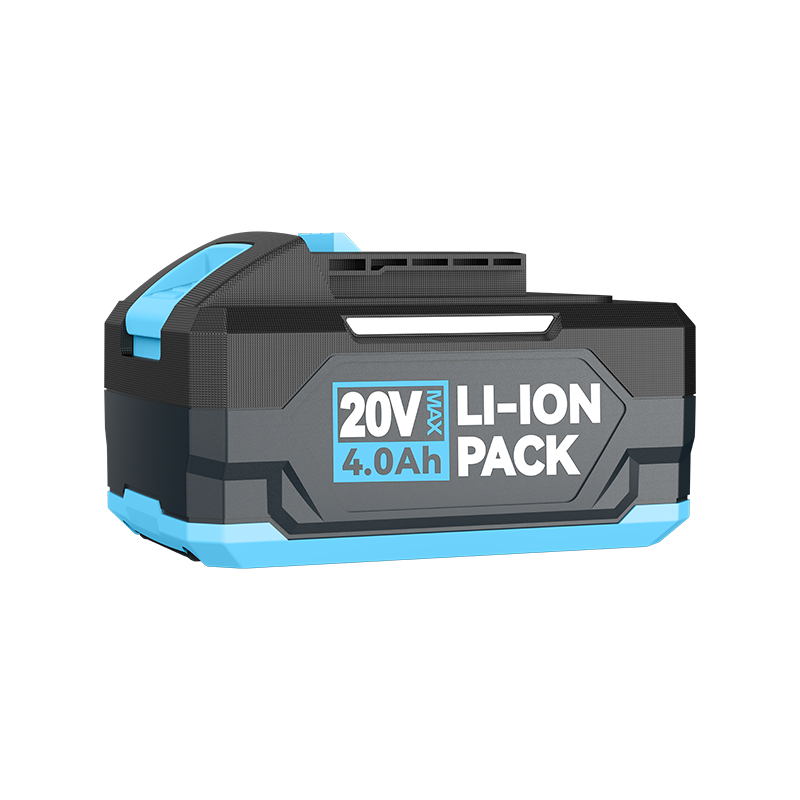
The battery pack is the heart of the Cordless Angle Grinder. Unlike standard household power tools, angle grinders require extremely high instantaneous current when cutting hard alloys or grinding welds. High-Rate Discharge: Industrial batteries use high-density lithium-ion cells capable of providing continuous high-current output without excessive heat. Thermal Management System: High-performance battery packs are equipped with thermistors and communication chips to monitor the temperature of each cell, preventing forced shutdowns or battery degradation during heavy tasks. Energy Density and Runtime: The B2B sector commonly utilizes 5.0Ah and higher capacities, allowing for hundreds of cuts through 12mm rebar on a single charge.
Gearbox Construction: Heat Dissipation and the Importance of All-Metal Housing in Industrial Environments
Since the Cordless Angle Grinder often works in environments full of metal debris and dust, the sealing and heat dissipation of the gearbox are critical. All-Metal Gearbox: High-end models use die-cast aluminum or magnesium alloy housings. Compared to plastic, metal quickly dissipates heat generated by gear friction, ensuring mechanical stability during long operations. Spiral Bevel Gear Design: Precision-ground spiral bevel gears handle higher torque loads while reducing vibration and noise. Labyrinth Sealing: Complex internal air ducts and sealing rings prevent conductive metal dust from entering the motor.
Variable Speed Control: Why Adjustable RPM is Critical for Polishing, Sanding, and Heavy-Duty Cutting
Not all tasks require maximum speed. The variable speed function of the Cordless Angle Grinder expands its application from rough metal cutting to fine surface finishing. Speed Range Segregation: Low speeds (3,000-5,000 RPM) are used for polishing, wire drawing, or stone grinding to prevent burning the workpiece surface; high speeds (8,500-11,000 RPM) are for efficient cutting. Electronic Constant Speed Feedback: This is a key differentiator for professional tools, as the sensor compensates for power even when the operator applies pressure, keeping the output speed constant.
| Engineering Component |
Standard Cordless Angle Grinder |
Professional/Industrial Cordless Angle Grinder |
| Battery Management |
Basic overload protection |
Real-time cell monitoring + Thermal management |
| Gearbox Material |
Semi-metal or reinforced plastic |
Reinforced die-cast aluminum/magnesium |
| Transmission |
Straight gears |
Precision spiral bevel gears |
| Speed Control |
Single speed output |
3-6 stage electronic speed + constant speed |
| Dust Protection |
Open air intake |
Detachable fine mesh/Labyrinth air ducts |
| No-Load Speed |
Approx. 8,000 RPM (Fixed) |
3,000 - 11,000 RPM (Adjustable) |
| Braking System |
Natural inertia stop |
Electronic rapid brake (<2 seconds) |
Versatility in Action: Primary Industrial Applications
The versatility of the Cordless Angle Grinder makes it the "Swiss Army Knife" of modern industrial sites. By removing the tether of a cable, it can flexibly reach angles that traditional tools cannot, showing high adaptability across different materials.
Metal Fabrication and Welding Prep: Cleaning Beads, Beveling Edges, and Removing Rust with a Cordless Angle Grinder
In metal shops, the Cordless Angle Grinder is an indispensable partner for welding. Weld Cleaning: Removing oxide layers, rust, or paint before welding to ensure quality; grinding down excess weld beads after completion. Beveling: Processing V or U-shaped grooves on thick plates to improve weld penetration. Deburring: Smoothing sharp burrs left after laser cutting or sawing using flap discs.
Masonry and Concrete Cutting: Utilizing Diamond Blades for Precise Scoring and Tuck-pointing
Though originally for metal, with specific attachments, the Cordless Angle Grinder excels in masonry. Stone Channeling: Using diamond blades to cut precise channels in concrete walls for electrical conduits. Tile Cutting: Allowing workers to trim tile edges directly at the installation site without returning to a fixed saw. Tuck-pointing: Removing weathered mortar from old brickwork for restoration, a common task in heritage building repair.
Emergency Services and Demolition: Rapid Response Capabilities Where External Power is Unavailable
In emergency rescue situations, the instant response of the Cordless Angle Grinder is irreplaceable. Rapid Breaching: Rescue personnel can cut through window bars, locks, or vehicle structures without searching for power or dragging generators. Remote Maintenance: For railway or bridge repairs in remote areas, the tool significantly simplifies logistics.
| Application |
Recommended Attachment |
Suggested Speed (RPM) |
Load Characteristics |
Torque Requirement |
| Heavy Grinding |
Grinding Wheel |
8,500 - 11,000 |
Continuous high pressure |
Extremely High |
| SS Polishing |
Nylon/Felt Wheel |
3,000 - 5,000 |
Light contact |
Medium |
| Concrete Cutting |
Diamond Blade |
10,000+ |
High impact |
High |
| Rust Removal |
Wire Brush |
5,000 - 7,000 |
High vibration |
Medium |
| Sheet Cutting |
Thin Cutting Disc |
11,000 |
Instant cut |
Low |
The Cordless Angle Grinder Buying Guide: Key Specs to Consider
When purchasing a Cordless Angle Grinder, the technical specs directly determine if the tool can handle specific industrial tasks.
Disc Diameter Compatibility: Choosing Between 4.5-inch (115mm) and 5-inch (125mm) Configurations
The disc diameter determines cutting depth and coverage. 4.5-inch (115mm) is the most common global standard, offering a compact body for tight spaces. 5-inch (125mm) is the preferred choice for professional metalworking, providing a deeper cutting path and higher peripheral speed for large-scale grinding.
No-Load Speed (RPM): Understanding the Sweet Spot for Efficiency Without Overheating the Workpiece
No-load speed indicates output power. High Speed (8,500 to 11,000 RPM) results in cleaner cuts in sheet metal. Speed Stability is crucial; high-quality tools show minimal RPM drop when pressure is applied to the workpiece.
Electronic Safety Features: Kickback Brakes, Restart Protection, and E-Clutch Systems
Modern Cordless Angle Grinders integrate several safety technologies. Kickback Brake: Sensors detect torque anomalies if a blade pinches and shut off power in milliseconds. Restart Protection: If a battery is inserted while the switch is "on," the tool will not start. E-Clutch: Automatically reduces current during extreme loads to protect battery life and prevent motor overheating.
| Key Specification |
Maintenance Grade |
Heavy Duty/Industrial Grade |
| Rated Voltage |
18V / 20V Max |
18V x2 (36V) or 60V Max |
| Recommended Capacity |
2.0Ah - 4.0Ah |
5.0Ah - 12.0Ah |
| Spindle Thread |
M10 / M14 / 5/8"-11 |
M14 / 5/8"-11 (High strength) |
| Switch Type |
Slide Switch |
Paddle Switch (Dead Man) |
| Braking System |
Mechanical/Natural stop |
Active Electronic Brake |
| Cutting Depth |
Approx. 25mm - 30mm |
35mm - 40mm |
| Handle |
Basic rubber grip |
Anti-vibration/Hydraulic handle |
Maximizing Efficiency with a Cordless Angle Grinder
Efficiency depends not only on maximum output but also on scientific management to prolong runtime and reduce costs.
Optimizing Battery Lifecycle: Best Practices for Charging and Storage to Prevent Capacity Fade
Batteries are the most expensive consumables. Thermal Management: Never charge a battery immediately after a heavy-duty task while it is still hot. Avoid Deep Discharge: Swap batteries at 15-20% remaining charge. Storage: Keep batteries at 40-60% charge in a cool, dry place when not in use.
Dust Management: The Necessity of Integrated Shrouds and HEPA Vacuum Attachments for OSHA Compliance
Metal dust and stone debris are enemies of the Cordless Angle Grinder. Integrated Shrouds: In concrete cutting, vacuum shrouds are mandatory for operator health (OSHA compliance) and to pull dust away before it enters the motor. Intake Filtration: Professional tools feature fine mesh guards that should be cleaned regularly with compressed air from the inside out.
Ergonomic Handling: Soft-grip Designs and Side Handle Positioning for Reduced Operator Fatigue
Operator fatigue impacts quality. Anti-Vibration Handles: These can reduce vibrations transmitted to the hand by over 30%. Balance: High-performance models optimize motor layout so the center of gravity is near the trigger, improving balance despite the battery weight.
| Efficiency Dimension |
Optimization Standard |
Technical Impact |
| Feed Pressure |
Maintain 2.5kg - 4kg pressure |
Prevents overload, extends disc life |
| Operating Temp |
Keep between 10°C - 45°C |
Ensures steady output, avoids thermal cut-off |
| Intake Cleaning |
Every 4 hours of operation |
Improves cooling, lowers internal heat |
| Cutting Angle |
15° - 30° relative to workpiece |
Maximum removal rate, avoids edge chipping |
Operational Safety and Professional Standards
The high-speed nature of the Cordless Angle Grinder makes it a high-risk power tool requiring strict adherence to safety protocols.
Personal Protective Equipment (PPE): Going Beyond Basic Eye Protection for High-velocity Sparks
Basic protection is often insufficient. Face Shields should be worn over goggles to protect against disc fragments. Flame-resistant Clothing like leather aprons prevents sparks from igniting fabrics. Anti-vibration Gloves reduce the risk of Vibration White Finger.
Wheel Inspection Protocols: Identifying Hairline Fractures in Bonded Abrasives Before Use
Strictly inspect attachments before use. The "Ring Test" involves tapping a ceramic disc; a dull sound indicates a crack. Check Expiration Dates, as bonding agents degrade over time. Ensure the RPM Rating of the disc is equal to or higher than the grinder's no-load speed.
The "Danger Zone": Managing the Line of Fire and Spark Direction in Confined Spaces
Positioning is core to safety. Operators must stand to the side of the disc's rotation plane (the Line of Fire). Adjust the Guard so sparks fly down and away. Always use Two-Handed Operation to maintain absolute control during a kickback.
| Operation |
Professional Safety Standard |
High Risk Violation |
Potential Consequence |
| Guard Status |
Installed and adjusted |
Guard removed for visibility |
No protection if disc bursts |
| Installation |
Original flange and wrench |
Using a hammer to lock flange |
Spindle or disc damage |
| Pressure |
Uniform, use tool weight |
Forceful downward pressure |
Motor overload or disc pinch |
FAQ: Technical Insights and User Concerns
How long does a 5.0Ah battery last on a Cordless Angle Grinder during continuous grinding?
On a standard 18V/20V platform: 25-40 minutes for light load (deburring) and 10-15 minutes for heavy-duty grinding. A "two-battery, one-charger" rotation is recommended for continuous site work.
Can I use corded grinding wheels on a Cordless Angle Grinder?
Yes, if the arbor size and RPM rating match. Always ensure the disc's max RPM is higher than the tool's. Special "Thin-Cut" blades are recommended for cordless tools to reduce resistance and extend battery life.
What is the difference between a "Slide Switch" and a "Paddle Switch" (Dead Man's Switch)?
A Slide Switch can be locked "on," which is good for long sessions but won't stop if the tool is dropped. A Paddle Switch has no lock and stops instantly when released, making it the mandatory standard for high-risk industrial sites.
How does a brushless Cordless Angle Grinder improve productivity compared to brushed models?
Brushless motors are more efficient (85-90%), increasing work per charge by 30-50%. They are also maintenance-free as there are no carbon brushes to replace and they generate less heat.
Why is my Cordless Angle Grinder stalling during heavy cuts?
This is typically the Overload Protection kicking in. If the operator applies too much pressure, the current spikes and the controller cuts power to protect the battery cells from overheating. Reduce pressure and let the disc's speed do the work.
Maintenance Tips: How to clean the air intakes of metal dust?
Use low-pressure compressed air to blow out the motor vents daily. If the tool has a dust mesh, remove and clean it to prevent conductive metal dust from accumulating and causing a short circuit.

 English
 русский
 Español