Product & Technology Update
Brushless Cordless Drill Technology: What Every Buyer Should Know Before Placing an Order
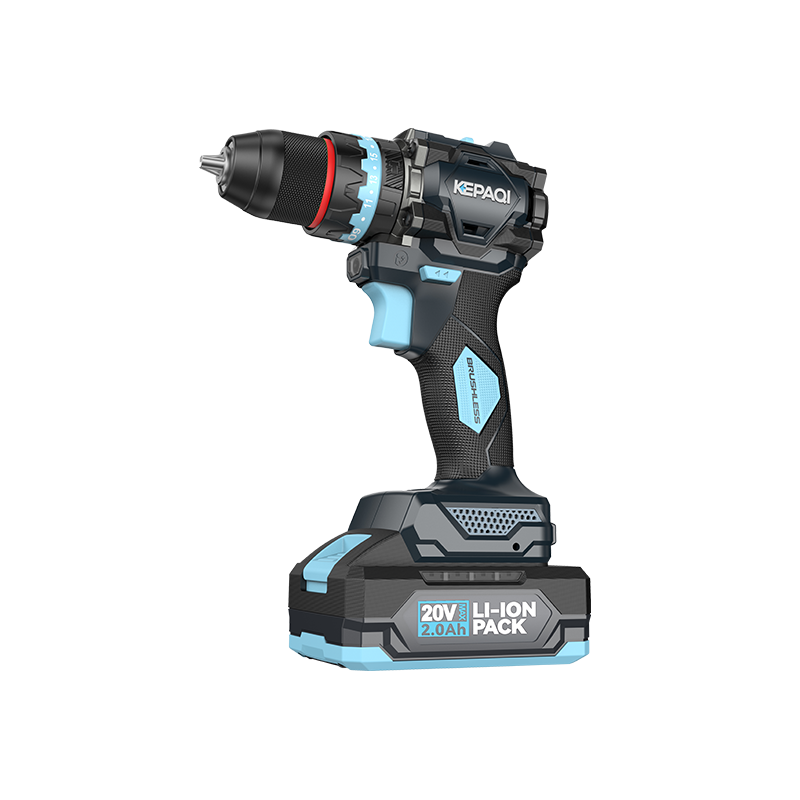
Every cordless drill on a factory floor or a job site today traces back to a single idea: freeing the drill from the wall socket. That idea is now more than sixty years old, but the tool built around it keeps changing shape. The latest shift, and the one driving purchasing decisions across the power tool category right now, is the move from brushed to brushless motors. A Brushless Cordless Drill is no longer a premium add-on reserved for flagship product lines — it has become the baseline expectation for anyone sourcing tools that need to survive daily use, whether that use happens in a workshop, on a construction crew, or in a home garage.
This piece walks through the questions we hear most often from tool buyers, distributors, and end users: what a cordless drill actually is, when the category first appeared, how brushless motors changed the math on runtime and durability, and what a 12V brushless platform can realistically do compared with larger voltage classes. Along the way we've pulled in production-floor detail — chuck sizes, torque bands, battery pairing — that tends to get left out of consumer buying guides but matters a great deal once a tool has to perform the same task a thousand times a week.
1961
Black & Decker introduces the first cordless drill, adapting battery technology originally developed for a NASA lunar tool.
1990s
NiMH battery chemistry replaces NiCd in most consumer lines, trimming weight while nudging runtime upward.
2005–2010
Lithium-ion cells become standard, and the first brushless motors appear in professional-grade drills.
Today
Brushless motors have moved down into compact 12V platforms, once a segment reserved for brushed, entry-level tools.
When Did Cordless Drills Come Out?
The short answer is 1961, when the first battery-powered hand drill reached the market. What's less commonly known is that the underlying motor and battery research had been funded for an entirely different purpose: a lightweight tool astronauts could use to collect core samples without a power cord tethering them to a spacecraft. That same low-torque, high-efficiency motor concept was scaled down and repackaged for a general consumer audience within a few years. For the next three decades, cordless drills stayed heavy, ran hot, and rarely held a charge through a full afternoon of work. It wasn't until lithium-ion chemistry replaced nickel-based batteries in the mid-2000s that the category earned real credibility on professional sites — and that credibility is exactly what opened the door for brushless motors shortly afterward.
What Is a Cordless Drill Used For?
A cordless drill is built around one core mechanism — a rotating chuck that grips interchangeable bits — but that single mechanism supports a surprisingly wide task list once you change the bit, the clutch setting, or the attachment. The list below covers the tasks we see referenced most often in product spec sheets and warranty claims, which tends to be a more reliable signal of real-world use than marketing copy.
Driving & Removing Screws
The most common single task across every drill category. Clutch settings prevent cam-out and stripped screw heads by disengaging torque once resistance hits a preset level.
Drilling Holes
Wood, softer metals, plastics, and drywall are all within range of a standard drill/driver, with bit selection doing most of the work.
Mixing & Stirring
With a paddle attachment, higher-torque models handle paint, thin-set mortar, and joint compound without a separate mixing tool.
Sanding & Polishing
Specialty attachments turn a standard chuck into a light sanding or polishing head for small-scale surface work.
Fastening in Tight Spaces
Compact and right-angle bodies reach cabinet interiors, engine bays, and stud gaps a full-size drill can't enter.
Repetitive Assembly Runs
Furniture, packaging, and fixture assembly lines lean on drills built for high daily cycle counts rather than occasional use.
What Does a Cordless Drill Do, Mechanically?
Underneath the housing, a cordless drill is a motor, a gear reduction system, and a chuck, tied together by a trigger that varies voltage — and therefore speed — based on how far it's pressed. The gear reduction stage is what converts a motor's naturally high RPM into usable torque; without it, a drill would spin too fast to control and too weakly to drive a screw into anything denser than foam board. Most drills sold today also include a clutch collar with numbered settings between roughly 1 and 20, plus a drill-only setting that bypasses the clutch entirely for full-power hole boring. Two-speed gearboxes are standard on anything above entry-level: a low range around 0–400 RPM for high-torque driving, and a high range often exceeding 1,500–2,000 RPM for drilling.
The motor itself is where brushed and brushless designs diverge. A brushed motor uses physical carbon contacts to route current through a spinning commutator — simple, inexpensive, and prone to friction losses and wear. A brushless motor replaces those contacts with a small onboard controller that switches current electronically, timed to the position of the rotor. Removing the physical contact point removes the friction, the heat it generates, and the wear that eventually degrades a brushed motor's output. That's the entire story behind why brushless tools run cooler, last longer, and pull more usable work out of the same battery pack.
What Are the Different Types of Cordless Drills?
"Cordless drill" is often used as a catch-all term, but the category actually splits into several distinct tool types, each suited to a different job. Matching the right type to the right task saves wear on the tool and produces cleaner results.
Drill/Driver
The general-purpose baseline. Handles most drilling and driving tasks across wood, plastic, and light metal.
Hammer Drill
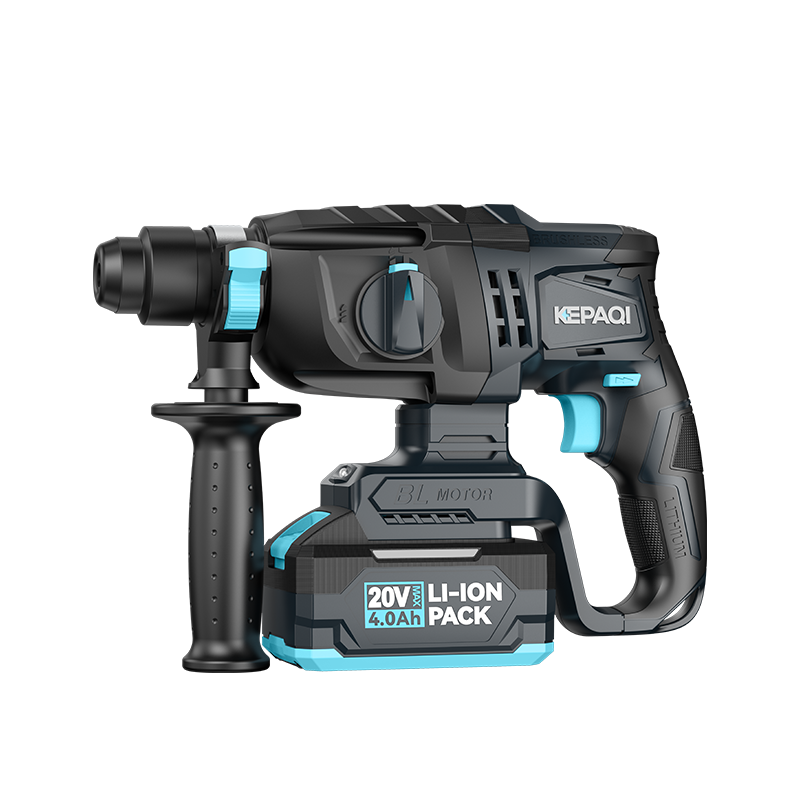
Adds a percussive, forward-and-back hammering action layered on top of rotation, built for brick, block, and masonry.
Impact Driver
Delivers torque in rapid rotational bursts rather than continuous force, ideal for long fasteners and lag screws.
Right-Angle Drill
A narrow, elongated head reaches between joists, studs, and cabinet frames where a standard body won't fit.
Rotary Hammer / SDS
Heavier-duty than a hammer drill, built for sustained concrete and stone drilling with SDS-shank bits.
Compact Driver
Lightweight, screw-focused tools built for speed and one-handed control rather than heavy drilling.
Brushless vs. Brushed: Where the Numbers Actually Diverge
Marketing copy tends to describe brushless motors in broad strokes — "more efficient," "longer lasting" — without pinning down what that means in practical terms. The comparison below reflects the performance gap we consistently see between comparable brushed and brushless platforms built on the same voltage and battery pairing.
| Factor |
Brushed Motor |
Brushless Motor |
| Runtime per charge |
Baseline |
Roughly 20–50% longer on the same battery |
| Motor lifespan |
Limited by brush wear |
No brush contact to wear down |
| Heat generation |
Higher, from friction |
Lower, improving sustained-load performance |
| Peak torque |
Adequate for light-duty use |
Higher, especially under continuous load |
| Maintenance |
Periodic brush replacement |
Effectively maintenance-free |
| Typical unit cost |
Lower |
Higher, offset by lifespan and runtime |
Spotlight: The 12V Cordless Brushless Drill
Voltage class is often the first filter buyers apply, and 12V platforms occupy a specific niche: compact enough for one-handed control and tight-space work, but no longer limited to light-duty jobs now that brushless motors have narrowed the performance gap with larger 18V and 20V tools. A well-built 12V brushless drill is aimed at electricians, maintenance technicians, furniture assemblers, and general users who value control and reach over maximum brute force.
1,650 No-load speed (RPM, high gear)
32 Max torque (Nm)
10 Chuck capacity (mm)
2.0 Standard battery capacity (Ah)
1.1 Tool weight with battery (kg)
45 Typical charge time (minutes)
The numbers above reflect a typical mid-tier 12V brushless configuration rather than a single fixed spec — battery capacity, gear ratios, and clutch range are all areas where a production line can adjust the build to fit a specific order without changing the overall platform. That flexibility is one of the more overlooked advantages of the 12V class: because the motor and gearbox are smaller than an 18V equivalent, tooling changes and pack substitutions are comparatively fast to implement, which shortens the distance between a spec conversation and a finished sample.
12V vs. 18V vs. 20V: Choosing the Right Voltage Class
Voltage numbers get thrown around loosely in product listings, and they don't always mean what buyers assume they mean — a 20V "MAX" rating, for instance, typically measures peak voltage at the moment a fresh cell is connected, while the nominal, sustained voltage during actual use sits closer to 18V. What matters more than the label is how the voltage class maps onto the work a tool will actually do. A 12V brushless platform, built well, closes much of the torque gap that used to separate it from larger tools, while keeping the weight and one-handed control that make it the right call for overhead work, tight enclosures, and long shifts where operator fatigue is a real cost.
| Voltage Class |
Typical Weight |
Best Fit |
| 12V Brushless |
1.0 – 1.3 kg |
Overhead work, tight spaces, all-day handheld use, electricians and technicians |
| 18V Brushless |
1.5 – 2.0 kg |
General construction, renovation, mixed drilling and driving at higher volume |
| 20V MAX Brushless |
1.6 – 2.1 kg |
Heavier fastening, larger bit diameters, jobs where peak torque outweighs reach |
For a factory building out a product line, the practical takeaway is that voltage class shouldn't be treated as a simple upgrade path from small to large. Each class serves a distinct buyer intent, and a 12V brushless drill sold as a "lighter version" of an 18V tool tends to undersell exactly what makes the smaller platform valuable: precision, reach, and reduced operator fatigue over a full working day, not just a smaller battery.
What Is the Battery Life of a Cordless Drill?
Battery life is really two separate questions people tend to conflate: how long a single charge lasts during use, and how many charge cycles the pack delivers before it needs replacing. Both depend heavily on amp-hour (Ah) rating, motor type, and how demanding the work is.
| Battery Capacity |
Typical Single-Charge Runtime |
Best Suited For |
| 1.5Ah |
Roughly 100–150 screws or short drilling tasks |
Light household use, occasional projects |
| 2.0Ah – 3.0Ah |
Half a day of mixed driving and drilling |
Everyday DIY and small workshop tasks |
| 4.0Ah – 5.0Ah |
Full working shift under moderate load |
Renovation crews, furniture assembly lines |
| 6.0Ah – 9.0Ah |
Extended heavy-duty use across multiple tools |
Continuous professional or industrial use |
Brushless motors extend every one of those runtime figures by roughly a fifth to a half compared with a brushed motor drawing from an identical battery, since less stored energy is converted to friction and heat rather than usable rotation. On the cycle-life side, a lithium-ion pack used and stored correctly — kept away from extreme heat, not left fully depleted for long stretches — typically delivers somewhere between two and five years of service, or several hundred to roughly a thousand charge cycles, before capacity drops enough to warrant replacement.
What Are the Safety Precautions When Using a Cordless Drill?
Cordless drills are simple tools, but the injuries they cause are almost always preventable with a short list of habits. These are the precautions we see referenced most consistently across workplace safety documentation.
Eye Protection
Bit fragments and material chips are the most common source of minor injury; safety glasses address this directly.
Secure the Workpiece
A clamp or vise removes the risk of a workpiece spinning free under torque, which is a leading cause of hand injuries.
Match Bit to Material
Using the wrong bit type increases kickback risk and shortens bit life dramatically.
Set the Clutch First
A clutch set too high for the task removes the safety margin the setting is designed to provide.
Remove the Battery for Bit Changes
Accidental trigger contact during a bit swap is a preventable cause of hand injury.
Check Behind the Surface
Wiring and plumbing detection before drilling into a wall avoids one of the more serious accident categories.
Keep Two-Handed Control
Larger drills and dense materials both call for two hands to manage torque reaction.
Store Batteries Properly
Avoiding extreme heat and deep discharge protects both battery safety and long-term capacity.
What Are the Common Uses of a Cordless Drill?
Beyond the individual tasks a drill performs, it's worth looking at the settings where cordless drills see the heaviest daily rotation, because those settings tend to define what buyers actually prioritize when comparing specs.
Furniture & Fixture Assembly
High cycle counts and repetitive fastening make runtime and clutch precision the top priorities here.
Renovation & Construction
Mixed tasks — drilling, driving, occasional masonry work — favor a versatile drill/driver over a specialized tool.
Electrical & Maintenance Work
Compact bodies and precise low-speed control matter more than raw torque in these settings.
Automotive & Workshop Use
Right-angle attachments and impact-rated bits extend a standard drill into engine-bay work.
Outdoor & Garden Projects
Raised beds, fencing, and trellis work call for a drill that tolerates dust and intermittent moisture exposure.
General Household Repairs
Shelving, curtain rods, and picture frames represent the lightest end of the use spectrum but the widest audience.
Where Manufacturing Detail Actually Matters
For anyone sourcing tools rather than simply buying one, the difference between a good drill and a disappointing one usually isn't visible on a spec sheet — it shows up in the gearbox tolerances, the clutch calibration consistency across a production batch, and the quality of the battery contacts. A factory that controls its own motor winding, gearbox assembly, and battery pack testing under one roof tends to produce far more batch-to-batch consistency than one assembling from mixed third-party components. That consistency is what keeps warranty rates low and keeps a private-label program viable at scale.
Testing protocols are worth asking about directly rather than assuming. Drop testing from working height, IP-rated dust and moisture resistance for job-site use, and cycle testing on the clutch mechanism are the three checks that most reliably predict field performance. Certifications — CE, UL, RoHS, and equivalent regional marks — confirm baseline compliance, but the more useful signal is usually the factory's own internal failure-rate data across a full production run, since that's the number that actually tracks with what a buyer will see after the tools reach the field.
Customization is where a 12V brushless platform tends to offer the most room to maneuver. Housing color and branding are the obvious levers, but battery pack voltage matching, clutch range tuning, chuck type (keyless vs. keyed), and included accessory kits can all be adjusted within a shared platform without requiring a full tooling change. For buyers building out a private-label line, that flexibility usually matters more than any single spec number, because it determines how closely the finished product can match a specific market's expectations without a ground-up redesign.
The Accessory Ecosystem Around a Drill Platform
A drill rarely sells on its own merits alone — the accessory ecosystem built around it often decides whether a buyer commits to a platform or keeps shopping. Chuck compatibility is the first checkpoint: a 10mm keyless chuck accepts the widest range of third-party bits and adapters, which matters more to buyers stocking a mixed toolkit than it might seem on a spec sheet. Bit sets, belt clips, carrying cases, and spare battery packs round out the rest of the decision, and increasingly, buyers expect these to be available as a coordinated kit rather than assembled piecemeal.
Bit & Driver Sets
Mixed Phillips, flathead, and hex bit kits reduce the need for a separate driver purchase.
Carrying Cases
Molded cases protect batteries and chargers during transport between job sites.
Spare & Extended Battery Packs
A second pack effectively doubles working time without adding charger inventory.
Belt Clips & Holsters
Hands-free carry matters most on ladders, scaffolding, and repetitive install work.
Right-Angle & Extension Attachments
Extend a standard drill's reach into cabinet interiors and joist bays without a second tool.
Fast Chargers
A charger rated for the pack's full capacity avoids the bottleneck of an underpowered stock charger.
Quality control on a production run tends to matter more than any individual accessory, though. A batch that passes visual inspection but hasn't been through torque-calibration sampling, chuck run-out checks, and battery contact resistance testing can still ship with inconsistencies that only surface after weeks of field use. The factories that catch these issues before shipment typically run a layered inspection process: incoming component checks on motors and cells, in-line testing during assembly, and a final random-sample functional test — clutch accuracy, no-load speed, and charge cycle verification — before a batch is cleared. For a buyer building a product line around a specific drill platform, asking for that inspection data upfront is a far more reliable filter than relying on a spec sheet alone, since two tools with identical published specifications can perform very differently in the field depending on how tightly the production line held its tolerances.
Where Cordless Drill Technology Is Heading
Three trends are shaping the next generation of cordless drills, and each has direct implications for anyone specifying tools right now rather than waiting for the next platform cycle.
The first is battery platform consolidation. Manufacturers are increasingly designing tool lines around a single battery voltage and connector standard that spans drills, drivers, and adjacent accessories, reducing the number of chargers and packs a user needs to keep on hand. The second is smarter power management: onboard chips that monitor cell temperature, adjust output under sustained load, and extend both single-charge runtime and long-term pack health beyond what passive battery designs could offer. The third is the continued migration of brushless motors downward into smaller and lower-cost platforms — a trend that has already reshaped the 12V segment and is now extending into even more compact sub-12V tools that were, until recently, brushed by default.
None of these shifts require buyers to wait for a hypothetical future product. They're already reflected in current-generation 12V brushless platforms, which means the practical question for most buyers isn't whether to move toward brushless — that decision has largely been made by the market already — but which specific configuration of torque, battery capacity, and accessory kit best matches the work the tool will actually be doing.

 English
 русский
 Español